
Tag Archives: Entry Exit System

Europe’s Borders Just Went Biometric: What You’ll Face

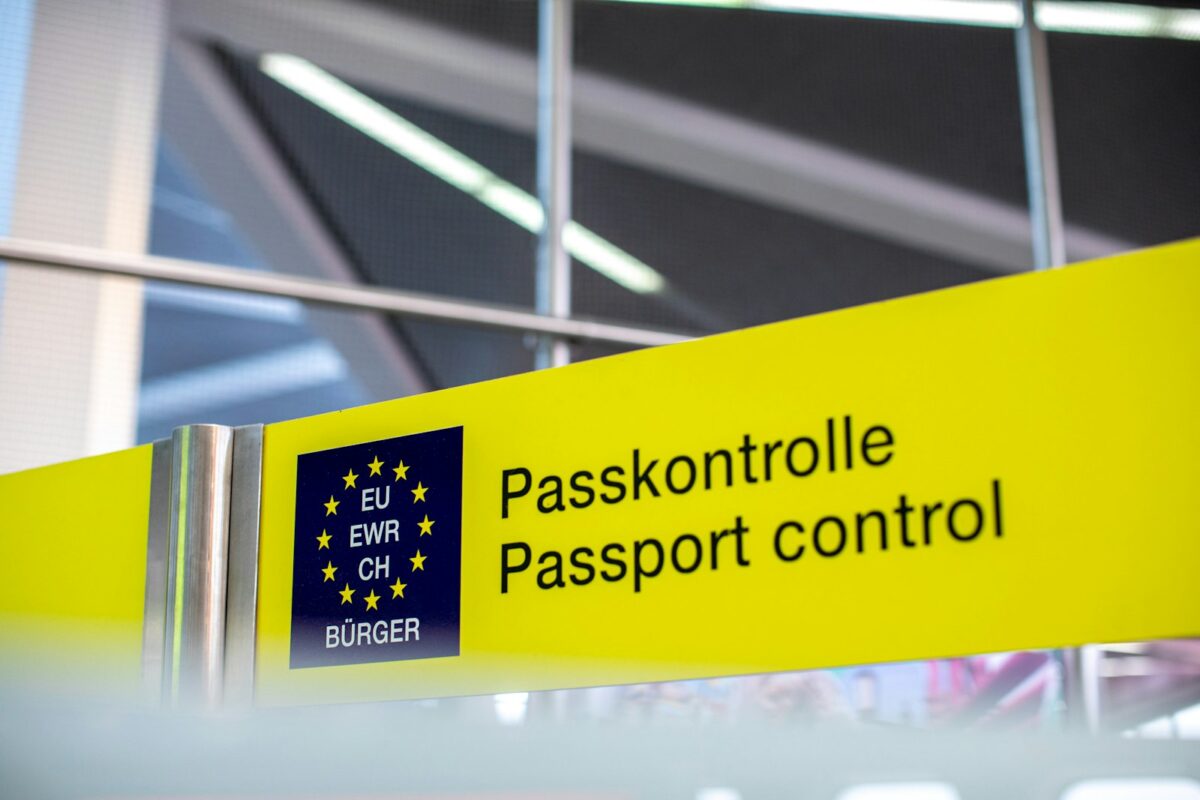
April 9, 2026 ended the old way of crossing into Europe. The EU EES biometric border system is now live, swapping passport stamps for fingerprints and a facial scan for every non-EU traveller entering the Schengen Area. Fly in for a holiday, a conference, or a job interview, and your first crossing now means a short enrolment at the kiosk. A second change, ETIAS, arrives later this year. Here is what actually changes for you.

By the Travel Explore editorial desk. Last updated June 30, 2026.

Quick map of this guide

What the new border check involves

The Entry/Exit System records your face and fingerprints the first time you cross, then logs every entry and exit electronically. No more ink stamps. The system “goes live on 10 April 2026,” France’s foreign ministry confirmed, after a phased rollout that began in October 2025. Your data sits in a central file for three years. The upside is real. Returning trips should be faster once you are enrolled, because the kiosk already holds your record. The first crossing is the slow one. Plan for delays. Border staff can still wave you through manually during peak crush periods, but you cannot count on it.

Where the EU EES biometric border system applies

The EU EES biometric border system covers all 29 countries applying Schengen rules at their external borders, from Lisbon to Helsinki. It applies to short stays only, the familiar 90 days in any 180. Take Mateus, a Brazilian design consultant who hops between client offices in Berlin and Madrid. Brazil is visa-exempt for short Schengen visits, so he never needed a visa. He still needs to enrol his biometrics now, and the clock on his 90/180 allowance is tracked automatically, not estimated by a tired officer with a calculator. Overstays are harder to hide. The math is the same. The enforcement is sharper.

Mapping your own move or multi-country trip? We keep the running checklist here: https://linktr.ee/travelexpore

ETIAS is the next step, not the same step

People keep mixing up the two systems. EES is the border check you clear in person. ETIAS is a pre-travel authorisation you buy online before you leave home, expected in the last quarter of 2026, costing 20 euros and valid for multiple trips. Visa-exempt travellers from roughly 60 countries will need it. It is not a visa. It is a quick screening tied to your passport. The smart move is to treat them as a pair: enrol your biometrics at the border now, and watch for the ETIAS launch date so a 20-euro form does not derail a booked trip.

Before you fly

  • Allow extra time at your first post-April crossing for biometric enrolment.
  • The EES check is free; only ETIAS later carries the 20-euro fee.
  • Your 90/180 short-stay count is now tracked automatically, so track it yourself too.
  • EES and ETIAS are separate steps that arrive at different times in 2026.

Questions travellers keep asking

Is the EU EES biometric border system already running?
Yes. Full application started on 9 April 2026 across the Schengen external borders, after a phased introduction from October 2025.

Do I pay for EES?
No. Biometric enrolment at the border is free. The 20-euro charge belongs to ETIAS, the separate online authorisation due later in 2026.

Does EES change the 90-day rule?
No. The 90 days in any 180 limit stays. EES simply records your entries and exits so the count is automatic and exact.

Will I be enrolled every trip?
No. Your biometrics are stored for three years, so later crossings reuse the record and should move faster than the first.

Related reads

Share this story

  • LinkedIn: Europe’s borders went biometric on 9 April. Here is what business travellers must do differently.
  • Twitter/X: No more passport stamps in Europe. EES is live, ETIAS is next. What it means for your next trip.
  • Facebook: Planning a Europe trip in 2026? Two new border systems change how you cross. Read before you book.

Cross Europe’s new borders without the stress

Biometric borders reward travellers who prepare and punish those who wing it. Get the timing, the fees, and the 90/180 math right before you pack. Start with our living Europe travel toolkit: https://linktr.ee/travelexpore

Sources

  • France Ministry for Europe and Foreign Affairs, EES go-live notice (T0): https://www.diplomatie.gouv.fr/en/services-to-foreigners/visiting-france/ees-the-new-european-border-entryexit-system-goes-live-on-10-april-2026
  • European Commission, Migration and Home Affairs, Entry/Exit System (T0): https://home-affairs.ec.europa.eu/policies/schengen/smart-borders/entry-exit-system_en
  • UK Government, EU Entry/Exit System guidance (T0): https://www.gov.uk/guidance/eu-entryexit-system


Tapay copy tradingGrow your money while you plan your moveTapay auto-copies a live trading strategy to your own account — spot & futures. Start free on demo, go live when you’re ready.Start free →

Trading involves risk. Only trade what you can afford to lose.

Schengen EES 2026 Fully Live: 5 Things African Travellers Must Know Before Crossing Europe

Schengen EES 2026 — the European Union’s Entry/Exit System — went fully operational on 10 April 2026. Manual passport stamping is over. Every non-EU traveller crossing a Schengen external border now provides fingerprints and a facial scan, which the EU stores for three years against your travel document. For African travellers used to a thirty-second stamp at Frankfurt or Charles de Gaulle, the new process takes longer at the first crossing and faster at the next ones, and it changes how the 90-in-180-days rule is enforced. Here are the five facts that matter most.

What changed on 10 April 2026

The EU launched EES progressively from 12 October 2025, with at least one border crossing in every Schengen country running EES from day one. The full rollout took six months. As of 10 April 2026, EES is mandatory at every external border crossing point in the 29-country Schengen area. According to the European Commission Migration and Home Affairs page, EES replaces manual passport stamping with an automated database that records your name, passport details, fingerprints, facial image, date and place of entry, and date and place of exit.

Fact 1: Every entry and exit now creates a biometric record

On your first arrival post-April 2026, expect to spend an extra 5 to 10 minutes at the border for fingerprint capture and facial photo. The data is stored for three years from your last exit. On subsequent entries within those three years, the system only re-verifies your face and one fingerprint — usually 30 to 60 seconds at automated kiosks. A Nigerian business traveller who visits Frankfurt twice a year will only do the full enrollment once; the next four entries are quick.

Fact 2: There is no opt-out for African nationals

EES applies to every third-country national, including all 54 African nationalities. The only exceptions are EU and Schengen citizens themselves, plus some residents and family members of EU citizens. If you hold a long-stay visa or a residence permit for a Schengen country (a Dutch HSM permit, a German Blue Card, an Italian work visa), you are also exempt — your residence card is the proof. Short-stay visitors and visa-free travellers (the Mauritius, Seychelles passport holders) are fully in scope.

Fact 3: The 90-in-180 rule is now enforced automatically

Schengen has always limited short-stay visitors to 90 days in any rolling 180-day window. Before EES, enforcement relied on border guards manually counting stamps. With EES, the algorithm does it instantly. The day you walk up to the border on day 91, the kiosk flashes red, the gate stays closed, and you are interviewed by a border officer. A Ghanaian frequent traveller who used to “shuffle” trips and rely on inconsistent stamping needs to retire that habit. There is a free EU calculator on the official travel-europe portal that shows your remaining days — use it before booking.

Travelling soon? Have us sanity-check your itinerary — https://linktr.ee/travelexpore

Fact 4: Self-service kiosks need a biometric passport

Most major Schengen airports (Schiphol, Charles de Gaulle, Madrid, Lisbon, Vienna, Munich) now have self-service kiosks for EES enrollment. These kiosks only work with biometric passports — the ones with the chip icon on the cover. Most African countries issue biometric passports as standard since the 2010s, but if yours is the old machine-readable-only version, you will go through the manual lane every time. A Cameroonian student arriving at Amsterdam Schiphol with a biometric passport can self-enroll in under three minutes; the same student with an older non-biometric passport waits in line for an officer.

Fact 5: ETIAS is still coming — later in 2026

EES is not ETIAS. EES is the border-crossing database. ETIAS is the pre-travel authorisation that visa-exempt nationals will need before flying to Europe — like the US ESTA or UK ETA. ETIAS is scheduled to go live in Q4 2026 and become mandatory in 2027. The two systems work together: ETIAS approves you to board the plane, EES tracks your stay on arrival. Most African nationals still need a Schengen visa for short stays, so ETIAS is less relevant; but Mauritian and Seychellois passport holders who currently travel visa-free will need ETIAS once it launches.

Frequently asked questions about Schengen EES 2026

Does my fingerprint data get shared with my home country?

No. EES data is stored in a centralised EU database accessed only by Schengen border, visa and law-enforcement authorities. It is not shared with African governments.

How long is my biometric data stored?

Three years from your last exit. If you do not return for three years, the data is automatically deleted and you re-enroll on your next visit.

Will EES delay my flight connection?

First enrollment can take 5 to 10 extra minutes. Repeat entries usually take 30 to 60 seconds at self-service kiosks. Build in a buffer on first arrival.

Does EES apply to children?

Children under 12 are exempt from fingerprinting but are still photographed for facial recognition.

Can EES refuse me entry?

Yes, if the system detects you have exceeded the 90-in-180 rule, are on an alert list, or your travel document is flagged.

The short version

  • Schengen EES 2026 is fully operational since 10 April. Passport stamps are gone.
  • Every African traveller is in scope; only EU citizens and Schengen residents are exempt.
  • First enrollment takes 5 to 10 minutes; repeat entries are 30 to 60 seconds with a biometric passport.
  • The 90-in-180-day rule is now enforced automatically by the algorithm.
  • ETIAS is a separate, future system — expected Q4 2026 launch, 2027 enforcement.

Cross Europe with confidence

Got questions about EES and your next Schengen trip? Send them our way at https://linktr.ee/travelexpore

Related reads on Travel Explore

Share this story

  • Schengen just turned your passport into a biometric record — here’s what that changes.
  • Why your next trip to Paris involves fingerprints and a face scan.
  • The shuffle-the-stamps overstay trick is officially dead. EES kills it.