Draft — updating with full content.
29 May 2026


Draft — updating with full content.

The Spain Digital Nomad Visa (DNV) 2026 is one of the most accessible EU residence routes for African remote workers earning hard-currency income. Combined with the Beckham Law tax regime — which can hold tax at a flat 24% for the first six years for qualifying applicants — Spain has become the most pragmatic European destination for Lagos-based software developers, Nairobi-based product designers, Cape Town-based growth marketers, and Cairo-based consultants who already earn from foreign clients. This step-by-step guide walks through the income threshold, the document stack, the consular filing options for African applicants, and the Beckham Law election to avoid the most expensive Spanish tax surprise.
The Spain DNV is available to non-EU nationals who are either remote employees of a non-Spanish company or freelancers with multiple non-Spanish clients. The visa grants an initial three-year residence permit (renewable for two-year increments up to five years total), unrestricted travel within the Schengen Area, and access to the Spanish public health and social security system once enrolled. After five years of continuous residence under DNV, you become eligible for long-term EU residence; after 10 years, Spanish citizenship.
You cannot earn more than 20% of your income from Spanish clients or sources. You cannot have been a tax resident in Spain in the five years prior to the application. Both rules are non-negotiable.
The 2026 DNV income requirement is 200% of the Spanish minimum wage (SMI), which for 2026 sits at approximately €2,762 per month or €33,144 annually for the principal applicant. Add 75% for a spouse (~€2,072/mo) and 25% per dependent child (~€690/mo per child). So a family of four needs to evidence around €5,400 gross monthly income.
Evidence options that work for African applicants: 6-12 months of bank statements showing recurring foreign-currency deposits, your employment contract (in English or with sworn translation), client invoices and contracts for freelancers, and tax filings from your home country. Crypto-only income generally does not qualify — Spanish consulates want bank-statement evidence.
Reading this and unsure where your file sits? Travel Explore reviews real cases every day — start at https://linktr.ee/travelexpore
The 2026 standard document stack includes: valid passport with at least 12 months remaining; completed national visa application form; employment contract or freelance client agreements showing more than 3 months of pre-existing relationship; bank statements (last 6 months minimum); proof of qualifications (university degree or 3+ years of relevant work experience); criminal record certificate from every country you have lived in for the past 5 years (apostilled and sworn-translated to Spanish); private health insurance with full coverage in Spain and no co-payments; proof of address in Spain (rental agreement or hotel booking for initial period); and the consular fee receipt.
The single most common refusal reason for African DNV applicants is a criminal record certificate that is older than 90 days at the time of consular filing. Time the request to coincide with your appointment date.
You can file the DNV from any Spanish consulate or honorary consulate where you are legally resident. For African applicants, the active filing posts are Madrid-Pretoria (Southern Africa), Madrid-Abuja and Madrid-Lagos (Nigeria), Madrid-Nairobi (East Africa), Madrid-Rabat and Madrid-Casablanca (Morocco), Madrid-Dakar (West Africa), Madrid-Cairo (Egypt) and Madrid-Algiers (Algeria). Consular processing typically takes 20-30 business days for complete DNV files; complex freelance cases can take 6-8 weeks.
Alternative: you can enter Spain on a Schengen tourist visa and apply for an in-country DNV residence permit within 90 days of arrival through the Unidad de Grandes Empresas (UGE-CE). This in-country route is faster (often 20 working days) and increasingly popular with African applicants who have a Schengen-valid passport stamp.
The Beckham Law (Ley Beckham) is the special tax regime that holds your Spanish income tax at a flat 24% (up to €600,000 of annual Spanish-source income) for up to six tax years, instead of the standard progressive rate that climbs above 45%. DNV holders are explicitly allowed to elect into the Beckham regime via Form 149 within six months of registering as a Spanish tax resident.
Two crucial conditions: you must not have been a Spanish tax resident in the previous five years; and Beckham generally taxes only Spanish-source income at 24% — foreign-source income (your remote employer’s salary paid abroad) is generally excluded from Spanish tax under the regime for the period. The combination of DNV + Beckham is what makes Spain meaningfully more attractive than Portugal D8 after the NHR was phased out.
Bring your draft application to us before submission — https://linktr.ee/travelexpore
Q: Can I work for a Nigerian or Kenyan employer on a Spain DNV?
Yes — the DNV is built precisely for remote employees of non-Spanish companies including African employers.
Q: Does the Spain DNV require Spanish language proof?
No language requirement for the initial DNV. Spanish is required at A2 for long-term residence after 5 years and B1 for citizenship after 10.
Q: How long does it take to renew the DNV?
Renewal applications are filed 60 days before expiry and processed in 1-3 months. Most renewals are approved if income and tax compliance are maintained.
Q: Can my children attend Spanish public schools on a DNV?
Yes — your dependent children have full access to Spanish public schools and the public health system.
Q: Will I get Spanish citizenship after the DNV?
You may apply for Spanish citizenship after 10 years of continuous lawful residence (2 years for nationals of Ibero-American countries — not most African states).
LinkedIn: Spain DNV + Beckham Law = the most pragmatic European route for African remote workers earning foreign-currency income.
Twitter: Spain Digital Nomad Visa 2026: €2,762/mo income, Beckham Law flat 24% tax, 5-year EU residence path. African remote workers, this is your route.
Facebook: Barcelona on your bank statements? If you earn from foreign clients, Spain’s Digital Nomad Visa is the route African remote workers are quietly winning on.
From Lagos to Nairobi, the families who succeed are the ones who plan early. Begin your case at https://linktr.ee/travelexpore.

For African skilled workers weighing the move to the southern hemisphere, the question is no longer “should I go” but “should I land in Auckland or Sydney?” The New Zealand Green List 2026 versus Australia Subclass 189 comparison decides whether your file moves on speed, salary or settlement permanence — and the answer is genuinely different for different occupations. This post compares both routes head-to-head on eligibility, processing speed, family rights, settlement timeline and post-arrival realities for Nigerian nurses, South African engineers, Kenyan ICT specialists, Ghanaian teachers and Egyptian medical doctors.
New Zealand’s Green List offers direct residence on arrival (Tier 1) or two-year work-to-residence (Tier 2) for over 80 occupations — including registered nurses, civil engineers, ICT security specialists, secondary maths and science teachers, and medical specialists. Australia’s Subclass 189 is a points-tested permanent visa with no employer or state nomination, granting full PR on arrival but only after invitation. NZ rewards occupation; Australia rewards points. NZ moves faster on Tier 1 (often weeks); Australia is invitation-rounded.
The Green List has two tiers. Tier 1 (Straight to Residence) gives direct residence visas to applicants with a job offer in an eligible role, the relevant qualification or experience, and registration where applicable. Tier 2 (Work to Residence) gives a 2-year work visa first; after 24 months of skilled employment, you apply for residence. Roles include senior secondary teachers, civil engineers (eligible after work-to-residence period), registered nurses, midwives, dairy farm managers, ICT security specialists and many medical specialties.
Real example: Yvette, a Cameroonian registered nurse with five years of experience and IELTS Academic 7.0, accepts an offer from an Auckland hospital. As an RN on Tier 1, she files Straight to Residence and lands in Auckland with permanent residence on arrival. The same role in Australia would put her on either a 482 employer-sponsored or a 189 points-based path with a much longer runway to permanent status.
Australia 189 is purely points-based — no sponsor, no state nomination. Submit an Expression of Interest (EOI), accumulate points (age, English, education, experience, partner skills), wait to be invited from the pool. Cut-offs in 2026 sit at 75-90 EOI points depending on occupation tier. On invitation, you file the substantive visa and receive permanent residence on grant. The 2026-27 cohort is signalled to grow substantially with the formal four-tier prioritisation system favouring critical-shortage occupations.
Stuck between two routes? Our team maps the cleanest one at https://linktr.ee/travelexpore
If you are a registered nurse, midwife, secondary maths/science teacher, or specialist medical doctor with a job offer: NZ Green List Tier 1 wins outright. Direct residence beats invitation-based PR every time.
If you are an ICT specialist, civil engineer or mechanical engineer with 75+ EOI points but no job offer: Australia 189 wins. The pure points test rewards your profile without the friction of finding an NZ employer first.
If you are early-career (under 30) with strong English but only 65-70 EOI points: Australia 491 regional provisional or NZ Tier 2 work-to-residence. Neither 189 nor Green List Tier 1 will activate.
If your spouse will also work: Australia’s labour market is larger and pays better in aggregate. NZ’s salaries are lower but the cost of living in Auckland and Wellington is also lower than Sydney and Melbourne.
Both countries are expensive. Auckland house prices are 8-10x median income; Sydney’s are 11-13x. Renting in either central city consumes 35-45% of post-tax income for a one-bedroom apartment. The African diaspora is meaningfully larger and longer-established in Australia (Sydney, Melbourne, Perth) than in NZ — which matters for community, faith spaces and cultural belonging. Conversely, NZ’s racial demographics and recent immigration history mean black African families often report easier social settlement in smaller NZ cities than in equivalent Australian regional centres.
If your timeline is tight, escalate before you apply — https://linktr.ee/travelexpore
Q: Can I apply for both NZ Green List and Australia 189 at the same time?
Yes — there is no exclusivity. Many African candidates run both pipelines in parallel and accept the first viable outcome.
Q: Do NZ Green List candidates pay the visa first?
The Straight to Residence visa fee for Tier 1 is around NZD 6,450 for the principal applicant including INZ levy.
Q: What IELTS score do I need for NZ Green List?
IELTS General or Academic 6.5 overall for Tier 1 (with no band under 6.5) for most occupations; specific occupational registrations may require higher.
Q: Can my African qualification skip recognition?
No. Both countries require a positive skills assessment / registration before residence is granted.
Q: Which country gives citizenship faster?
Australia: 4 years of lawful residence with at least 12 months as PR. NZ: 5 years of permanent residence. Australia is faster by approximately 12 months on average.
LinkedIn: NZ Green List or Australia 189? For African nurses and teachers, NZ is the cleaner route. For African engineers and ICT specialists with strong points, Australia is faster.
Twitter: NZ Green List vs Australia 189: occupation wins on NZ, points win on Aus. Pick by profile, not by hype.
Facebook: Down-under for African skilled workers in 2026 — here’s how to choose Auckland vs Sydney by what you actually do for a living.
When you’re ready to stop researching and start filing, we’re at https://linktr.ee/travelexpore.

Bref aperçu en français : Le Permis Unique belge reste l’une des voies européennes les plus sous-utilisées par les Africains francophones. Voici les cinq idées reçues qui font perdre des dossiers, et la vérité sur Bruxelles en 2026.
The Belgium Single Permit (Permis Unique / Gecombineerde Vergunning) is one of the most underused skilled-migration routes in the EU for francophone African applicants — and the reason is a stubborn set of myths, not the actual rules. Cameroonians, Senegalese, Ivoirians, Beninois, Togolese, Congolese (DRC and ROC) and Burundians have every structural advantage on this route: a French-speaking labour market in Brussels and Wallonia, an active diaspora, demographic complementarity, and a permit framework that, since 2023, consolidates work and residence authorisation into one application. This article breaks the five biggest myths and replaces each with what the law actually says in 2026.
False for most of the country. Belgium is a federal state with three official languages — Dutch, French and German. Brussels-Capital and the Walloon Region operate in French (and Brussels is officially bilingual). Single Permit applications for jobs in Brussels and Wallonia can be filed and managed entirely in French. Even in Flemish Brabant and other Dutch-speaking regions, technical and ICT roles in multinationals routinely operate in English. The “Belgium requires Dutch” myth comes from old guidance about citizenship integration tests, not the work permit itself.
The salary thresholds for the Single Permit “highly skilled” category in 2026 sit at around €48,000-€51,000 gross per year in Brussels-Capital and Flanders, and the Wallonia threshold is meaningfully lower at around €36,000-€38,000 for general highly skilled roles. For African ICT, engineering and finance professionals with five-plus years of experience these thresholds are well within reach. Wallonia in particular accommodates earlier-career francophone applicants who would not qualify under Flemish thresholds. The myth that Belgium requires “German-level” salaries collapses when you compare Wallonia thresholds to the German EU Blue Card.
Worried your documents won’t survive scrutiny? We pre-audit at https://linktr.ee/travelexpore
The Single Permit framework is open across the entire labour market through three primary tracks: highly skilled employees (salary-based), shortage occupations (regionally defined and refreshed annually), and EU Blue Card (separate higher-salary path). Shortage occupation lists in Brussels and Wallonia regularly include nurses, midwives, hospitality managers, construction foremen, electricians, vehicle mechanics and chefs — many of which match African candidate profiles outside the ICT bubble. A Cameroonian nurse with a recognised diploma is a stronger candidate than a Cameroonian junior backend developer for the same region.
Single Permit applications are processed by the region where the employer is located. Brussels Region, Walloon Region and Flemish Region each set their own thresholds, shortage lists, and processing timelines. Wallonia has historically been the friendliest to francophone African applicants for general highly skilled roles. Brussels-Capital sits in the middle. Flanders applies the strictest thresholds and prefers Dutch-speaking applicants. A job offer in Liège or Charleroi will sail through Wallonia processing in 4-8 weeks; the same offer relocated to Antwerp would carry more scrutiny.
It absolutely does. Five years of continuous lawful residence in Belgium puts you on the standard naturalisation route. Single Permit time counts. After five years you can apply for Belgian (and EU) citizenship if you meet integration requirements: proof of language proficiency in one of the official languages (French is fine), proof of social integration (employment record), and proof of economic participation. For francophone Africans with native French, this is structurally easier than the equivalent in the Netherlands or Germany.
Don’t lose months to a refusal. Talk it through at https://linktr.ee/travelexpore
Q: How long does Single Permit processing take?
4-8 weeks in Wallonia and Brussels for highly skilled, longer in Flanders. Add 2-4 weeks for the consular visa stamping in your home country.
Q: Can my spouse work on my Single Permit?
Yes — accompanying family members receive residence permits with full work authorisation.
Q: Can I switch jobs while on a Single Permit?
You can switch employers but a new Single Permit application must be filed by the new employer. Plan a 6-week overlap.
Q: Does the EU Blue Card or Single Permit make more sense?
If you meet the EU Blue Card salary (~€60k+), the Blue Card adds intra-EU mobility after 12 months. Otherwise Single Permit is the cleaner route.
Q: I’m Congolese (DRC) — do I qualify automatically?
Nationality alone does not qualify or disqualify you. The Single Permit is based on the employer’s job offer and your qualifications, not nationality.
LinkedIn: Le Permis Unique belge est l’une des voies les plus sous-utilisées par les Africains francophones. Cinq mythes à enterrer en 2026.
Twitter: Belgium Single Permit 2026: French speaks here, Wallonia thresholds are reachable, shortage occupations are broad. Francophone Africa, this is your route.
Facebook: Camerounais, Sénégalais, Ivoiriens — la Belgique est plus accessible que vous ne le pensez en 2026.
The window is narrow. Every week you delay, conditions tighten. Begin today at https://linktr.ee/travelexpore.
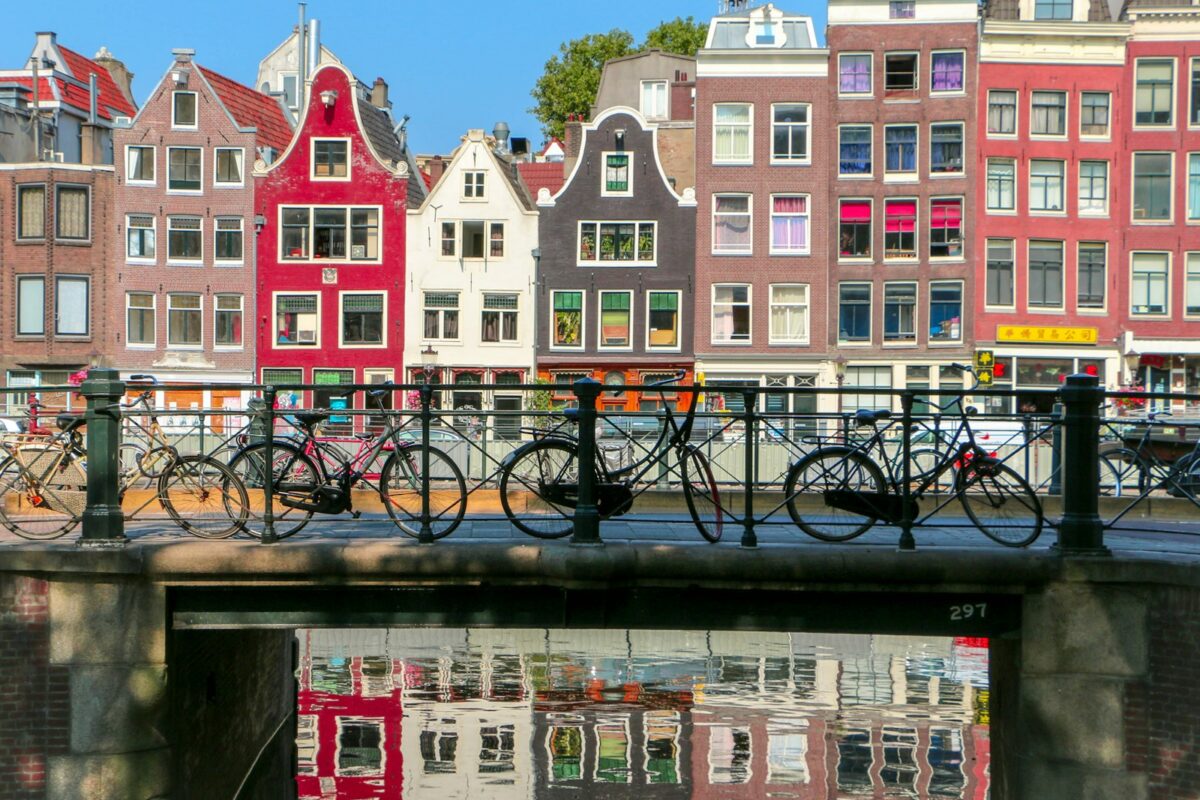
The Netherlands Orientation Year (Zoekjaar Hoogopgeleiden) is one of Europe’s most generous post-study pathways and it remains wide open to African graduates in 2026. Twelve months of unrestricted work rights in the Netherlands, available within three years of completing a Dutch degree, a recognised foreign master’s, or a Top-200 international university programme. For Nigerian, Kenyan, Ghanaian and Ethiopian graduates who finish a recognised degree, the Zoekjaar is functionally the cheapest way to convert study into either a Highly Skilled Migrant (HSM) sponsorship or, increasingly, an EU Blue Card.
The Orientation Year permit grants 12 months of unrestricted residence and work rights in the Netherlands. You can take any job, work for any employer, work full-time, work part-time, freelance, or run a small business. There is no salary requirement during the Zoekjaar — that distinction matters because it removes the Highly Skilled Migrant salary pressure for a year while you find sponsorship at the HSM threshold (€5,688 gross per month for 2026, lower for under-30s and recent graduates).
Crucially, time spent on Zoekjaar counts toward continuous residence for permanent residency and Dutch naturalisation — five years of continuous lawful residence puts you on the path to a Dutch (and EU) passport.
You qualify if, within the past three years, you have completed: (a) a Dutch master’s, post-doctoral or PhD; (b) a recognised foreign master’s from a top-200 university (the Times Higher Education, QS, or ARWU lists count); or (c) an Erasmus Mundus or similar EU-recognised programme. Several African universities appear on these rankings — the University of Cape Town (consistently top-200), University of the Witwatersrand, Stellenbosch University, and Cairo University periodically — but most African universities do not. For the majority of African applicants, the route works through Dutch study or post-Dutch-master’s eligibility.
Real example: Adaeze, a Nigerian graduate who completed her MSc International Business at the University of Groningen in June 2026, files Zoekjaar in July 2026. She has until June 2027 to find a Dutch employer willing to sponsor an HSM permit at the under-30 salary threshold (about €4,171 gross per month for 2026). She lands a position at a Rotterdam logistics firm in October 2026 and switches in-country in November.
Reading this and unsure where your file sits? Travel Explore reviews real cases every day — start at https://linktr.ee/travelexpore
Step 1: gather your degree certificate and (if foreign) a Nuffic credential evaluation certifying it as Dutch master’s-equivalent.
Step 2: file the IND online application for “Orientation Year for Graduates Seeking Employment in the Netherlands” within three years of degree completion. The IND fee is around €228 for 2026.
Step 3: if applying from outside the Netherlands, you also pay a Machtiging tot Voorlopig Verblijf (MVV) provisional residence permit fee. If you are already in the Netherlands on a study permit, you can switch in-country without an MVV.
Step 4: book your biometric appointment at the Dutch consulate (Pretoria for Southern Africa, Abuja for Nigeria, Nairobi for East Africa, Rabat for Morocco). Submit passport, degree, Nuffic certificate, proof of sufficient means (about €1,200 per month is the typical IND requirement), and proof of comprehensive health insurance.
Step 5: on approval, you receive a residence permit card valid for 12 months from the date of issue.
Three moves make the Zoekjaar work for African graduates. First, register with the gemeente immediately on arrival and apply for a BSN — without it you cannot legally work. Second, register at IND-recognised HSM sponsors only when interviewing. Only employers on the IND public sponsor register can sponsor HSM permits — interviewing at non-sponsors is wasted time unless they are willing to apply for recognition (rare for SMEs). Third, file your HSM switch application 8 weeks before your Zoekjaar expires. Late filings cost you continuous residence credit.
The HSM threshold for 2026 is around €5,688 gross per month for over-30s and €4,171 for under-30s. Recent EU Master’s graduates qualify at the under-30 rate even up to age 35 in many cases. The EU Blue Card threshold is higher (around €5,896) but adds intra-EU mobility. If your offer is in the €4,171-€5,000 range and you are under 30, choose HSM. If your offer is above €5,896, the Blue Card gives you a path to switch to Germany or Belgium within 12 months — useful if Dutch housing pushes you out.
Already gathered documents? Run them by us first — https://linktr.ee/travelexpore
Q: Can I apply for Zoekjaar from Lagos without ever studying in the Netherlands?
Only if your degree is from a top-200 ranked university. Otherwise the route requires Dutch study first.
Q: Does my University of Cape Town MSc qualify?
UCT consistently appears in the QS top-200, so yes — but verify the rankings list for the year you finished your degree.
Q: Can my spouse work during my Zoekjaar?
Yes, the accompanying spouse permit grants unrestricted work rights.
Q: What if I cannot find an HSM employer by month 12?
You can apply for a Self-Employment (zzp) residence permit if you have a viable business plan and at least one client, or leave the Netherlands and return on another route.
Q: Does Zoekjaar lead directly to Dutch citizenship?
Not directly — but the time counts toward the 5-year continuous residence required for naturalisation if followed by HSM or Blue Card.
LinkedIn: 12 months of unrestricted work in the Netherlands, no salary minimum. African graduates with a Dutch master’s or a top-200 foreign degree should know about the Zoekjaar.
Twitter: Dutch Zoekjaar 2026: 12 months to find work in NL after your master’s. Counts toward Dutch PR. Open to qualifying African graduates.
Facebook: If you graduated from a top-ranked university or finished a Dutch master’s, the Netherlands Zoekjaar is your year to land work — and a path to PR.
Choose the route, then choose the team. Travel Explore is ready when you are — https://linktr.ee/travelexpore.