Draft — updating with full content.
Schengen EES 2026 Fully Live: 5 Things African Travellers Must Know Before Crossing Europe
In this article
- What changed on 10 April 2026
- Fact 1: Every entry and exit now creates a biometric record
- Fact 2: There is no opt-out for African nationals
- Fact 3: The 90-in-180 rule is now enforced automatically
- Fact 4: Self-service kiosks need a biometric passport
- Fact 5: ETIAS is still coming — later in 2026
- Frequently asked questions about Schengen EES 2026
- The short version
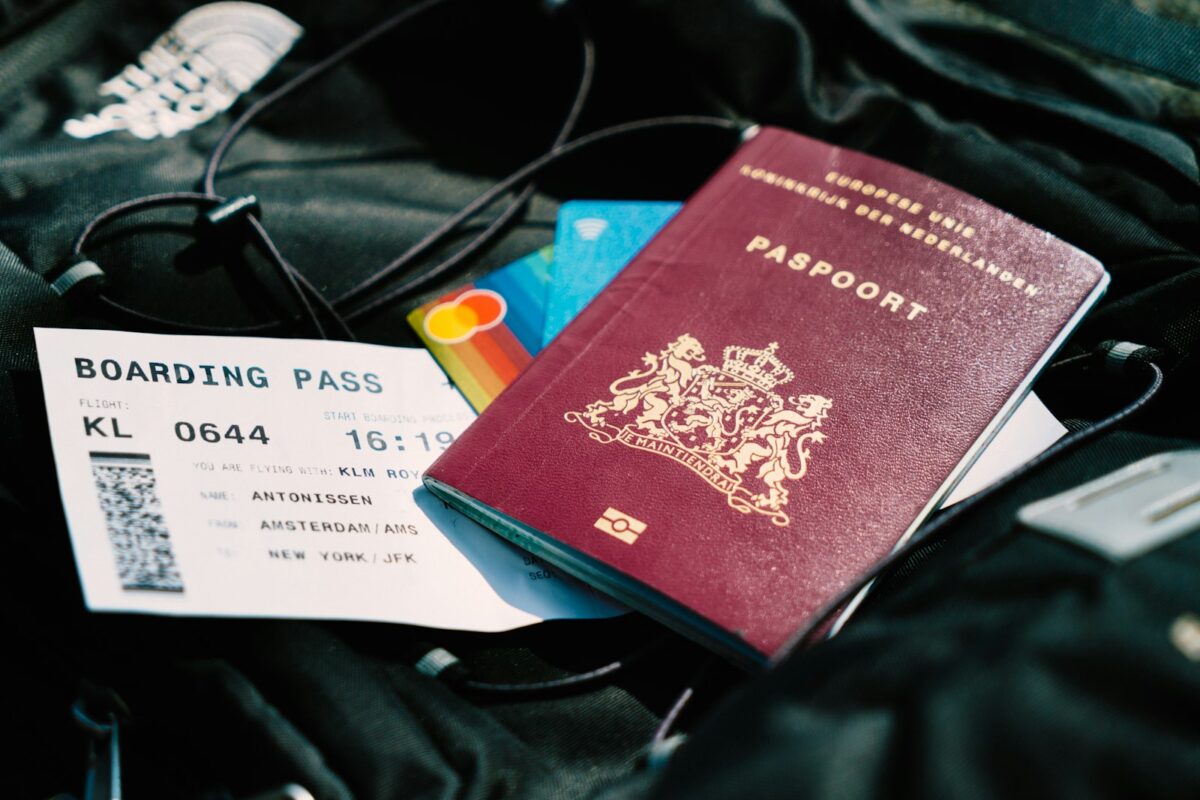
Schengen EES 2026 — the European Union’s Entry/Exit System — went fully operational on 10 April 2026. Manual passport stamping is over. Every non-EU traveller crossing a Schengen external border now provides fingerprints and a facial scan, which the EU stores for three years against your travel document. For African travellers used to a thirty-second stamp at Frankfurt or Charles de Gaulle, the new process takes longer at the first crossing and faster at the next ones, and it changes how the 90-in-180-days rule is enforced. Here are the five facts that matter most.
What changed on 10 April 2026
The EU launched EES progressively from 12 October 2025, with at least one border crossing in every Schengen country running EES from day one. The full rollout took six months. As of 10 April 2026, EES is mandatory at every external border crossing point in the 29-country Schengen area. According to the European Commission Migration and Home Affairs page, EES replaces manual passport stamping with an automated database that records your name, passport details, fingerprints, facial image, date and place of entry, and date and place of exit.
Fact 1: Every entry and exit now creates a biometric record
On your first arrival post-April 2026, expect to spend an extra 5 to 10 minutes at the border for fingerprint capture and facial photo. The data is stored for three years from your last exit. On subsequent entries within those three years, the system only re-verifies your face and one fingerprint — usually 30 to 60 seconds at automated kiosks. A Nigerian business traveller who visits Frankfurt twice a year will only do the full enrollment once; the next four entries are quick.
Fact 2: There is no opt-out for African nationals
EES applies to every third-country national, including all 54 African nationalities. The only exceptions are EU and Schengen citizens themselves, plus some residents and family members of EU citizens. If you hold a long-stay visa or a residence permit for a Schengen country (a Dutch HSM permit, a German Blue Card, an Italian work visa), you are also exempt — your residence card is the proof. Short-stay visitors and visa-free travellers (the Mauritius, Seychelles passport holders) are fully in scope.
Fact 3: The 90-in-180 rule is now enforced automatically
Schengen has always limited short-stay visitors to 90 days in any rolling 180-day window. Before EES, enforcement relied on border guards manually counting stamps. With EES, the algorithm does it instantly. The day you walk up to the border on day 91, the kiosk flashes red, the gate stays closed, and you are interviewed by a border officer. A Ghanaian frequent traveller who used to “shuffle” trips and rely on inconsistent stamping needs to retire that habit. There is a free EU calculator on the official travel-europe portal that shows your remaining days — use it before booking.
Travelling soon? Have us sanity-check your itinerary — https://linktr.ee/travelexpore
Fact 4: Self-service kiosks need a biometric passport
Most major Schengen airports (Schiphol, Charles de Gaulle, Madrid, Lisbon, Vienna, Munich) now have self-service kiosks for EES enrollment. These kiosks only work with biometric passports — the ones with the chip icon on the cover. Most African countries issue biometric passports as standard since the 2010s, but if yours is the old machine-readable-only version, you will go through the manual lane every time. A Cameroonian student arriving at Amsterdam Schiphol with a biometric passport can self-enroll in under three minutes; the same student with an older non-biometric passport waits in line for an officer.
Fact 5: ETIAS is still coming — later in 2026
EES is not ETIAS. EES is the border-crossing database. ETIAS is the pre-travel authorisation that visa-exempt nationals will need before flying to Europe — like the US ESTA or UK ETA. ETIAS is scheduled to go live in Q4 2026 and become mandatory in 2027. The two systems work together: ETIAS approves you to board the plane, EES tracks your stay on arrival. Most African nationals still need a Schengen visa for short stays, so ETIAS is less relevant; but Mauritian and Seychellois passport holders who currently travel visa-free will need ETIAS once it launches.
Frequently asked questions about Schengen EES 2026
Does my fingerprint data get shared with my home country?
No. EES data is stored in a centralised EU database accessed only by Schengen border, visa and law-enforcement authorities. It is not shared with African governments.
How long is my biometric data stored?
Three years from your last exit. If you do not return for three years, the data is automatically deleted and you re-enroll on your next visit.
Will EES delay my flight connection?
First enrollment can take 5 to 10 extra minutes. Repeat entries usually take 30 to 60 seconds at self-service kiosks. Build in a buffer on first arrival.
Does EES apply to children?
Children under 12 are exempt from fingerprinting but are still photographed for facial recognition.
Can EES refuse me entry?
Yes, if the system detects you have exceeded the 90-in-180 rule, are on an alert list, or your travel document is flagged.
The short version
- Schengen EES 2026 is fully operational since 10 April. Passport stamps are gone.
- Every African traveller is in scope; only EU citizens and Schengen residents are exempt.
- First enrollment takes 5 to 10 minutes; repeat entries are 30 to 60 seconds with a biometric passport.
- The 90-in-180-day rule is now enforced automatically by the algorithm.
- ETIAS is a separate, future system — expected Q4 2026 launch, 2027 enforcement.
Cross Europe with confidence
Got questions about EES and your next Schengen trip? Send them our way at https://linktr.ee/travelexpore
Related reads on Travel Explore
- ETIAS 2026 Q4 Launch: What Visa-Exempt African Travellers Must Know
- EU Blue Card 2026 Compared
- UK Global Talent Visa 2026
Share this story
- Schengen just turned your passport into a biometric record — here’s what that changes.
- Why your next trip to Paris involves fingerprints and a face scan.
- The shuffle-the-stamps overstay trick is officially dead. EES kills it.
Netherlands HSM 2026: New EUR 5,942 Threshold, the 30 Percent Ruling Cut, and What it Means for African Tech Professionals
Sections in this guide
Netherlands HSM 2026 — the Highly Skilled Migrant route — remains the Dutch immigration system’s most consistent door for African tech, finance and consulting professionals. From 1 January 2026 the over-30 monthly salary floor jumped to EUR 5,942 and the under-30 floor to EUR 4,357. The 30 percent expat tax ruling has stayed at 30 percent for 2026, but the government has confirmed it will drop to 27 percent for new rulings issued from 1 January 2027. For African candidates planning a Dutch move, the timing of your contract start matters more than ever.
The 2026 salary thresholds in numbers
Per the official IND required amounts page, the Highly Skilled Migrant thresholds for 2026 are:
- EUR 5,942 per month gross for HSM applicants aged 30 and over.
- EUR 4,357 per month gross for HSM applicants under 30.
- EUR 3,125 per month gross for HSM applicants who graduated from a Dutch institution in the past three years (the Orientation Year + HSM combo).
- EUR 2,989 per month gross for the under-30 graduate variant.
The thresholds were indexed by 4.5 percent in January 2026. The Dutch government uses the Wet minimumloon (minimum wage) annual review to recalculate the salary floor each year. The numbers do not include the holiday allowance (vakantiegeld) of 8 percent, which is paid on top — useful to remember when comparing offers across European countries.
The 30 percent ruling and the 2027 cut to 27 percent
The Dutch 30 percent tax ruling lets qualifying expats receive 30 percent of their salary tax-free for the duration of the ruling, capped at the Balkenende norm (EUR 262,000 a year for 2026). To qualify in 2026, your taxable salary after deducting the 30 percent allowance must exceed EUR 48,013 a year (EUR 36,497 for those under 30 holding a recognised Master’s degree). The ruling traditionally ran for five years.
From 1 January 2027 the maximum tax-free allowance for new rulings drops from 30 percent to 27 percent. That is a real net pay cut for new arrivals. A Nigerian software engineer signing for EUR 75,000 in late 2026 keeps a 30 percent ruling for the full five years. The same engineer signing in January 2027 starts at 27 percent. Over five years that difference is worth roughly EUR 11,000 in pocket. If you are negotiating an offer between now and December 2026, timing the start date to 2026 rather than 2027 is the single highest-impact lever you have.
How the Highly Skilled Migrant route works
HSM is an employer-sponsored route. The employer must be a recognised sponsor (Erkend Referent) registered with the IND. Once you have a contract that meets the salary threshold, the employer applies for your residence permit (the MVV provisional permit if you are abroad). The IND decision is usually issued within two to four weeks for trusted partners. You then collect your MVV at the Dutch embassy with jurisdiction over your country — for most of West Africa that is Lagos or Abuja, for East Africa Nairobi, for Southern Africa Pretoria.
The Highly Skilled Migrant permit is initially issued for the length of the contract up to five years. You can switch employers within the HSM framework as long as the new employer is also a recognised sponsor and the new salary meets the threshold. You have a three-month job-search grace period if you lose a job.
Confused by the salary thresholds? Get a tailored review at https://linktr.ee/travelexpore
The recognised sponsor list and what it means
The IND keeps a public list of recognised sponsors with around 12,000 Dutch companies on it. Tech firms (Booking.com, Adyen, ASML, Philips), banks (ING, ABN AMRO), consultancies (Deloitte, KPMG, EY) and most major universities are on it. Smaller startups are not always sponsors — if your offer comes from a small Amsterdam startup, ask up front whether they hold sponsor status. Without it, you cannot use HSM with that employer.
A Kenyan data engineer with an offer from ASML in Eindhoven at EUR 7,200 a month is a textbook HSM case. The same engineer with an offer from a five-person Rotterdam pre-seed startup at EUR 6,500 a month cannot go through HSM unless the startup first applies for sponsor recognition (a four to six-month process). For non-sponsor employers, the alternative is the European Blue Card or the self-employment route, both slower and more expensive.
From HSM to permanent residence
After five continuous years of legal Dutch residence, HSM holders can apply for permanent residence (Verblijfsvergunning regulier voor onbepaalde tijd) or Dutch citizenship. The integration requirements at the five-year mark include passing the Dutch civic integration exam at A2 level. Dutch citizenship requires renouncing your original nationality unless you fall under an exception (Dutch spouse, recognised stateless status), which is the most important catch for African applicants. We covered the citizenship pathway in our piece on the Netherlands Orientation Year visa for African Master’s graduates.
Frequently asked questions about Netherlands HSM 2026
Does the 30 percent ruling apply automatically?
No. Your employer or you must apply for the ruling within four months of starting work. Late applications are pro-rated.
Can I bring my spouse?
Yes. Your spouse comes on a partner permit and can work freely in the Netherlands without their own permit.
What happens if I lose my job?
You get a three-month grace period to find a new HSM-qualifying role. After three months without a new sponsor your permit lapses.
Can I change employers while on HSM?
Yes, as long as the new employer is a recognised sponsor and the new salary meets the threshold.
Are stock options counted toward the salary threshold?
No. Only contractual gross monthly salary in cash counts. Stock options, RSUs and one-time bonuses are excluded.
What to keep top of mind
- Netherlands HSM 2026 salary floors are EUR 5,942 (30+), EUR 4,357 (under 30) and EUR 3,125 (Dutch graduate).
- 30 percent tax ruling stays at 30 percent through 2026, drops to 27 percent for new rulings from 1 January 2027.
- Time your contract start before 2027 if you can — worth roughly EUR 11,000 over five years.
- Only Erkend Referent (recognised sponsor) employers can hire on HSM. Verify before you sign.
- After five years you can apply for permanent residence or Dutch citizenship (which usually requires renouncing your African nationality).
Plan your Dutch move with Travel Explore
Travel Explore packages HSM applications for African professionals. Start your file at https://linktr.ee/travelexpore
Related reads on Travel Explore
- Netherlands Orientation Year Visa 2026
- EU Blue Card 2026 Compared
- Germany Family Reunification Visa 2026
Share this story
- Sign your Dutch contract in 2026, not 2027 — here’s the EUR 11,000 reason why.
- How Amsterdam quietly became Europe’s most welcoming city for African tech talent.
- The Netherlands HSM threshold just climbed again — but it is still easier than the Blue Card.
Ireland Critical Skills Permit 2026: New EUR 40,904 Salary Floor and the Graduate Carve-Out African Workers Should Know
What’s covered below
Ireland Critical Skills Permit 2026 changed the salary floors on 1 March, two-and-a-half months ago. The basic threshold for a relevant-degree role rose by 7.66 percent to EUR 40,904. The non-degree threshold (where you bring experience instead of credentials) sits at EUR 68,911. And in a move most coverage missed, the Department of Enterprise, Trade and Employment kept a special graduate lane at EUR 36,848 for recent third-level graduates. For African candidates plotting a move to Dublin or Cork in 2026, the headline number is less important than where you sit on those three tiers.
The 1 March 2026 salary changes in numbers
The threshold rises were announced in December 2025 as part of a multi-year roadmap to push permit salary floors closer to the median Irish wage. The 7.66 percent jump in March 2026 brings the Critical Skills Employment Permit minimum to:
- EUR 40,904 annual minimum with a relevant degree (NFQ Level 7 or above).
- EUR 68,911 annual minimum without a relevant degree (relevant experience required).
- EUR 36,848 annual minimum for graduates of any recognised third-level Irish institution (NFQ Level 8+) within 12 months of graduation.
For comparison, the General Employment Permit threshold also rose to EUR 39,309 on the same day. The full DETE roadmap projects two more increases before 2028, but Critical Skills remains the fastest route to the Stamp 4 settlement permit and is still the preferred choice for African doctors, nurses, engineers and ICT specialists.
Two salary thresholds, two different stories
The two main thresholds tell two stories. At EUR 40,904 with a relevant degree, Ireland is competing with Germany’s EU Blue Card threshold (about EUR 48,300 for shortage occupations) and the Netherlands HSM threshold (EUR 71,304 a year for over-30s). At EUR 68,911 without a degree, Ireland is functionally pricing out non-graduate African applicants from CSEP and pushing them toward the General Employment Permit instead.
Practical translation: if you have a recognised Bachelor’s or Master’s in a Critical Skills role, the EUR 40,904 line is easy. Average pay for a registered nurse in Ireland in 2026 sits around EUR 42,000 to EUR 48,000. A software engineer with three years of experience earns EUR 55,000 to EUR 75,000. Both clear the floor comfortably.
The EUR 36,848 graduate carve-out
The graduate carve-out is what most coverage misses. If you graduated from a recognised third-level institution (Level 8 or above) and apply within twelve months of your graduation date, you only need to earn EUR 36,848 a year — over EUR 4,000 less than the standard threshold. A Ghanaian software engineering masters graduate from University College Dublin signing with a Dublin startup in 2026 only needs an offer of EUR 36,848 to qualify, not EUR 40,904. The catch: the discount only applies for the first 12 months post-graduation, and it must be your first permit. After your first CSEP, renewals at the EUR 40,904 line apply.
Want help packaging documents the way the embassy expects? https://linktr.ee/travelexpore
Which occupations now qualify under Ireland Critical Skills Permit 2026
The Critical Skills Occupation List is the second leg of the test. Roles on the list automatically qualify for CSEP regardless of whether your salary is above or below the standard EUR 64,000 fallback line (now EUR 68,911). The list in 2026 covers:
- Medical doctors, nurses, midwives and physiotherapists.
- Software developers, data engineers and information security analysts.
- Civil, mechanical and electrical engineers.
- Financial analysts, actuaries and risk managers.
- University-level lecturers and senior research roles.
If your role is not on the list but you have a Master’s degree and the EUR 40,904 salary, you may still qualify through the standard route. If the role is off-list and below the threshold, you would need to look at the General Employment Permit instead. A Senegalese registered general nurse with two years of experience, an offer from a Dublin hospital at EUR 44,000, and Irish Nursing Board (NMBI) registration in progress is a textbook CSEP file in 2026.
Application flow from Lagos, Nairobi or Accra
- Secure a written job offer of two years or more in a Critical Skills role with a salary above the relevant threshold.
- Your employer applies for the Critical Skills Employment Permit through the Employment Permits Online System (EPOS). Processing currently runs three to four weeks for trusted partners and eight to ten weeks for new employers.
- Once the permit is granted, you apply for an entry visa (D-type) from the Irish embassy with jurisdiction over your country. For West Africa, that is usually the embassy in Abuja or the visa application centre in your capital.
- On arrival in Dublin, register with the Garda National Immigration Bureau within 90 days and get your Irish Residence Permit (IRP).
- After two years on a CSEP you can apply for Stamp 4, which removes the employer-tie and is the precursor to long-term residence and citizenship.
Frequently asked questions about Ireland Critical Skills Permit 2026
Does the EUR 40,904 figure include benefits like health insurance?
No. Only basic salary counts. Bonuses, allowances, and the value of health insurance are excluded.
How long is the CSEP valid?
Up to two years initially. You can apply for Stamp 4 after two years.
Can my spouse work in Ireland?
Yes. CSEP holders bring spouses on a Stamp 1G, which allows full work rights with no permit required.
What if my qualifications need re-validation by an Irish body?
For regulated roles like medicine, nursing and engineering you must register with the relevant Irish body before the permit can issue. Plan for two to four months for NMBI, IMC or Engineers Ireland decisions.
Is there an age cap?
No formal age cap exists, but renewals tighten if you are over 65 at the start of the second permit.
Before you go
- Ireland Critical Skills Permit 2026 raised the standard floor to EUR 40,904 on 1 March.
- The graduate carve-out at EUR 36,848 only applies within 12 months of an Irish third-level graduation.
- Critical Skills Occupation List roles bypass the higher EUR 68,911 non-degree line.
- The CSEP is the fastest route in Europe to a Stamp 4 settlement permit, available after two years.
- Process the file like a regulated-profession application — NMBI, IMC or Engineers Ireland registration first.
Apply with confidence
Get expert help with your Critical Skills Employment Permit — https://linktr.ee/travelexpore
Related reads on Travel Explore
Share this story
- Ireland just raised the bar — but the graduate carve-out is the move most Africans miss.
- Dublin’s Critical Skills route is the fastest path to Stamp 4 in the EU.
- A Ghanaian masters grad needs EUR 36,848, not EUR 40,904. Here’s why.
Germany Chancenkarte 2026: The Points System That Lets African Workers Job-Hunt in Berlin Without an Offer
Jump to section
Germany Chancenkarte 2026 — the Opportunity Card — quietly became one of the most flexible ways for a skilled African worker to step onto European soil legally without an employer sponsor. Launched in June 2024 and refined throughout 2025, the card is essentially a one-year residence permit for the express purpose of job-hunting in Germany. It comes with a six-point eligibility test, a small financial requirement, and the right to take part-time jobs of up to twenty hours a week while you search for a permanent role.
The Opportunity Card in plain English
The Chancenkarte sits between the old Job Seeker Visa and the EU Blue Card. The Job Seeker Visa was strict: six months, no work permission, full proof of funds. The Blue Card requires you to land a contract before you even apply. The Opportunity Card lets you arrive in Germany, work part-time to support yourself, and look for a long-term role with one year of breathing room. According to the official Make-it-in-Germany portal, two paths qualify you: full recognition as a Fachkraft (skilled worker) or scoring at least six points across the qualification, experience, language, age and connection criteria.
The base requirements are simple. You must have either a vocational qualification of at least two years’ duration or a recognised university degree. You need basic German (A1) or solid English (B2) to demonstrate you can function in Germany. You need to show that you can financially support yourself, and you need a clean immigration record.
The six-point threshold and how each criterion stacks up
The points system is where the real planning happens. The criteria in 2026 are:
- Recognised qualification — 4 points if your qualification is fully recognised in Germany; 3 points if it is partially recognised; 0 if it is unrecognised.
- Work experience — 3 points for five-plus years in your field within the last seven; 2 points for two years’ experience in the last five.
- German language — 3 points for B2 or higher; 2 points for B1; 1 point for A2.
- English language — 1 point for C1 or above.
- Age — 2 points if under 35; 1 point if 35 to 39.
- Connection to Germany — 1 point if you have lived legally in Germany for at least six months in the last five years.
- Spouse qualifies too — 1 point if your spouse also qualifies for the Chancenkarte.
A Nigerian electrical engineer aged 32 with a Bachelor of Engineering recognised through the Anerkennung-in-Deutschland database, four years of experience, B1 German and C1 English scores 3 (qualification) + 2 (experience) + 2 (German B1) + 1 (English C1) + 2 (age) = 10 points. Far above the six-point threshold. The same engineer without any German would still score 3 + 2 + 1 + 2 = 8, still comfortably eligible.
The 1,091 euro monthly finances rule
For 2026 the proof-of-funds requirement is 1,091 euros per month, or 13,092 euros for the full year of the Opportunity Card. There are three ways to demonstrate it. The most common is a blocked bank account (Sperrkonto) with Fintiba, Coracle or Expatrio that locks the funds and releases them in monthly installments. The second is a Declaration of Commitment (Verpflichtungserklarung) from a German sponsor — useful if you have family or close contacts already in Germany. The third is a signed part-time employment contract that proves enough income from the moment you arrive.
Not sure which route fits your case? Talk to Travel Explore — https://linktr.ee/travelexpore
Twenty hours of part-time work while you hunt
This is the under-appreciated power feature of the Germany Chancenkarte 2026. You can take up to twenty hours of part-time work each week while you search for a full-time skilled role. That includes Probearbeitstage — trial work days — with potential employers. A Ghanaian software developer can intern at three Berlin startups for a week each, then sign with the best fit. A Kenyan nurse can pick up shifts at a clinic while completing the recognition of her credentials. This part-time permission is what turns the Chancenkarte from a paper visa into a real, lived bridge.
Converting Chancenkarte to a long-term residence permit
You will land in Germany on a one-year Chancenkarte. Once you have an offer that meets either the EU Blue Card minimum (about 48,300 euros for shortage occupations and 58,400 euros for general roles in 2026) or the Skilled Worker residence permit threshold, you switch in-country. The Auslanderbehorde issues a new residence permit, you keep the same address, the same bank, the same SIM card. Six years of legal residence puts you on the path to permanent settlement (Niederlassungserlaubnis). After eight years, citizenship becomes possible if your German is at B1 and your dependants are integrated.
Frequently asked questions about Germany Chancenkarte 2026
Can my degree from a Nigerian or Kenyan university qualify?
Yes, as long as it is listed in the Anabin database run by the Central Office for Foreign Education. You can pre-check before you apply.
How long does the visa decision take?
Most German embassies in Africa decide within six to twelve weeks of biometric submission.
Can I bring my spouse and children?
Yes, on a family reunion visa, though they may need basic German and you must show enough income to support them.
What is the application fee?
75 euros at the consulate, plus 100 euros for the residence permit once you arrive in Germany.
Can I extend the Chancenkarte if I do not find a job in one year?
It is not extendable in the same form. If you have started qualified work or hold an offer in progress, you can transition to a different residence permit. Otherwise you must leave and reapply.
Quick recap
- Germany Chancenkarte 2026 is a one-year residence permit for job-hunting, available without an offer.
- You qualify either as a recognised Fachkraft or by scoring six points across qualification, experience, language, age and German ties.
- Finances: 1,091 euros per month, typically via a Sperrkonto.
- Part-time work up to twenty hours a week is permitted, including trial work days.
- Convert to EU Blue Card or Skilled Worker residence once you land a sustained offer.
Start your Chancenkarte journey
Ready to start your Opportunity Card application? Talk to a Travel Explore consultant: https://linktr.ee/travelexpore
Related reads on Travel Explore
- Germany Family Reunification Visa 2026
- EU Blue Card 2026 Compared
- Fully Funded Masters Scholarships for Africans 2026
Share this story
- Score six points, fly to Berlin — the simplest legal route into Europe right now.
- Why a Ghanaian developer can intern at three Berlin startups before signing with one.
- Forget the Job Seeker Visa — Chancenkarte just made it obsolete for Africans.