
Category Archives: Immigration

Australia Partner Visa 309 and 100 in 2026: Processing, Pitfalls and African Spouse Files

The Australia Partner Visa 309 2026 remains one of the most paperwork-heavy family routes in the Pacific, and most African applicants we audit are quietly missing two or three relationship-evidence categories that the Department of Home Affairs treats as non-negotiable. The 309 (temporary, offshore) and its permanent-stage 100 are still the only paths for an African spouse to follow an Australian citizen or permanent resident from Lagos, Nairobi, Accra, Harare, Addis or Johannesburg to Sydney or Melbourne. With official published processing of 24–30 months, files that arrive complete often clear in 14–22.

What you will learn

The 309 → 100 two-stage flow

You apply for the Partner Visa 309 from outside Australia — typically with the Australian Department in Pretoria, Nairobi or via the Global Visa Processing Centre. Once granted, you enter Australia as a temporary resident with full work and Medicare rights. After roughly 24 months of cohabitation in Australia, the Department reviews the relationship again and grants the permanent Partner Visa 100. The fee is paid once for the combined application (AUD 9,365 in 2026), and the 100 is treated as a continuation rather than a fresh visa.

Four pillars of relationship evidence

The Department weighs your case across four published pillars: financial commitment (joint accounts, joint debts, shared bills, money transfers across the relationship period), social commitment (declarations from family and friends, photos at events, witness Form 888s), nature of household (shared accommodation, joint utility bills, mail to a common address, lease or mortgage in joint names), and continuing commitment (correspondence, travel itineraries, joint holidays, plans). Strong files document each pillar for the full relationship period, not just the last six months.

Tariro and Daniel illustrate a typical Zimbabwe-to-Australia file. Tariro met Daniel during his volunteering in Harare, they registered their relationship in 2024, lived together in Cape Town for 18 months, and Daniel moved to Sydney for work. Their 309 application included two years of WhatsApp message exports, joint bank statement copies from Stanbic, an Australian-registered de facto declaration, four Form 888s, and a joint travel itinerary across South Africa and Tanzania. Outcome: 309 grant in 16 months.

Why some African files clear faster

The Department publishes 24–30 months as the indicative timeframe — but internal data shared with migration agents shows that the slowest 25% of files account for most of the upper-bound time. Those slow files share three traits: missing or undated relationship evidence, biometrics submitted late or to the wrong VAC, and incomplete Form 80 character history. Front-load all three and your file lives in the middle 50% — 14 to 22 months for African posts.

Have an Australian-registered agent review your file

Travel Explore works with MARA-registered agents to pre-audit your relationship file before lodgement. We catch the gaps the Department uses to push files into the slow lane. Start at https://linktr.ee/travelexpore

Five pitfalls African spouses hit

  • Submitting only post-engagement evidence — the Department wants the full relationship arc, including the dating period.
  • Form 888 declarations from witnesses who do not personally know both partners.
  • Missing relationship registration where the relevant Australian state or African jurisdiction recognises it.
  • African police clearances dated more than 12 months before lodgement.
  • Health examinations completed at non-empanelled clinics, triggering a rework.

FAQ

Do we need 12 months of cohabitation?

For a de facto relationship, generally yes. Married couples are exempt from the 12-month rule if their marriage is recognised under Australian law.

Can I work in Australia on a 309?

Yes. The 309 grants unrestricted work rights and Medicare access from the day of arrival.

What about same-sex partners?

Australian law treats same-sex de facto and married couples identically under the partner programme. Evidence requirements are the same.

Does the sponsor’s income matter?

Australia does not impose a minimum income on partner sponsors, but financial assurance forms part of the household-nature evidence pillar.

What if our relationship started online?

That is fine — the Department accepts online beginnings, but expects evidence of physical meetings, joint travel and the eventual transition to cohabitation.

Five things to do this month

  • Pull a chronological folder of relationship photos, messages and shared travel.
  • Open or document a joint bank or money-transfer record across multiple months.
  • Identify four Form 888 witnesses now, not at lodgement.
  • Book health examinations only at panel-doctor clinics on the Department’s list.
  • Order police clearances last — they expire in 12 months.

Move your partner file from “average” to “fast”

Travel Explore prepares your Partner 309 file, MARA review, and post-arrival 100 transition. Begin at https://linktr.ee/travelexpore

Related reads

Share this story

  • Australian Partner Visa quietly clears in 16 months when the file is clean. Most files are not.
  • Four evidence pillars decide your Partner 309. Miss one and you wait 30 months.
  • African spouses to Australia: stop guessing — here is the playbook the Department actually uses.

Sources: Australian Department of Home Affairs Partner Visa published guidance; MARA migration agent advisories; Australian Bureau of Statistics visa-processing data, 2026.
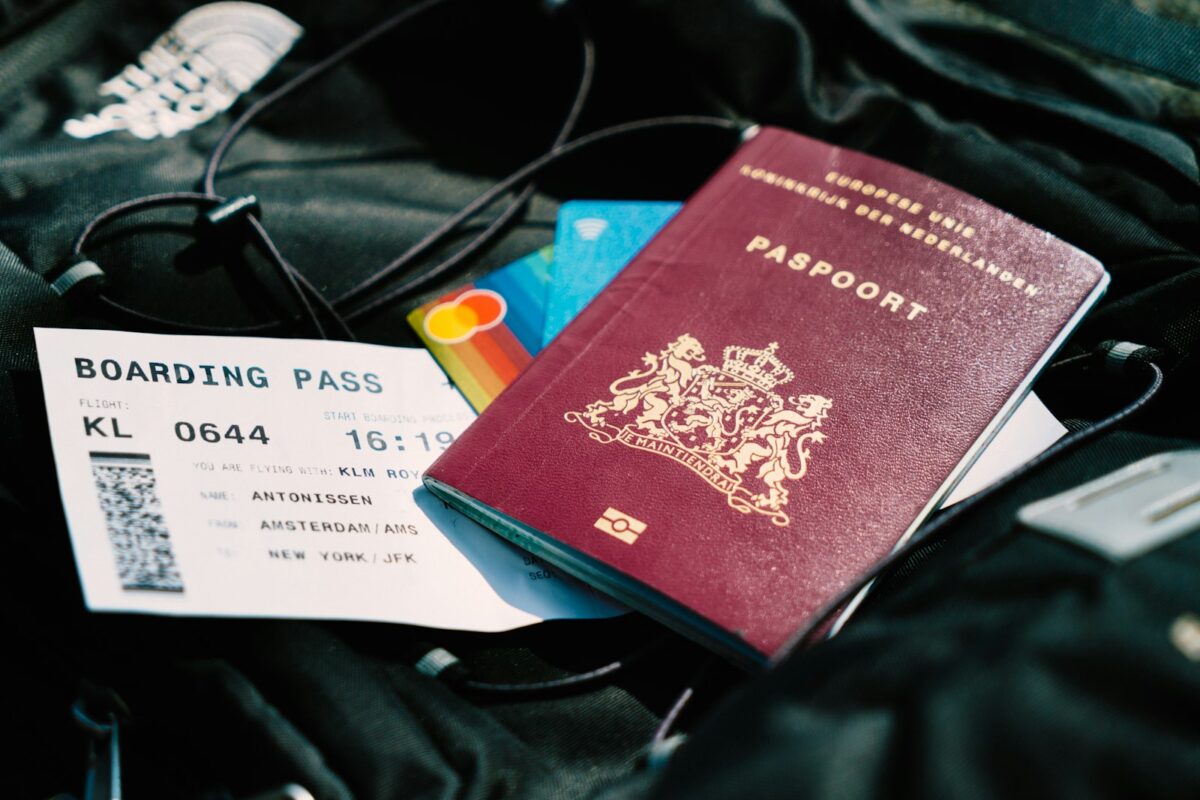

ETIAS Launch in Q4 2026: What African Travellers Need to File for Schengen Entry

The ETIAS launch Q4 2026 is the second half of Europe’s new border architecture, and it lands on the heels of the Entry/Exit System (EES) that went live on 10 April 2026. For African passport-holders, this is a real procedural change rather than a marketing tweak: you will need a pre-travel authorisation before boarding a flight to any Schengen country once ETIAS is live, even for short tourism, business or family-visit trips. Read this if you are visa-exempt for the EU — or planning to be once Kenya, South Africa or Mauritius secure full reciprocity.

On this page

EES today, ETIAS this autumn — the sequence

EES is a database that registers every non-EU short-stay entry and exit, replacing manual passport stamps with biometric capture of facial image and fingerprints. It went live 10 April 2026 and has been rolling out in phases at airports and land borders since. ETIAS is the pre-travel authorisation that visa-exempt nationals will need on top of EES, and the European Council confirmed in March 2025 that it would launch in the last quarter of 2026. The European Commission has now signalled October–December 2026 as the operational window, with a six-month transition period before authorisation becomes mandatory.

Who actually needs ETIAS as an African passport holder

ETIAS applies only to nationals of countries already on the EU’s visa-free list. Today that covers passport-holders of Mauritius and Seychelles directly, plus second-passport holders from many African families — UK, Canadian, Australian or Caribbean CBI passports issued to African nationals all trigger ETIAS rather than a Schengen visa. African passport-holders from countries requiring a short-stay Schengen visa (Nigeria, Ghana, Kenya before reciprocity finalises, South Africa, Senegal, Egypt and most others) continue to apply for the C-type visa and are not in the ETIAS scope yet.

Kwame, a Ghanaian project manager with a Canadian passport, illustrates the most common dual-citizen case. From Q4 2026 he will need an approved ETIAS authorisation linked to his Canadian passport before he can fly Toronto–Frankfurt. His Ghana passport is irrelevant for the Schengen leg as long as he travels on the Canadian document.

Filing flow, fee, validity

The ETIAS application is online, takes roughly 10 minutes and costs €7 for applicants between 18 and 70. Under-18s and over-70s are exempt. Decisions are usually issued within minutes, but the EU allows up to 96 hours for routine review and up to 30 days where additional documentation is requested. Authorisations are valid for three years or until the underlying passport expires, whichever comes first, and cover multiple short stays of up to 90 days in any 180-day rolling window across all 30 Schengen states.

You will be asked for: passport details, current address, education and occupation, current and previous Schengen travel history, criminal record disclosure, and a few security questions about travel to conflict zones. Lying is not the move — the system cross-checks against Interpol, SIS, VIS and other databases before granting authorisation.

Pre-file with Travel Explore

Once Q4 opens we will pre-file ETIAS applications for African travellers and dual-citizens at no charge on Travel Explore Premium. Reserve your slot here → https://linktr.ee/travelexpore

Reasons ETIAS gets denied

The European Commission’s guidance lists six primary refusal grounds: previous Schengen overstay, irregular entry record in EES, unresolved criminal record matching, listed alert in SIS, public health concern, or false statements during the application itself. The most common pitfall for African dual-citizens is failing to disclose a previous visa refusal — even one rejected Schengen visa filed under your African passport must be declared on the ETIAS application linked to your second passport. Suppression equals refusal.

If refused, you receive a reasoned decision and a right of appeal in the country responsible for the assessment. There is no automatic ban — you can re-apply once the refusal ground is cured.

FAQ

Does ETIAS replace a Schengen visa?

No. ETIAS only applies to passport-holders who are already visa-exempt. Nigerian, Ghanaian, Kenyan and most other African passport-holders still apply for the Schengen short-stay visa.

Is it a visa?

No. ETIAS is a pre-travel authorisation, similar to the US ESTA or Canadian eTA. Border officers still make the final entry decision.

Do I need ETIAS for transit?

Yes — if you leave the international transit area in a Schengen airport, ETIAS is required. Airside-only transit is exempt.

Does an EU residence permit replace ETIAS?

Yes. Anyone holding a long-stay D-visa or residence permit from a Schengen state is exempt from ETIAS for travel within Schengen.

Will ETIAS affect EES biometric scans?

No. EES still captures fingerprints and facial image on first entry; ETIAS is a pre-authorisation layered on top.

Quick wins before Q4 2026

  • Confirm whether your passport is in the ETIAS-eligible visa-free list.
  • Renew your passport now if it expires within 24 months — ETIAS validity tracks the passport’s expiry.
  • Pull a clean Schengen travel history from EES self-service once available, to verify no spurious overstay flags.
  • If you hold a second passport (UK, Canadian, Australian, Caribbean CBI), file ETIAS on that document — not your African one.
  • Build a 96-hour buffer between application and flight, especially in October and November when launch traffic peaks.

Travel Explore handles the filing

Get a clean ETIAS file submitted by an expert team. Lock in your slot at https://linktr.ee/travelexpore

Related reads

Share this story

  • Europe just added a 10-minute pre-flight step. Skip it and the airline won’t board you.
  • Visa-free into Schengen? Read this before booking your October trip.
  • €7 and three years of coverage. Here is the ETIAS playbook for African travellers.

Sources: European Commission Migration and Home Affairs ETIAS and EES guidance (April 2026); French Ministry of Europe and Foreign Affairs EES launch advisory; Fragomen EU border briefing, May 2026.

UAE Property Investor Visa AED 400,000 in 2026: How African Buyers Qualify

The UAE Property Investor Visa AED 400,000 route is the cleanest entry to Gulf residency for African buyers in 2026 — and after April’s rule changes it is also the cheapest it has been since 2019. Sole owners now secure a renewable 2-year property investor visa with no minimum value when paired with the Dubai Land Department’s valuation, while joint owners must each hold at least AED 400,000 in equity. For Nigerian, Kenyan, Ghanaian and South African investors who have already been priced out of London and Lisbon, Dubai is offering the most accessible legal residency in the Gulf.

Map of this guide

Three property-visa tiers explained

The UAE now operates three property-linked residency tiers. Tier one is the renewable 2-year property investor visa: sole owners can hold any value of completed Dubai property at DLD valuation, joint owners need AED 400,000 of equity each. Tier two is the 10-year Golden Visa for property investors, which requires AED 2 million invested. Tier three is the Real Estate Talent / SME founder package, which gives priority processing for off-plan and mortgaged buyers under the refreshed Golden Visa investor portal launched in May 2026.

The February 2026 scrapping of the 50% down-payment rule is the single biggest change. Mortgaged and off-plan units now count toward the threshold at full DLD valuation, not just paid-in equity. That alone halves the cash a Lagos or Nairobi investor needs in the first year.

Paperwork the Dubai Land Department wants

You will need the Title Deed in your name, a DLD valuation certificate dated within 90 days, a clear-from-mortgage letter (or the bank’s no-objection letter if you are mortgaged), a passport copy, a passport-sized photo and a UAE health-insurance policy. Source-of-funds documentation has tightened in 2026 — three months of bank statements from your home country plus an audited income trail are the new norm under the UAE’s enhanced AML regime.

Emeka, an Abuja-based oil services trader, illustrates the cleanest path. He bought a 1-bedroom in Dubai Marina for AED 1.1 million using a 50% mortgage in March 2026. Under the old rule his AED 550,000 equity counted only — now the full DLD valuation does. He filed for the 2-year investor visa via the Smart Services portal, received approval in 11 days, and onboarded his family on dependant permits one month later.

Real all-in cost from Lagos or Nairobi

The visa itself is roughly AED 4,000 in government fees plus AED 1,200 for Emirates ID. Add legal due diligence, NOC fees and DLD admin and you are landing closer to AED 18,000 in transactional costs for a single applicant. Dependants are AED 5,000–7,000 each. The bigger swing item is the property purchase: a usable 1-bedroom in Jumeirah Village Circle sits at AED 750k–950k today, while Dubai Marina or Downtown will start at AED 1.4 million.

African buyers typically finance via a UAE mortgage (LTV 50–80% for non-residents, 6.5–8% rates) and use a Dubai-based property management firm to keep the unit yielding. Net rental yield on a JVC 1-bed is currently 6–8% — enough in many cases to cover the visa renewal cycle.

Have Travel Explore vet the deal first

Every week we see African buyers lose deposit money on off-plan projects that never qualify for residency. We pre-vet developers, valuations and visa eligibility before you sign anything. Start the audit at https://linktr.ee/travelexpore

Path to the 10-year Golden Visa

Once your portfolio crosses AED 2 million in DLD-valued Dubai property, you become eligible for the 10-year Golden Visa for investors. The 2026 update lets you reach that threshold across multiple properties — a stack of three JVC units now does the job. The Golden Visa also unlocks sponsorship of parents, household staff and unrestricted business setup in mainland UAE.

For African families thinking in five-year cycles, the play is to start with a 2-year investor visa on one apartment, build rental cash flow, add property two and three over 24 months, then convert to Golden Visa with the AED 2 million milestone.

FAQ

Does an off-plan apartment qualify?

Yes from April 2026 — provided the DLD records you as the title-holder. Earlier rules required completion or 50% paid-in equity.

Can my spouse and children be sponsored?

Yes. Spouse, children under 18 (or unmarried daughters of any age) and parents in some cases can be added as dependants under your investor visa.

Do I have to live in Dubai?

No physical-presence rule applies — but you must not stay outside the UAE for more than 6 consecutive months or the visa lapses. Most African investors travel in every quarter for compliance.

Is rental income taxable?

The UAE itself imposes no personal income tax on rental income. Tax may still apply in your country of residence — check home-country rules separately.

What if the property value falls below AED 400,000 at renewal?

The investor visa is anchored to the original Title Deed and DLD valuation at issuance. Market drops do not automatically cancel the visa unless you sell the property.

Five quick wins for African buyers

  • Buy in DLD-registered freehold areas only — not leasehold pockets.
  • Insist on the developer’s RERA registration number before paying any deposit.
  • Use a UAE-licensed escrow account for all installments — never wire to a developer’s operating account.
  • Keep one year of liquid AED for renewals, insurance and DEWA bills.
  • Build a UAE banking footprint before your first rental contract — Emirates NBD, Mashreq Neo and Wio currently accept African passport holders without local residency.

Buy clean, hold long, renew on autopilot

Travel Explore handles property due diligence, visa filing and Emirates ID renewal under one engagement. Begin at https://linktr.ee/travelexpore

Related reads

Share this story

  • One Dubai apartment. Two-year residency. Zero income tax. Welcome to 2026.
  • AED 400,000. That’s it. The cheapest Gulf residency African buyers will see this decade.
  • The 50% down-payment rule is gone — mortgaged buyers now qualify like everyone else.

Sources: Dubai Land Department property investor portal 2026; UAE Federal Authority for Identity & Citizenship Golden Visa rulebook 2026; Fragomen UAE residency client briefing, May 2026.

UK Earned Settlement 10-Year ILR 2026: What African Skilled Workers Lose

UK earned settlement 10-year ILR 2026 is the single biggest shift in British settlement law for our generation of African Skilled Worker holders. The Home Office has confirmed that the qualifying period for Indefinite Leave to Remain under most points-based system routes — Skilled Worker, Scale-up, High Potential Individual — moves from five years to ten under the new earned settlement framework. If you are a Nigerian software engineer, a Ghanaian care assistant, a Kenyan radiographer or a Zimbabwean accountant currently on a Skilled Worker visa, this article maps the rule, the carve-outs, and the realistic moves that protect your settlement clock.

Inside this guide

The 2026 earned settlement rule, in plain English

The 2025 immigration white paper, now translating into the Statement of Changes published in spring 2026, formally raises the standard qualifying period for Indefinite Leave to Remain to ten years for most points-based routes. The official position is that settlement is no longer automatic at five years of lawful residence — it must be earned through continuous contribution, clean compliance and either time or specific demonstrable national-interest factors that can shave the clock back to five.

The four pillars of “earned” status are: continuous sponsored employment without unauthorised gaps, salary at or above the relevant going rate across each three-month payroll window, B2 English maintained, and no breach of public-funds, criminality or sponsor-licence rules. Hit all four and you stay eligible; miss one and you fall back to the new decade.

Who keeps the 5-year clock and who restarts

The change is forward-looking but reaches further than many African applicants assume. Anyone whose first Skilled Worker permission was granted before the statement’s commencement date generally keeps the five-year route, provided they apply for ILR before any visa break. People granted a new initial Skilled Worker, Scale-up or HPI visa after commencement default to ten years unless they qualify for one of the published acceleration grounds (highly-skilled roles on the Critical Workforce list, dependants of a British national, or those settled-flagged through a global talent endorsement).

Folake, a Lagos-trained nurse, illustrates the trap. She moved to Manchester on a Health and Care Worker visa in March 2023. Her five-year ILR window closes in March 2028 — comfortably inside the legacy framework. But if she switches sponsor and her new permission is issued post-commencement, the Home Office can argue she “re-entered” the route and reset her settlement clock. Continuity matters more than ever.

Real-world math: extra fees, IHS, anxiety

An additional five years of Skilled Worker sponsorship is not just a calendar problem — it is a balance-sheet event. Two more 3-year visa extensions, each carrying the application fee plus Immigration Health Surcharge for the worker and any dependants, push the typical cost of reaching ILR from roughly £14,000 to £26,000 for a family of four. Add in priority service, sponsor licence levy pass-through, and biometric appointments and you are looking at well over £30,000 to cross the line.

That is before the soft costs: a decade of dependency on a single sponsor, restricted ability to switch industries, and rising scrutiny on the three-month payroll compliance window introduced in April 2026.

Map your move with Travel Explore

If you are mid-Skilled-Worker and unsure whether you are on the 5-year or 10-year clock, our consultants run a free 20-minute timeline audit so you can plan extension dates, switches and dependant applications around the new rules. Start here → https://linktr.ee/travelexpore

Three legitimate moves to defend your timeline

First, freeze your existing Skilled Worker permission. Resist the urge to switch sponsors purely for a small salary uplift before commencement; a new permission could pull you onto the 10-year track. Second, accelerate any dependant applications now so spouse and child clocks align with yours. Third, if your role sits on the Critical Workforce or new Temporary Shortage List, capture documentary evidence — pay slips, employer letters, role profile — every twelve months so you can credibly argue an “earned” five-year settlement when policy guidance lands.

African applicants in shortage clinical roles (nursing, radiography, paramedic), STEM PhDs in priority sectors, and Global Talent endorsees from accredited African universities have the strongest factual basis for staying on a 5-year path. Document early, document often.

FAQ

Will my Skilled Worker visa become invalid?

No. Existing leave continues until its current expiry. The ten-year clock affects the new ILR test — not the validity of the current Skilled Worker grant.

Do dependants follow the main applicant’s clock?

Yes. Spouses and children settle on the principal’s qualifying period, so any reset on the main applicant flows through.

Does time on a Student or Graduate route count?

No. Only time on the Skilled Worker / Scale-up / HPI tracks counts toward ILR under the points-based system. Student and Graduate route time still does not.

Can I shorten ten years with extra salary?

The Home Office signals that contribution thresholds (salary, tax, civic activity) may unlock the accelerated 5-year route, but the final scoring grid is expected in late 2026. Plan around ten years and treat any acceleration as upside.

What if I lose my sponsor?

You have 60 days to find new sponsorship. A clean transfer inside that window protects continuity; a gap can reset your clock. Build a backup sponsor list before you need it.

What to walk away with

  • Ten years is the new default ILR window for Skilled Worker holders post-commencement.
  • Continuity of permission is the single biggest factor protecting a 5-year clock.
  • Critical-shortage roles and Global Talent endorsements remain the strongest acceleration cases.
  • Budget for an extra £12,000–£15,000 per family for two additional extensions.
  • Align dependant applications to the principal applicant before any switch.

Plan the next decade with one call

Travel Explore maps your settlement clock, sponsor strategy and family timeline in one place. Book your audit at https://linktr.ee/travelexpore

Related reads

Share this story

  • UK just doubled the ILR clock. African Skilled Workers need this read today.
  • Five years became ten — but only for some. Find out which track you are on.
  • £12,000 of new fees, 60 months of extra waiting. The UK settlement story has changed.

Sources: UK Home Office Statement of Changes 2026, House of Commons Library briefing CBP-10267, gov.uk Skilled Worker guidance updated 20 May 2026.

Turkiye Citizenship by Investment 2026: African Investors Compare Routes Side-by-Side

The Turkiye citizenship by investment 2026 route is no longer the budget option it used to be — the real estate threshold sits at USD 400,000 since June 2022 and Ankara is rumoured to be reviewing it again — but it is still the fastest second-passport route under USD 1 million. For Nigerian, Egyptian, Kenyan, Ghanaian and South African investors weighing it against Caribbean CBI, Portugal’s residency-by-investment successor, or UAE’s Golden Visa, this guide does the side-by-side that the marketing brochures avoid.

The Turkiye CBI rules in plain numbers

Five qualifying investment paths, three minimums. Real estate purchase at USD 400,000 (or equivalent in TRY at the central bank rate), held for at least three years. Bank deposit of USD 500,000 in a Turkish bank, held for three years. Government bond purchase of USD 500,000, held for three years. Fixed capital investment of USD 500,000 in a registered Turkish business. Job creation of at least 50 Turkish citizens. Real estate accounts for over 85% of approvals, so the rest of this article assumes that path.

Processing time runs three to six months from application to citizenship certificate, faster than every European residency programme. Family members included on a single application: spouse, dependent children under 18, and dependent parents over 65 (added in 2024). No physical residence required to maintain citizenship. Dual citizenship is allowed and Turkiye does not notify your home government — relevant for Egyptians and Nigerians where home rules permit dual citizenship subject to disclosure.

What the Turkish passport actually buys you

The Turkish passport ranks 51st on the Henley Passport Index for 2026, giving visa-free or visa-on-arrival access to roughly 121 destinations including Singapore, Hong Kong, Indonesia, Japan (eTA), South Korea (eTA) and most of South America. Crucially, Turkish citizens hold E-2 treaty investor eligibility for the United States — that is the underlying value for many Africans pursuing this route, because no African passport holds E-2 access directly.

The passport does NOT include visa-free Schengen access. Schengen visas remain required, with the standard cost and processing time of any Turkish national. Visa-free UK access is not included either. The passport’s strongest plays are the E-2 path to the US and freer movement across Asia, the Middle East and Latin America — not Europe.

Compared: Turkiye, Caribbean CBI, Portugal, UAE

For an African investor with USD 400k–500k of working capital, the four major options now look like this. Turkiye real estate at USD 400k, citizenship in 4–6 months, family included, holds Turkish citizenship plus E-2 eligibility, asset is recoverable after three years. Caribbean CBI (Dominica, St Lucia, Grenada, Antigua, St Kitts) at USD 200k–250k donation or USD 250k–400k real estate, citizenship in 4–8 months, family included, Schengen and UK visa-free access — but a donation is not recoverable. Portugal residency-by-investment (post-2023 successor of the Golden Visa) at EUR 500k investment fund subscription, residency in 6–9 months, citizenship after five years, EU-wide work and study rights. UAE Golden Visa at AED 2 million property (about USD 545k), 10-year residency, no citizenship, family included.

The cleanest decision tree: need US E-2 access fast and have USD 400k? Turkiye. Need Schengen-free travel and accept a non-recoverable donation? Caribbean. Need a path to EU citizenship and have time? Portugal. Need long-term Gulf residency and tax neutrality? UAE.

Sitting on USD 300k–500k of investable capital and weighing Turkiye against St Kitts or Portugal? Send the budget and timeline through https://linktr.ee/travelexpore and we will model the after-tax cost of each route.

The risks African investors keep underweighting

Three pitfalls. (1) Turkish lira volatility and real estate valuation in TRY. The USD 400k threshold is measured at a central bank fixing — if the lira appreciates between purchase and exit, your USD recovery is lower than expected. Conversely, lira depreciation can move your asset below the threshold mid-hold, triggering compliance issues. Always purchase in USD-denominated contracts where the seller agrees.

(2) Developer markup on CBI-eligible properties. Turkish developers often charge 25–40% above market for CBI-tagged units. A USD 400k Istanbul flat may be worth USD 280k–300k at independent valuation. Get an independent appraisal from a non-developer agent. (3) Source-of-funds documentation for African investors. The Turkish authorities accept bank statements, business income, share sale proceeds and inheritance — but the documentation must be apostilled and translated by a sworn Turkish translator. A Nigerian investor who tries to file with un-apostilled CBN statements gets a delay of three months minimum.

Frequently asked questions

How long does Turkiye citizenship by investment 2026 take from start to finish?

Three to six months from application submission to citizenship certificate. The fastest cases close in 90 days; complex source-of-funds files can run six months.

Can I sell the property after I receive Turkish citizenship?

Not for three years. The investment must be held for a minimum three-year lock-up period, monitored by the Land Registry. Selling earlier voids the citizenship.

Does Turkiye allow dual citizenship for Africans?

Yes. Turkiye allows dual citizenship without requiring you to renounce your African nationality. Confirm separately with your home country (Nigeria, Egypt and South Africa allow dual; Ethiopia and Tanzania restrict it).

Does the Turkish passport give visa-free Schengen access?

No. Schengen and UK visa-free access are not included. The passport’s strongest features are E-2 US investor eligibility and visa-free Asia/Latin America travel.

What is the realistic all-in cost for an African investor with a family of four?

Around USD 480,000–520,000: the USD 400k property plus government and legal fees of USD 30k–50k, plus an apostille and translation budget of USD 5k–10k, plus a buffer for due diligence.

Get the practical next step

Tap https://linktr.ee/travelexpore to land in our DMs and we will send you the document templates referenced in this article.

The summary

  • USD 400k Turkish property, three-year hold, four-to-six-month processing — the fastest second-passport route under USD 1m.
  • Use Turkiye if E-2 US access matters; use Caribbean if visa-free Europe and UK matter more.
  • Insist on independent property valuation and apostilled source-of-funds documents — these are the two top refusal causes.

Share this story

  1. Turkiye CBI vs Caribbean vs Portugal vs UAE — here is the side-by-side African investors actually need.
  2. USD 400k. Four months. A passport that opens E-2 to the US. Turkiye is still the fastest second-passport play under a million.
  3. Three pitfalls that quietly delay African Turkiye CBI applications by 90 days. Avoid them.

Have a question about your case? Tap our team via https://linktr.ee/travelexpore and we’ll come back to you with a written next step.