

Category Archives: Visa Consultancy

UK Global Talent Visa 2026: Endorsement Routes, Settlement Path and the African Talent Playbook

The UK Global Talent Visa 2026 is the most flexible, settlement-friendly UK route open to African researchers, tech founders, designers and academics — and yet it remains the most under-used. There is no salary floor, no employer sponsor, no language test for most applicants, and the path to indefinite leave can be as short as three years. This African talent playbook walks you through the endorsement routes, fees, document checklist and the realistic timeline a Lagos-based AI engineer, a Nairobi epidemiologist or a Dakar-based filmmaker should plan around in 2026.

What is the UK Global Talent Visa 2026?

The UK Global Talent Visa 2026 is a two-stage Home Office route. Stage one is endorsement — an industry body confirms you are a leader (Exceptional Talent) or a rising star (Exceptional Promise) in your field. Stage two is the actual visa, which you apply for at gov.uk/global-talent after you have your endorsement letter. The route has six endorsing arms covering digital technology, science, engineering, humanities, arts and architecture, and most recently fashion design.

For 2026 the headline change is the formal handover of the digital-technology endorsement arm from the now-closed Tech Nation to a new Home Office-appointed body, with most evaluation handled jointly by industry experts and the UK Research and Innovation network. The fee structure also moved — the endorsement fee plus visa fee combined now sits around £716, and the Immigration Health Surcharge stays at £1,035 per year. There is no minimum salary and no English language test at the endorsement stage for the vast majority of applicants.

Who is eligible — the African talent shortlist

The eligibility net is wider than most African applicants assume. A Ghanaian product designer with a global Behance following, a South African machine-learning researcher with NeurIPS publications, a Kenyan climate-policy academic, a Cameroonian creative director, an Egyptian architect, an Ivorian fashion designer and a Senegalese fintech founder can all qualify under different arms. Exceptional Promise (the rising-talent track) deliberately targets professionals five-or-fewer years into their global recognition, and that is where most African applicants land.

The route is also one of the few UK products where dependant family members — spouse and children under 18 — can apply alongside you, work or study without restriction, and count towards the same settlement clock. Exceptional Talent endorsements lead to indefinite leave to remain (ILR) after three years; Exceptional Promise leads to ILR after five.

Key endorsement bodies, fees and timelines

Each of the six endorsement arms has its own document checklist. For digital technology, you submit a CV, three reference letters from senior tech leaders, and evidence such as patents, product launches, GitHub repositories, conference talks or revenue figures. For science and engineering, the Royal Society, the British Academy and the Royal Academy of Engineering each evaluate against publication, citation and grant-funding evidence. For arts and culture, Arts Council England partners specialist sub-panels for film, fashion, architecture and music. The clearest internal walkthrough we have published is our UK Innovator Founder Visa 2026 guide, which explains the parallel founder route and how it differs from Global Talent.

  • Endorsement application fee: £561 — refundable in part if rejected at the document-check stage.
  • Visa application fee (after endorsement): £192.
  • Immigration Health Surcharge (IHS): £1,035 per year for each visa year requested up front.
  • Dependants: each spouse and child pays the same visa fee plus IHS.
  • Processing target: 8 weeks for endorsement, 3 weeks for the post-endorsement visa decision — in practice 12-16 weeks end-to-end for African applicants because of biometrics scheduling at VFS centres in Lagos, Accra, Nairobi, Johannesburg, Cairo and Dakar.

Need help with your UK Global Talent Visa 2026 application?

Travel Expore helps African applicants — from Lagos to Nairobi to Johannesburg to Dakar — package their endorsement evidence, secure reference letters from senior global figures and time their visa filings. Start your free eligibility check at https://linktr.ee/travelexpore.

Why the UK Global Talent Visa 2026 matters for African applicants

For African knowledge workers, the UK Global Talent Visa 2026 is structurally more generous than the Skilled Worker route. There is no Certificate of Sponsorship, no employer locked-in dependency, no salary floor that bars junior researchers, and no requirement to leave the UK if you change jobs. A Lagos AI engineer endorsed under digital technology can start a company in Manchester, take a research fellowship at Imperial in year two and consult for a Berlin scale-up in year three — all on the same visa.

The route is also one of the most powerful for academic-track applicants. The UK Research and Innovation fast-track lets a Kenyan climate scientist, a Tanzanian public-health researcher or a Cameroonian materials engineer apply for endorsement using an existing UKRI grant or fellowship as auto-evidence — cutting the document-prep workload by months. See the UKRI fellowship list for current open calls. For more on the parallel UK academic route, our UK Skilled Worker 2026 round-up compares fees and switching rules.

Frequently asked questions about the UK Global Talent Visa 2026

Can I apply for the UK Global Talent Visa 2026 from Nigeria, Ghana or Kenya without a UK job offer?

Yes. The UK Global Talent Visa 2026 does not require a job offer or sponsor. You apply directly with an endorsement letter, biometric appointment at the VFS centre in your home country and the document set described above.

How long does the UK Global Talent Visa 2026 last and when can I get permanent residence?

You can request up to five years on a single application. Exceptional Talent endorsements unlock ILR after three years of UK residence; Exceptional Promise unlocks ILR after five.

Do I need an English language test for the UK Global Talent Visa 2026?

No language test is required at the endorsement or visa stage. You will, however, need to pass the standard English requirement (B1 CEFR) when you apply for ILR after three or five years.

Can I bring my spouse and children on the UK Global Talent Visa 2026?

Yes. Each dependant pays the visa fee plus IHS and gets the same right to work, study and switch jobs without restriction.

Which endorsement body should an African tech founder use?

For digital technology, the Home Office has appointed a successor body to the closed Tech Nation. Founders with traction (revenue, funding, product launches) use the founder evidence track; engineers and product managers without a company use the technical evidence track.

Is the UK Global Talent Visa 2026 fee refundable if my endorsement is rejected?

The endorsement fee (£561) is partly refundable at the document-check stage and partly retained if the panel reviews your full case. The visa fee (£192) is only paid after a successful endorsement, so it is at no risk if the endorsement is refused.

Key takeaways

  • The UK Global Talent Visa 2026 has six endorsement arms covering tech, science, engineering, humanities, arts and architecture — African applicants qualify under more of them than most expect.
  • No salary floor, no employer sponsor, no language test at the endorsement or visa stage.
  • Total fees including endorsement, visa and IHS land near £6,000-£7,000 for a five-year application.
  • Settlement (ILR) lands at three years for Exceptional Talent and five years for Exceptional Promise.
  • Plan a 12-16 week timeline end-to-end and start your reference letters six months before you submit the UK Global Talent Visa 2026 endorsement.

Get expert help with your UK Global Talent Visa 2026 application

Travel Explore helps African applicants — from Lagos, Accra, Nairobi, Cape Town, Yaoundé, Dakar and beyond — package endorsement-grade evidence and time their UK Global Talent Visa filings. Talk to a consultant at https://linktr.ee/travelexpore.

Related reads on Travel Explore

Share this story

  • The UK visa Africans keep ignoring — Global Talent doesn’t need a sponsor or a salary floor
  • From Lagos AI engineer to London settlement in three years — how Global Talent works in 2026
  • Tech Nation is gone, but the UK’s most flexible visa is still wide open to African researchers
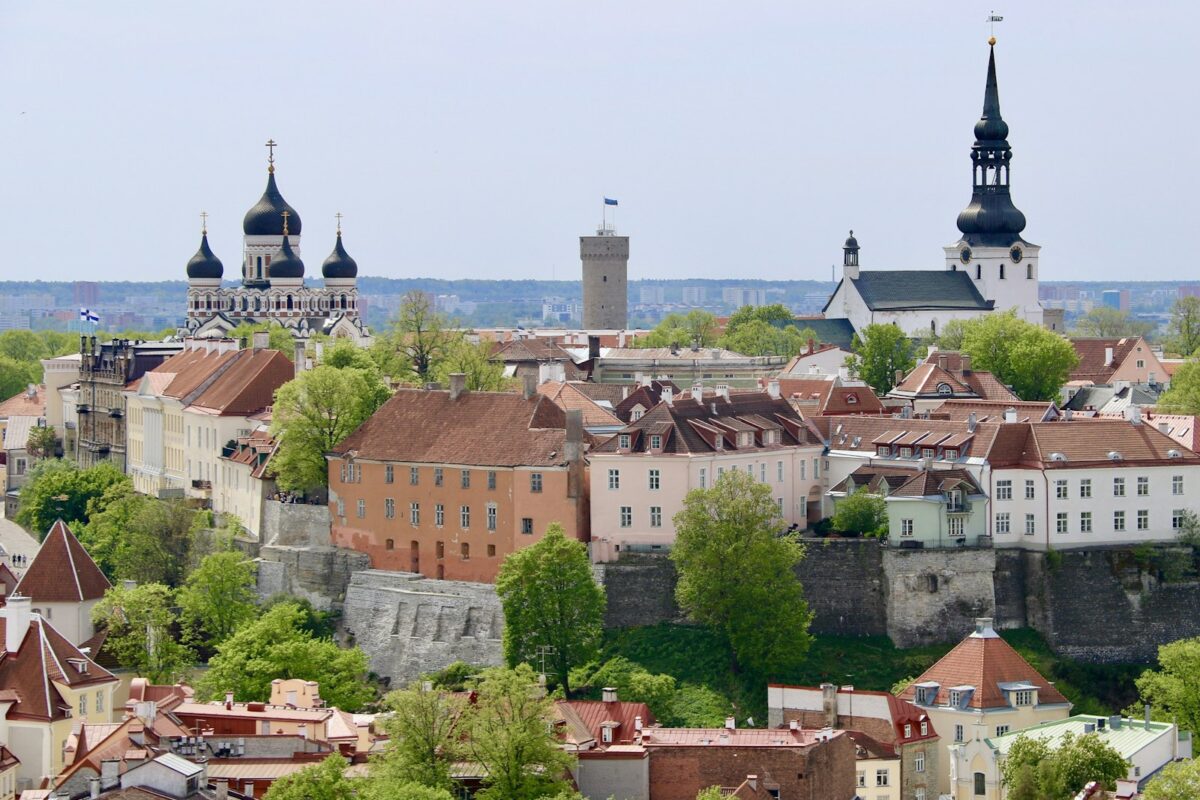
Estonia Digital Nomad Visa 2026: 12-Month Permit and e-Residency Path for African Tech Talent

The Estonia Digital Nomad Visa 2026 is one of Europe’s cleanest packages for African tech talent: a 12-month residence permit, a remote-work-friendly tax structure, an e-Residency layer for company formation, and full Schengen mobility. Tallinn already has a small but vibrant African tech community working for US fintechs, UK SaaS firms and remote agencies. The 2026 update keeps the €4,500 monthly gross income floor while clarifying the tax residency rules.

What is the Estonia Digital Nomad Visa 2026?

Estonia launched its Digital Nomad Visa in 2020 as part of a wider push to attract location-independent professionals to its e-Estonia ecosystem. The visa is officially a Type D long-stay national visa for remote workers employed by, contracted to, or running a business outside Estonia. Per the Estonian Police and Border Guard Board page, the visa is issued for up to 365 days and is non-renewable in-country — though holders can transition to other Estonian permits like the Startup Visa or Employee Card if they secure local work.

The 2026 update raises the gross monthly income floor to €4,500 (from €3,504 set in 2024) and aligns it with Estonia’s rising minimum wage. Application fees are €100 at an Estonian embassy or honorary consulate. Decisions typically land in 30 days for complete files.

Who is affected?

The Estonia DNV fits African tech talent and remote-first creatives: a Nigerian product designer contracted to a New York agency, a Kenyan software engineer working full-time for a London SaaS company, a Senegalese marketing consultant servicing French and Belgian clients, an Egyptian copywriter building a remote agency, a Ghanaian frontend developer at a Berlin remote-first startup, and a South African video editor with international clients. The unifying thread is verifiable income above the floor from non-Estonian sources.

African applicants who want to combine the DNV with company formation often pair it with e-Residency — Estonia’s digital identity programme that lets non-residents register Estonian companies and run them online. The DNV is the residence layer; e-Residency is the business layer.

Key requirements & income floor

To qualify for the Estonia Digital Nomad Visa 2026, African applicants need: proof of remote work for an entity registered outside Estonia (employer letter, freelance contracts, or own non-Estonian business documents), gross monthly income of at least €4,500 for the past 6 months, valid travel medical insurance covering Schengen, a clean criminal record extract, and a minimum 1-year passport validity beyond the visa expiry. For parallel context on European digital-nomad routes, see our Spain Digital Nomad Visa 2026 breakdown.

  • Income — €4,500 monthly gross, sustained over the past 6 months.
  • Insurance — Schengen-area travel medical insurance, €30,000 minimum coverage.
  • Validity — Up to 365 days; non-renewable in Estonia (must exit and reapply or switch to another permit).
  • Tax residency — Stays beyond 183 days trigger Estonian tax residency at 22% flat (2025 reform).

Need help with your Estonia DNV application?

Travel Expore helps African remote workers navigate the Estonia Digital Nomad Visa 2026 end-to-end — from income proofing to e-Residency stacking — with consultants serving applicants from Lagos to Nairobi to Cape Town. Start your free eligibility check at https://linktr.ee/travelexpore.

Why it matters for African tech talent

Estonia matters because it pairs Schengen mobility with one of the EU’s most digital-friendly tax structures. African remote workers earning USD or GBP can keep their international clients while running an Estonian OU (private limited company) for invoicing and SaaS operations — the corporate tax model defers tax until profits are distributed, meaning reinvested earnings face 0%. Combined with the DNV’s 12-month residence, this is one of the cleanest legal setups for an African founder operating between Lagos, London and a Tallinn-registered entity.

Tallinn’s remote-work infrastructure (coworking spaces, co-living houses, the Lift99 hub) is mature enough that arrival is friction-free. Per Invest Estonia, over 8,000 African e-Residents now operate Estonian companies, with Nigeria, Kenya, South Africa and Egypt leading.

Frequently asked questions about Estonia Digital Nomad Visa 2026

Can I work for an Estonian company on the DNV?

No. The Digital Nomad Visa requires income from non-Estonian sources. To work for an Estonian employer, switch to the Employee Card or Startup Visa.

How long can I stay on the Estonia Digital Nomad Visa 2026?

Up to 365 days in Estonia. The visa is non-renewable in-country — you must exit Estonia and reapply, or switch to a different permit (Startup Visa, Employee Card, etc.) before expiry.

Is e-Residency the same as the Estonia DNV?

No. e-Residency is a digital identity for non-residents to run Estonian companies online — it grants no right to live in Estonia. The DNV is the residence permit. Many African founders combine both: e-Residency for the company, DNV for the residence.

What income proof do I need for the Estonia Digital Nomad Visa 2026?

Bank statements showing €4,500+ monthly gross for the last 6 months, an employer letter or signed contracts confirming the remote relationship, and tax filings or invoices from your work over the past year.

Can I bring my family on the Estonia DNV?

Spouses and dependent children can apply for accompanying long-stay visas. They must show their own travel insurance and proof of resources. Spouses cannot work locally on the accompanying visa.

How does Estonian tax work on the DNV?

If you stay more than 183 days in Estonia in a 12-month period, you become an Estonian tax resident and owe income tax (22% flat from 2025). Many DNV holders structure their stays to avoid tax residency.

Key takeaways

  • The Estonia Digital Nomad Visa 2026 gives African remote workers a 12-month Type D long-stay visa.
  • Income floor is €4,500 gross monthly from non-Estonian sources, sustained over 6 months.
  • The visa is non-renewable in-country — switch to Startup Visa or Employee Card if you want to extend.
  • Pair with e-Residency to register and run an Estonian OU as the invoicing entity.
  • Tax residency triggers at 183 days; flat 22% income tax from 2025.

Get expert help with your Estonia Digital Nomad Visa 2026 application

Travel Explore helps African applicants — from Lagos, Nairobi, Accra, Cape Town, Yaoundé, Dakar and beyond — navigate this process end-to-end. Talk to a consultant at https://linktr.ee/travelexpore.

Related reads on Travel Explore

Share this story

  • African remote workers, Estonia is the cleanest EU setup you have not used yet
  • e-Residency + DNV: the African founder stack for an Estonian-registered global business
  • EUR 4,500, 12 months, Schengen access — why Tallinn is the new African remote-work hub

Commonwealth Scholarships 2026/2027: Fully-Funded UK Master’s and PhDs for Africans — The October 14 Deadline Playbook

The Commonwealth Scholarships 2026 round — covering the 2026/2027 academic year — is open and the headline deadline is 16:00 BST on Tuesday 14 October 2026. The Commonwealth Scholarship Commission funds Master’s and PhD study at UK universities for citizens of eligible Commonwealth countries, with a stipend of £1,378 per month, full tuition, return airfare and family allowances. For Nigerian, Ghanaian, Kenyan, Tanzanian, Cameroonian, Ugandan, Rwandan and South African graduates, this is one of the most prestigious and best-funded scholarships still available.

What is the Commonwealth Scholarships 2026 round?

The Commonwealth Scholarships 2026 round opened in early September 2025 and accepts applications until 14 October 2026 (UK time). The Commission funds three streams: Master’s scholarships (one year), PhD scholarships (three years), and Split-Site PhD scholarships (one year of UK study within a doctorate registered at a Commonwealth-country university). Applications must go through your country’s national nominating agency — the Commission does not accept direct applications.

The funding package was reconfirmed in the official Commonwealth Scholarship Commission scholarship page. It covers university tuition (paid directly to the institution), a monthly living allowance of £1,378 (£1,696 for those studying in Greater London), economy-class return airfare to the UK, a thesis grant, family allowances for spouses and children where applicable, and a study/travel grant. Total estimated value per scholar runs to £75,000-£120,000 depending on programme length.

Who is eligible for the Commonwealth Scholarships 2026?

You qualify if you are a citizen of (or have refugee status in) an eligible Commonwealth developing country, hold a degree of upper-second-class (2:1) honours minimum, and would be unable to fund the UK study without the scholarship. You cannot already be registered for a UK PhD or MPhil. Most African Commonwealth countries are eligible, including Nigeria, Ghana, Kenya, Tanzania, Uganda, Rwanda, Cameroon, Sierra Leone, Sri Lanka and Zambia.

Concrete personas who succeed: a Nigerian first-class graduate in computer science applying for a Master’s in AI at Edinburgh; a Ghanaian medical doctor applying for an MPH in Public Health at LSHTM; a Kenyan environmental scientist applying for a PhD in climate adaptation at Cambridge; a Cameroonian lawyer applying for an LLM in international human-rights law at SOAS. Strong personal statements that link the proposed study to a clear development-impact plan in your home country are the differentiator.

Key requirements for the Commonwealth Scholarships 2026 application

The biggest mistake African applicants make is leaving the application to September. Start in May.

  • Citizenship: of an eligible Commonwealth developing country (most of Africa, South Asia, Caribbean, Pacific).
  • Academic record: minimum 2:1 honours bachelor’s, ideally with a relevant Master’s for PhD applicants.
  • Development impact statement: clear narrative on how your study returns to benefit your home country.
  • Two referees: one academic, one professional, with specific knowledge of your work.
  • UK university place: most scholarships require a confirmed offer of admission (conditional or unconditional) at a UK university, although some streams accept applications without offers.
  • National nominating agency: in Nigeria the Federal Scholarship Board; in Ghana the Scholarship Secretariat; in Kenya the Higher Education Loans Board. Apply via your country’s agency by their internal deadline (typically 4-6 weeks before 14 October 2026).

Build a winning Commonwealth Scholarships application

Travel Expore reviews your CV against winning Commonwealth profiles, edits your personal statement and development-impact plan, and helps you target UK universities most likely to admit you with funding. Get free guidance at https://linktr.ee/travelexpore.

Why Commonwealth Scholarships matter for Nigerians and Africans

For African graduates, Commonwealth Scholarships sit alongside Chevening as the top fully-funded UK scholarship route. Where Chevening focuses on early-career professionals returning to leadership roles, Commonwealth weights more heavily on academic excellence and development impact in low- and middle-income countries. That favours scientists, doctors, engineers, climate researchers and public-policy academics.

Combine the Commonwealth route with a Plan B. Apply to DAAD in Germany, the Erasmus Mundus joint Master’s programmes, and the Mastercard Foundation Scholars Program in parallel — with similar essays adapted to each. The Commission’s Study UK British Council page has additional country-by-country information for African applicants.

Frequently asked questions about Commonwealth Scholarships 2026

What is the deadline for Commonwealth Scholarships 2026?

The Commonwealth Scholarship Commission deadline is 16:00 BST on Tuesday 14 October 2026. National nominating agencies typically close their internal deadlines 4-6 weeks earlier, so confirm your country’s deadline immediately.

What does Commonwealth Scholarships 2026 cover?

Full tuition fees paid to the UK university, a monthly stipend of £1,378 (£1,696 in Greater London), return economy-class airfare, a thesis grant, family allowance where applicable, and study/travel allowances. Total package value is approximately £75,000-£120,000 depending on programme length.

Do I need a UK university offer before applying?

For most streams, yes — you need a confirmed offer of admission (conditional or unconditional) at a UK university by the application deadline. Some streams allow applications without an offer if you can show a clear academic plan and target university shortlist.

Can I apply directly to the Commonwealth Scholarship Commission?

No. All applications must go through your country’s designated national nominating agency or one of the approved non-governmental nominating bodies. The Commission does not accept direct applications.

How competitive are Commonwealth Scholarships?

Highly competitive. The Commission funds approximately 700-900 scholars per year globally, drawn from over 60,000 applications. Acceptance rates per country vary from 1% to 5%; strong African candidates typically need at least a first-class or strong 2:1 with substantial development impact narrative.

Can I bring my family on a Commonwealth Scholarship?

Yes. Spouses can apply for UK dependant visas and Commonwealth Scholarships pay a partial family allowance to married scholars whose families join them in the UK. Children receive small allowances; school fees are not covered by the Commission.

Key takeaways

  • Commonwealth Scholarships 2026 deadline: 16:00 BST on Tuesday 14 October 2026.
  • Funding covers tuition, £1,378 monthly stipend (£1,696 in London), return airfare, thesis and family allowances.
  • Eligible African applicants come from Nigeria, Ghana, Kenya, Tanzania, Uganda, Rwanda, Cameroon and most Commonwealth Sub-Saharan countries.
  • Apply through your national nominating agency — not direct to the Commission.
  • Pair Commonwealth with Chevening, DAAD, Erasmus Mundus and Mastercard Foundation for stronger odds.

Get expert help with your Commonwealth Scholarships application

Travel Expore reviews your CV, sharpens your personal statement and development-impact plan, and connects you with UK universities most likely to fund African scholars. Talk to a consultant at https://linktr.ee/travelexpore.

Related reads on Travel Expore

Share this story

  • The October 14 deadline that could send a Nigerian, Ghanaian or Kenyan to a UK PhD on full scholarship
  • Commonwealth vs Chevening: which UK scholarship should African graduates target in 2026?
  • £1,378/month + tuition + flights: the Commonwealth Scholarships 2026 deal Africans should chase this summer

Greece Golden Visa 2026: €800,000, €400,000 and €250,000 Tiers — Where Africans Should Buy

The Greece Golden Visa 2026 has rewritten Europe’s residence-by-investment leaderboard. Athens has the lowest entry-level threshold of any EU Schengen country at €250,000 (commercial-to-residential conversions only), €400,000 for regional residential, and €800,000 for Attica, Thessaloniki and major islands. For Nigerian, Egyptian and South African investors planning a Plan B residence card with full Schengen mobility, the deal is open — but the rules tightened in 2024-2025 and continue to evolve.

Travel Buddy logo
Passport of: Travel to:

What changed in the Greece Golden Visa 2026?

Three big shifts define the Greece Golden Visa 2026 framework. First, the three-zone investment system: Zone A (Athens, Thessaloniki, Mykonos, Santorini and other islands above 3,100 inhabitants) requires €800,000; Zone B (regional Greece) requires €400,000; Zone C is open Greece-wide for commercial-to-residential conversions at €250,000. Second, properties must be at least 120 sqm and a single property — you can no longer split the threshold across two smaller flats. Third, short-term rentals (Airbnb, Booking.com) are banned for Golden Visa properties, with violations triggering a €50,000 fine and possible permit cancellation.

According to the Get Golden Visa April 2026 guide, the program continues to attract investors from China, Turkey, Russia, the US and increasingly Egypt and Nigeria. Greek Migration Ministry numbers show several Sub-Saharan African nationalities now among the top growing applicant pools. Henley & Partners’ Greece breakdown remains the standard reference for due diligence and tax planning.

Who is the right candidate for the Greece Golden Visa 2026?

The Greece Golden Visa is designed for non-EU investors looking for a residence card with low physical-presence requirements (no obligation to actually live in Greece) plus full Schengen access. African candidates who fit best include high-net-worth Nigerian families seeking a Plan B; South African investors diversifying out of rand exposure; Egyptian entrepreneurs looking for EU base of operations; Kenyan and Ghanaian professionals approaching retirement; and Senior African executives whose corporate cards are already EU-stamped.

This is not the right route if you actively need to work in Greece (the visa allows residence but not employment in most cases), if you want fast EU citizenship (Greek naturalisation requires seven years of physical residence), or if you cannot afford the long-term carrying cost of a luxury Greek property. For working professionals, look at Portugal’s D8 or Spain’s Digital Nomad Visa instead.

Key requirements for the Greece Golden Visa 2026

Greece’s investment paperwork is famously efficient compared to Spain or Portugal — if your money is clean and your lawyer is good, the application takes 60-90 days end-to-end.

  • Investment minimum: €800,000 (Zone A: Attica, Thessaloniki, large islands), €400,000 (Zone B: regional Greece), or €250,000 (commercial-to-residential conversion, Greece-wide).
  • Property size: at least 120 sqm; one single property required — no splitting across multiple flats.
  • Source of funds: bank statements, business income proof, asset sale documents — everything must be transparent and tax-compliant.
  • Application fee: €2,000 government fee plus legal, notary and tax (transfer tax 3.09%).
  • Family inclusion: spouse, children under 21 (extendable to 24 if studying), and parents/parents-in-law of both main applicant and spouse.

Map your €250k, €400k or €800k investment

Travel Expore connects African investors with vetted Greek law firms, banks and developers, runs source-of-funds checks, and structures the cleanest path to Golden Visa approval. Start your free consultation at https://linktr.ee/travelexpore.

Why the Greece Golden Visa 2026 matters for Africans

Greece is the cheapest EU residence-by-investment route still active. Portugal’s Golden Visa moved away from real estate, Ireland closed its IIP, and Spain ended its property-investor route in April 2025. That leaves Greece, Malta, Cyprus, Italy and Hungary — and Greece is the only one offering meaningful sub-€500k entry. For Nigerian families parking wealth out of naira exposure, or Egyptian SMEs looking for an EU-domiciled holding company, Greece is the practical landing pad.

The trade-offs to budget for: short-term rental ban (no Airbnb income), 24% Greek VAT on new builds, transfer taxes, and ongoing property tax (ENFIA). Build a 5-10% return-on-investment thesis only if you have a long-term lease tenant lined up; otherwise, treat the property as a residence card with optionality, not a yield play. The Global Citizen Solutions Greece guide walks through tax planning in detail.

Frequently asked questions about the Greece Golden Visa 2026

What is the minimum investment for a Greece Golden Visa in 2026?

It depends on the zone. Zone A (Athens, Thessaloniki, Mykonos, Santorini and large islands) requires €800,000. Zone B (regional Greece) requires €400,000. Zone C allows €250,000 for commercial-to-residential conversions Greece-wide. All properties must be at least 120 sqm.

Can I rent out my Greece Golden Visa property?

You can sign long-term residential leases, but short-term rentals (Airbnb, Booking.com, etc.) are banned for Golden Visa properties. Violations trigger a €50,000 administrative fine and possible permit cancellation.

Do I have to live in Greece on the Golden Visa?

No. Greece imposes no minimum stay requirement to maintain the residence permit. You can spend most of the year in Lagos, Nairobi or Cairo and still keep the permit active.

Does the Greece Golden Visa lead to citizenship?

Yes, but slowly. Greek naturalisation requires seven years of physical residence in Greece — not just permit ownership. Most Golden Visa holders use the residence card for Schengen mobility rather than for fast-track citizenship.

Can I include my parents on the Greece Golden Visa?

Yes. The application allows the main applicant’s spouse, children under 21 (extendable to 24 if studying), and the parents/parents-in-law of both main applicant and spouse on a single investment.

How long does Greece Golden Visa processing take?

60-90 days end-to-end if source-of-funds documentation is clean and the property purchase completes promptly. Allow 4-6 months including notary, bank account opening and biometrics.

Key takeaways

  • The Greece Golden Visa 2026 has three tiers: €800k Zone A, €400k Zone B, €250k commercial conversion.
  • Properties must be at least 120 sqm and a single property — no splitting across multiple flats.
  • Short-term rentals (Airbnb) are banned; long-term residential leases are allowed.
  • No minimum-stay requirement, but Greek citizenship still needs seven years of physical residence.
  • Greece is currently the cheapest EU residence-by-investment route still active.

Get expert help with your Greece Golden Visa application

Travel Expore connects African investors with reputable Greek law firms, banks and developers, structures your source-of-funds file, and runs the application end-to-end. Talk to a consultant at https://linktr.ee/travelexpore.

Related reads on Travel Expore

Share this story

  • The cheapest EU residence-by-investment route in 2026 — and where Africans should buy
  • Greece Golden Visa decoded: how Nigerian and Egyptian investors can land EU residence in 60 days
  • Athens at €800k vs regional Greece at €400k — the African Golden Visa playbook

Austria Red-White-Red Card 2026: €3,465 Salary, 64 Shortage Occupations and the 8-Week Digital Route for Africans

The Austria Red-White-Red Card 2026 is one of central Europe’s most under-used routes for skilled African workers. Vienna’s 2026 reforms raised the “Other Key Workers” salary to €3,465 per month (up from €3,225), expanded the shortage list to 64 nationwide and 66 regional occupations, and rolled out a digital portal that targets 8-week processing times. AI engineers, cybersecurity analysts, registered nurses and skilled construction trades from Africa are now squarely in scope.

What changed in the Austria Red-White-Red Card 2026 rules?

Three updates define the Austria Red-White-Red Card 2026 reset. First, salary thresholds rose: €3,465/month for “Other Key Workers”, €8,316/month for super-key employees and posted-worker exemption candidates, and the EU Blue Card (Highly Qualified Workers) bar at 1.5x the average Austrian salary. Second, the shortage occupation list grew to 64 nationwide and 66 regional roles, with new entries for AI specialists, cybersecurity analysts and digital health engineers. Third, points are now awarded once every six months instead of twice, slightly slowing point accumulation.

The biggest practical change is the digital application portal, which Austria launched in early 2026. Applications and supporting documents go through one central system, and the AMS (Austrian Public Employment Service) labour market test integrates directly. Per workinaustria.com, the target processing window is 8 weeks — faster than Germany’s Blue Card and competitive with Ireland.

Who is eligible for the Austria Red-White-Red Card 2026?

The RWR Card is structured as a points-based system across six applicant categories. African applicants typically use one of three routes: Highly Qualified Workers (university graduates with strong work experience — need 70/100 points); Skilled Workers in Shortage Occupations (vocational or higher qualifications matching the 64+66 shortage list — need 55/90 points); or Other Key Workers (any occupation with a job offer above €3,465/month — need 55/90 points).

Concrete personas: a Nigerian software developer with 3 years of experience and an English C1 (Highly Qualified, 70 points); a Ghanaian registered nurse certified by Pflegegesetz (Skilled Worker in Shortage Occupation, 55 points); a Cameroonian welder hired by an Austrian construction firm at €3,465/month (Other Key Worker, 55 points). The shortage list now favours AI, cybersecurity, digital health, mechatronics, electrical engineering, nursing and skilled trades — sectors where Africans frequently have applicable training.

Key requirements for the Austria Red-White-Red Card 2026

Austria’s system rewards detailed paperwork. Build your file before applying, not during.

  • Salary: €3,465/month minimum for Other Key Workers; higher floors for Highly Qualified and EU Blue Card. Salary must match Austrian collective agreements.
  • Points: 70/100 for Highly Qualified, 55/90 for Skilled Workers in Shortage Occupations and Other Key Workers. Points come from qualifications, work experience, language skills, and age.
  • Language: German A1 minimum scores points; A2 or B1 unlocks more. English C1 also adds points for Highly Qualified.
  • Job offer: from an Austrian employer, on a recognised contract, validated by the AMS labour market test.
  • Application route: digital portal launched 2026 — applications, documents and AMS check go through one system, target 8 weeks.

Calculate your RWR Card points

Travel Expore runs a points calculator on your CV, finds Austrian employers in your shortage occupation, and submits your digital RWR Card file. Start your free check at https://linktr.ee/travelexpore.

Why the Austria RWR Card 2026 matters for Africans

Vienna’s tech ecosystem is small but premium-paying, and Austria sits at the centre of central Europe with strong rail links into Germany, Switzerland, Italy and the Czech Republic. For African applicants who narrowly miss the points or salary cuts at Germany’s EU Blue Card, Austria is often the next-best fit. The 8-week digital processing also undercuts Germany’s 12-16 week timeline, which can matter for tech offers with hard start dates.

The RWR Card converts to permanent residence after five years of legal residence, and Austria offers full intra-EU labour mobility. Don’t under-estimate German — while you can land an RWR Card with A1 German plus C1 English (Highly Qualified track), career growth in Vienna outside multinational tech firms strongly favours B1 German. The migration.gv.at portal has the full official guidance and shortage-occupation list updated annually.

Frequently asked questions about the Austria Red-White-Red Card 2026

What is the minimum salary for the Austria Red-White-Red Card 2026?

For Other Key Workers, the minimum gross salary is €3,465 per month in 2026 (up from €3,225 in 2025). Super-key employees benefiting from posting exemptions must earn €8,316/month. Highly Qualified Workers and EU Blue Card holders have higher salary floors.

How many points do I need on the RWR Card system?

70/100 for Highly Qualified Workers, 55/90 for Skilled Workers in Shortage Occupations, and 55/90 for Other Key Workers. Points come from qualifications, work experience, language skills, and age, with bonuses for shortage-list occupations.

Can I apply for the RWR Card without a job offer?

Highly Qualified Workers can use a six-month Job Seeker Visa to enter Austria and find work, then switch to the RWR Card after securing a job offer. Skilled Workers and Other Key Workers need a job offer up front.

How fast does the new Austria digital portal process applications?

The 2026 digital portal targets 8 weeks from complete submission to RWR Card decision. Lagos, Nairobi, Pretoria and Accra biometrics typically slot within that window when documents are in order.

Can my family join me on the RWR Card?

Yes. Spouses, registered partners and dependent children can apply for the Red-White-Red Card Plus, granting them full Austrian labour market access from day one.

Does the RWR Card lead to permanent residence?

Yes. After five years of legal residence in Austria, you can apply for permanent residence (Niederlassungsbewilligung Daueraufenthalt EU). German B1 is required at this stage.

Key takeaways

  • The Austria Red-White-Red Card 2026 raises Other Key Worker salary to €3,465/month from €3,225.
  • The shortage list now spans 64 nationwide + 66 regional occupations, including AI and cybersecurity.
  • Highly Qualified Workers need 70/100 points; Skilled Workers and Other Key Workers need 55/90.
  • The new digital application portal targets 8-week processing — faster than Germany’s Blue Card.
  • RWR Card converts to permanent residence after five years and grants full EU labour mobility.

Get expert help with your Austria RWR Card application

Travel Expore runs your points calculator, validates your shortage-occupation match, and submits your digital portal application end-to-end. Talk to a consultant at https://linktr.ee/travelexpore.

Related reads on Travel Expore

Share this story

  • The 8-week European visa most African tech workers haven’t heard of
  • Why Vienna is quietly out-recruiting Berlin for African AI and cybersecurity talent
  • Austria’s Red-White-Red Card 2026: the €3,465 salary that opens the EU door