Category Archives: Immigration

Canada Francophone Mobility 2026: The LMIA-Exempt Work Permit Africans Keep Overlooking

Canada Francophone Mobility 2026 is the easiest work permit pathway IRCC currently offers French-speaking candidates — and the one African applicants most consistently overlook. There is no Labour Market Impact Assessment requirement, no minimum salary floor, no skill-level restriction, no age cap, and the most common processing time in 2026 is ten to fourteen weeks. If you speak French at a working level and have an employer outside Quebec willing to sign a contract, this is the closest thing to a fast-track Canadian work permit available to anyone in West or Central Africa.

What Canada Francophone Mobility 2026 is

Mobilite Francophone is a category of the International Mobility Program. It allows Canadian employers outside Quebec to hire francophone workers without first proving that no Canadian or permanent resident was available for the role — the LMIA that adds three to six months and roughly CA$1,000 to most foreign hires. The program was created in 2016 and has been quietly expanded under every IRCC immigration plan since. In the 2026 to 2028 immigration plan, IRCC reiterated a six-percent francophone admission target outside Quebec, which means the program has political and budget support through at least 2028.

Per the official IRCC Francophone Mobility page, the work permit is closed (employer-specific) but can be issued for the full length of the job offer up to three years. Most applicants apply from outside Canada via a Visa Application Centre. African nationals from Senegal, Cote d’Ivoire, Cameroon, Benin, Togo, Mali, Burkina Faso, Niger, Guinea and the Democratic Republic of Congo are the largest user groups.

Why African applicants keep missing it

Most francophone Africans coming to Canada apply for the wrong thing. They aim at Express Entry, where they need a CRS score of 480-plus to be competitive, or at a student visa, which costs CA$20,000 to CA$30,000 a year in tuition. Francophone Mobility skips both. You only need:

  • A French level of CLB or NCLC 5 (rough equivalent of TEF B1 or DELF B1) in listening and speaking.
  • A genuine job offer from a Canadian employer based outside Quebec.
  • Proof you can perform the job (CV, training certificates, professional licences where relevant).
  • The right intent — the IRCC officer must believe you will leave Canada at the end of your stay if you do not transition to permanent residence.

That last point is the most common refusal reason. The Mobilite Francophone refusal rate sits around 20 percent on first applications. Most refusals are not about French — they are about ties to your home country and proof of funds, exactly like a visitor visa.

Eligibility: language, job, location

The language test must show CLB or NCLC 5 in listening and speaking. The accepted tests are the TEF Canada and the TCF Canada. CLB or NCLC 5 corresponds roughly to:

  • TEF Canada: 226 in listening, 310 in speaking.
  • TCF Canada: 369 in listening, 6 in speaking.

You do not need to be a perfect French speaker. You need to handle a job in French. The job offer must be from an employer located outside Quebec — Ontario, British Columbia, Alberta, Manitoba, Saskatchewan, Nova Scotia, New Brunswick, Newfoundland and Labrador, Prince Edward Island, Yukon, Northwest Territories or Nunavut. Quebec runs its own immigration system, so it is excluded from the federal Mobilite Francophone program.

Want a personalised eligibility check before you spend on visa fees? https://linktr.ee/travelexpore

The application flow in four steps

  1. Job offer secured. Your future Canadian employer issues a job offer letter, a contract and a copy of their compliance fee receipt (CA$230 employer compliance fee paid via the Employer Portal).
  2. Offer of Employment number. The employer submits the offer through the IRCC Employer Portal and gets an Offer of Employment number that starts with the letter A. You quote this on your application.
  3. Online work permit application. You apply online via the IRCC portal, upload the job offer, your French test, your CV, your passport, your funds proof (about CA$5,000 if applying alone, more for dependants), and your biometrics. The fee is CA$155 work permit plus CA$85 biometrics.
  4. Biometrics and decision. Biometrics at the Visa Application Centre in your home country, then a wait of ten to fourteen weeks for the decision. A Cameroonian software engineer with a Calgary job offer can realistically be in Alberta within four months of the employer signing the contract.

What happens after the work permit

A Francophone Mobility work permit is a stepping stone, not a destination. Once in Canada, you build the Canadian work experience IRCC values most heavily under the Canadian Experience Class. After 12 months of NOC TEER 0, 1, 2 or 3 work in Canada, you are eligible for an Express Entry profile through the CEC stream. Combined with your CLB 7 French (very likely if you already passed CLB 5), your CRS score will be competitive for the dedicated French-language category-based draws we covered in our piece on Canada TR-to-PR pathways for 2026.

Frequently asked questions about Canada Francophone Mobility 2026

Do I need to be a French citizen to qualify?

No. Any nationality with French ability at CLB or NCLC 5 in listening and speaking qualifies, including all African nationalities.

Can I bring my spouse and children?

Yes. Your spouse can apply for an open work permit and your dependent children can apply for study permits as part of your file.

Can I work in Quebec on this permit?

No. Quebec is excluded. You must work outside Quebec for the duration of the permit.

What is the refusal rate?

Around 20 percent on first applications. The most common reason is unconvincing ties to home country and weak proof of funds.

How long does the work permit last?

Up to three years, matching the length of the job offer.

What to remember

  • Canada Francophone Mobility 2026 is LMIA-exempt and processes in 10 to 14 weeks.
  • You need CLB or NCLC 5 in French listening and speaking, plus a job offer outside Quebec.
  • Senegalese, Ivorian, Cameroonian and Congolese candidates are the strongest fits.
  • The permit is closed to one employer but easily renewable and pivotable to PR.
  • Build the file like a visitor-visa case — proof of ties and funds is what tips it over the line.

Talk to a Travel Explore consultant

Travel Explore reviews Francophone Mobility applications case-by-case before submission. Start here: https://linktr.ee/travelexpore

Related reads on Travel Explore

Share this story

  • An LMIA-exempt work permit no one tells francophone Africans about — processed in 10 weeks.
  • Speak French at B1? Canada will fly you out for a Calgary job before December.
  • Why Senegalese engineers in 2026 are skipping Express Entry entirely.

Canada Express Entry Categories 2026: How African Skilled Workers Land Healthcare, French and Physician Draws

On 18 February 2026 Immigration, Refugees and Citizenship Canada quietly rewrote how it picks economic immigrants. Canada Express Entry Categories 2026 now has ten active lanes, five carried over from 2025 and five brand-new ones. The numbers from the first quarter of 2026 show physician candidates getting invitations with a CRS score of just 169 — the lowest threshold in the system’s history — while general Canadian Experience Class draws sit at 507 to 511. For African applicants this is the most important rebalance of the program since category-based selection launched in 2023.

What changed in February 2026

The first set of category-based draws started in summer 2023 with six lanes. By the end of 2025 IRCC had quietly retired transport workers and agriculture and food, kept five categories active, and used the rest of 2025 to test new ideas. On 18 February 2026 the department published an updated list with ten active categories. The retained five are French language, Healthcare and social services, Trades, STEM, and Education. The new five are Senior managers with Canadian work experience, Researchers with Canadian work experience, Transport workers (relaunched with a tighter occupation list), Skilled military recruits, and Physicians.

The shift matters because category-based selection picks specific candidates from the existing Express Entry pool. A Cameroonian nurse with a CRS of 470 might never see a Canadian Experience Class invitation, but the same profile is a strong candidate for a Healthcare draw where the cutoff has been sitting in the high 460s through Q1. According to the Canadian government’s own category-based selection page, the underlying eligibility (a profile in Express Entry, language test, ECA and proof of experience) stays the same. The categories just decide who gets picked.

The ten Canada Express Entry Categories 2026 in plain English

Here is the lineup as of May 2026:

  • French language — minimum CLB 7 in French on all four skills.
  • Healthcare and social services — nurses, personal support workers, allied health, social workers; minimum 12 months of experience as of 2026.
  • STEM occupations — software engineers, data scientists, electrical engineers, civil engineers and more.
  • Trades — carpenters, plumbers, welders, electricians and the full skilled-trades list.
  • Education — early-childhood educators, teaching assistants and instructors.
  • Senior managers with Canadian experience — new in 2026, designed for in-Canada candidates already managing teams.
  • Researchers with Canadian experience — new in 2026, aimed at PhD and postdoc holders inside Canada.
  • Transport workers — commercial drivers, logistics planners and aircraft mechanics.
  • Skilled military recruits — international candidates entering the Canadian Armed Forces.
  • Physicians — new in 2026; CRS thresholds have collapsed to 169 in Q1.

CRS cutoffs that show where the easy lanes are

Q1 2026 draw data tells the real story. Canadian Experience Class draws ran at 507 to 511. French-language draws ran at 393 to 400. Healthcare draws cut at 467. Senior Managers landed at 429. Physicians hit 169 on their first dedicated draw — the lowest invitation cutoff in Express Entry history. Provincial Nominee draws still cut high at 710 to 802, but those candidates already hold a provincial nomination worth 600 CRS points.

The implication is simple: if you can position yourself into a low-cutoff category, you do not need to chase a 500-plus CRS score. A Senegalese registered nurse with three years of post-licensing experience and CLB 7 English can sit comfortably in the Healthcare lane. A Ghanaian software engineer with a NOC 21231 role and four years of experience qualifies for the STEM lane. The bigger your alignment with a named category, the lower the score you need.

Stuck on the paperwork side of this? Start a free first review at https://linktr.ee/travelexpore

The French draw is the most overlooked route for Africans

On 4 March 2026 IRCC issued 5,500 invitations in a French-language category draw at a CRS cutoff of 397. That was the largest single draw of Q1. The minimum eligibility is CLB 7 in French in all four skills (listening, reading, writing, speaking) on the TEF or TCF. For Senegalese, Ivorian, Beninois, Cameroonian, Togolese, Guinean, Burkinabe, Malian and Congolese candidates, this is the most under-used lane in the whole Express Entry system. Canada’s 2026 to 2028 immigration plan targets six percent francophone admissions outside Quebec, which means these draws will keep going.

A Cameroonian project manager who scored TEF B2 last year and has four years of management experience can realistically sit at a 405 to 420 CRS in 2026 — comfortably above the French cutoff and well below what a Canadian Experience Class candidate needs. If French is your first or second language, sitting the TEF should be your first move, not your last.

How to position your profile for the right category

  1. Run your NOC code against the IRCC category list for 2026 — not 2024 or 2025, because the occupation lists changed.
  2. Get your ECA done early; WES turnaround for African transcripts is averaging 32 to 45 business days in 2026.
  3. Take both English and French language tests if your French is workable — the French category has a far lower cutoff.
  4. Build at least 12 months of continuous, full-time experience in your target occupation before submitting.
  5. Update your Express Entry profile every time your situation improves — new ECA, new language test, new experience month.

Frequently asked questions about Canada Express Entry Categories 2026

Do I need a Canadian job offer to qualify for a category-based draw?

No. None of the ten categories require a job offer. Senior Managers and Researchers do require Canadian work experience, but the other eight lanes are open to candidates outside Canada.

Can I qualify for more than one category at the same time?

Yes. A Nigerian software engineer who passes a TEF at CLB 7 qualifies for both the STEM and French lanes and will be picked from whichever has the next draw.

How long does it take to get permanent residence after an ITA?

IRCC processes most post-ITA Express Entry files in five to six months in 2026, slightly faster than 2025 averages.

Are physicians really getting invitations at CRS 169?

Yes, in Q1 2026 the dedicated Physicians draw cut at 169. The category is small and targeted, but the threshold is genuine.

What is the difference between Senior Managers with Canadian experience and the general managerial NOCs?

Senior Managers with Canadian Experience requires at least 12 months of in-Canada management experience in a NOC TEER 0 role. Without that experience you would compete in the general pool.

The bottom line

  • Canada Express Entry Categories 2026 has ten active lanes — five retained, five new.
  • Physician draws now cut at 169 CRS, the lowest in the system’s history.
  • The French lane issued 5,500 invitations in a single draw at 397 — the easiest path for francophone Africans.
  • Healthcare and STEM remain the strongest lanes for African applicants with English profiles.
  • Profile positioning, not raw CRS score, is what decides who gets picked in 2026.

Get expert help with your Express Entry application

Book a consultation with Travel Explore at https://linktr.ee/travelexpore

Related reads on Travel Explore

Share this story

  • Physicians are now landing PR at a CRS of 169 — here is what that means for African doctors eyeing Canada.
  • 5,500 invites in one French draw. If you speak French and have not registered, you are leaving Canada on the table.
  • Ten lanes, one Express Entry pool, and a totally different set of rules from what your cousin used in 2022.

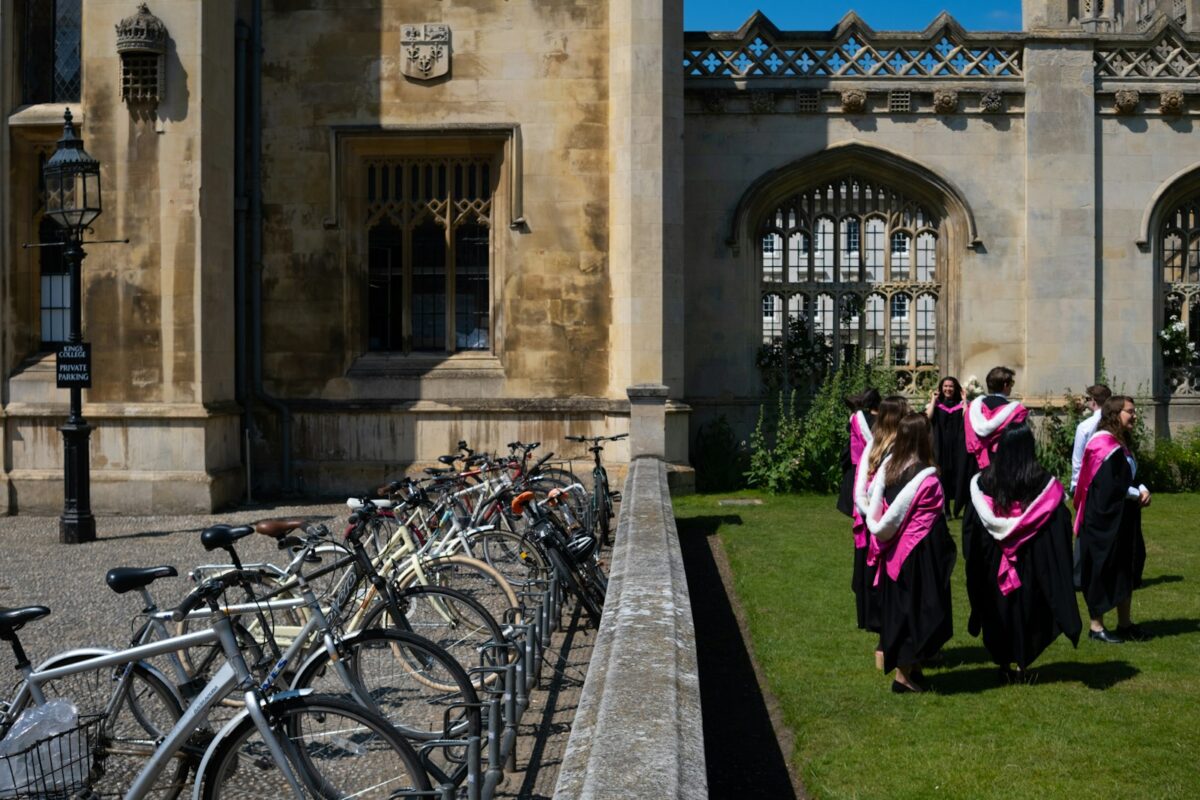
UK Graduate Route 2026: Make the Most of the 2-Year Window Before the January 2027 Cut

The UK Graduate Route 2026 remains one of the most generous post-study work visas in Europe — for now. International bachelors and masters graduates who hold a UK student visa can switch into the Graduate Route and stay for two years with no job offer and no minimum salary. From January 2027, the same route shortens to eighteen months for everyone except PhD holders. If you are an African graduate planning your move, the seven months between mid-2026 and early 2027 are the most valuable window the UK has offered post-study workers in years.

What the UK Graduate Route 2026 actually is

The Graduate Route is a non-sponsored post-study work permission. Launched in July 2021 to replace the old Tier 1 Post-Study Work visa, it lets a student visa holder who has completed an eligible UK course apply once for the right to stay and work without an employer sponsor. There is no salary floor, no shortage occupation list and no need for the job to match your field of study. You can work full-time, self-employed, freelance or alongside a Tier 4 dependant.

To qualify in 2026 you must hold an active Student visa on the day you apply, have successfully completed an eligible course at a registered sponsor (most universities and a small number of higher-education colleges), apply from inside the UK before your student visa expires, and pay the £822 application fee plus the £1,035 per year Immigration Health Surcharge for the duration of your grant. The Migration Advisory Committee, in its 2024 rapid review, recommended keeping the route as-is. The Home Office accepted the recommendation in principle but laid out tighter rules for institutions that fail compliance checks.

The 2-year window and the January 2027 cut

Here is the news that matters in 2026. Under the Restoring Control of the Immigration System white paper published in 2025, the Graduate Route will be reduced from two years to 18 months for bachelor and masters graduates applying on or after 1 January 2027. PhD holders keep their three-year grant. Anyone who applies before that date receives the full two-year permission and keeps it even if their visa runs past 2027 — UK Visas and Immigration does not retrospectively shorten an existing grant.

That cut-off is what makes 2026 a planning year. A Cameroonian masters student finishing a one-year programme in September 2026 is looking at applying in late September. They will get the full two years. The same student starting a two-year MSc in autumn 2026 will likely complete in summer 2028 — well after the cut — and qualify for only 18 months. The decision to delay or accelerate a course start date now has a six-month consequence later.

  • Apply before 1 January 2027 — get the full 2 years
  • Apply on or after 1 January 2027 — get 18 months
  • PhDs and doctorate holders — still 3 years either way
  • Existing Graduate Route holders — not affected, keep your grant

PhD graduates still keep three years on the UK Graduate Route 2026

The PhD carve-out is the part the headlines often miss. A Nigerian doctoral candidate finishing at the University of Manchester in 2026 will receive a three-year Graduate Route grant regardless of whether they switch before or after January 2027. The same applies to Doctor of Medicine, Doctor of Engineering and other recognised doctorate programmes. If your career plan involves a longer research career, applying for a UK PhD via Commonwealth Scholarship, CSC or a Doctoral Training Partnership is the smarter long-game move than rushing a one-year masters in 2026. We covered how to compare DAAD, Erasmus and Chevening for the masters track in a recent piece — the same logic guides PhD funding choices.

Timing your application: when to switch in 2026

UKVI rules require you to apply from inside the UK before your Student visa expires. That sounds straightforward, but the timing trap that catches African students every year is course-end confusion. Your student visa typically ends about four months after your last expected end date. Your Graduate Route application must be in before that expiry — not before your graduation ceremony.

  1. Confirm your course-completion date in writing with your university registrar.
  2. Wait for the university to report your successful completion to UKVI (most universities do this automatically within four weeks of your final result).
  3. Apply online for the Graduate Route within that window, ideally six to eight weeks after your final result is confirmed.
  4. Keep proof of your Student visa, BRP or eVisa, passport biometrics and IHS payment receipts during the wait.

A Kenyan masters graduate from the University of Edinburgh finishing in September 2026 should aim to lodge their Graduate Route application by mid-October 2026 to receive a decision before Christmas. That keeps the application comfortably inside the 2-year-grant window and avoids any year-end processing slowdown.

Need a second pair of eyes on your application? Travel Explore can review it — https://linktr.ee/travelexpore

Using the Graduate Route to bridge to Skilled Worker

The Graduate Route is not the destination. It is the bridge. Most successful applicants use it to find a Skilled Worker sponsor and switch into a long-term route while still in the UK. In 2026 the Skilled Worker minimum salary is £41,700 for new entrants, with shortage-occupation reductions and lower thresholds for new entrants under 26. A Graduate Route holder who lands a sponsored offer can switch in-country with no need to leave the UK or re-enter on a fresh visa.

The data consistently shows that graduates who secure a sponsored role within their first nine months on the Graduate Route are most likely to convert to Skilled Worker successfully. After the 18-month rule kicks in, that conversion window narrows sharply — which is exactly why government modelling expects the policy to push more graduates back home rather than into long-term Skilled Worker routes.

Frequently asked questions about UK Graduate Route 2026

Can I apply for the Graduate Route from outside the UK?

No. Graduate Route applications must be made from inside the UK while you still hold a valid Student visa. If you leave before applying you lose eligibility, even if your course is complete.

Will the January 2027 18-month change affect me if I apply in November 2026?

No. The cut applies to applications dated 1 January 2027 or later. An application submitted on 31 December 2026 still receives the full two years.

Can I bring my spouse and children on the Graduate Route?

Only dependants who were already on your Student visa can continue under the Graduate Route. You cannot add new dependants while on this route. Plan your family applications during the Student visa phase.

Does the Graduate Route count towards UK settlement?

No. Time on the Graduate Route does not count towards Indefinite Leave to Remain. Settlement time only starts accumulating once you switch into a qualifying route such as Skilled Worker, Global Talent or Innovator Founder.

What happens if my university loses its sponsor licence after I graduate?

Your Graduate Route eligibility is based on your status on your course-completion date. Subsequent sponsor licence revocations do not strip you of the right to apply, provided you completed before the revocation took effect.

Key takeaways

  • The UK Graduate Route 2026 still gives bachelors and masters graduates a full two years to live, work and job-search without sponsorship.
  • From 1 January 2027 the route shortens to 18 months for bachelors and masters; PhD graduates keep three years.
  • The best window to apply is between September 2026 and December 2026 — before the cut takes effect.
  • Apply from inside the UK before your Student visa expires; use the route to bridge into Skilled Worker or Global Talent.
  • A Ghanaian engineering masters graduate finishing in autumn 2026 has every reason to apply on time and use the two years strategically.

Ready to take the next step?

If you’d rather not navigate the Graduate Route alone, Travel Explore handles it end-to-end: https://linktr.ee/travelexpore

Related reads on Travel Explore

Share this story

  • The clock is ticking on the UK’s most generous post-study visa — here is why September 2026 matters.
  • Two years or eighteen months — the single calendar date that decides your UK post-study future.
  • PhD graduates still walk away with three years. Everyone else has until New Year’s Day 2027.

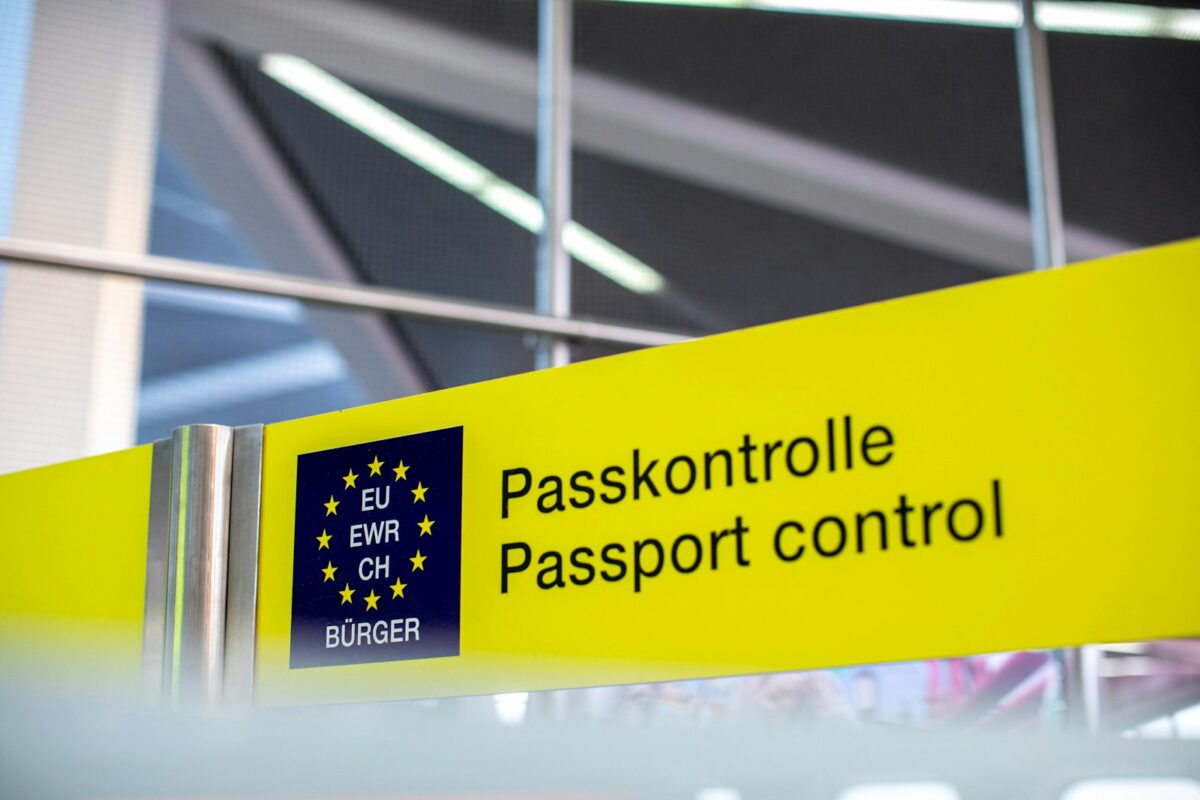
ETIAS 2026 Launches Q4: What Visa-Exempt African Travellers Must Know Before Booking

ETIAS 2026 — the European Travel Information and Authorisation System — goes live across the Schengen area in Q4 of this year. It is not a visa; it is a pre-travel screening check for citizens of visa-exempt countries entering the 30 Schengen states for short stays. For African travellers, the rule splits the continent neatly: passport holders from countries already visa-exempt for Europe (Kenya, Mauritius, Seychelles, and a small handful of others) will need ETIAS, while passport holders from countries that already require a Schengen visa (Nigeria, Ghana, Cameroon, Egypt, South Africa and most of the continent) keep filing for a Schengen visa as before.

This brief separates the noise from the practical detail. If you are flying into Paris, Amsterdam, Frankfurt or Madrid on a Kenyan passport for a business trip in November 2026, ETIAS is the new thing on your checklist. If you are flying on a Nigerian or South African passport, the Schengen visa process is unchanged.

What ETIAS is — and is not

ETIAS is a digital authorisation linked to your passport. You apply online, pay a small fee, answer a set of security and immigration-history questions, and receive a decision within minutes in most cases (up to 30 days in complex cases). Once approved, the authorisation is valid for three years or until the passport expires, whichever comes first. It allows multiple short stays of up to 90 days in any 180-day rolling period across the Schengen area.

What ETIAS is not: it is not a visa. It does not guarantee entry — the final entry decision rests with the border officer at the Schengen external border, exactly as it does today. It does not extend the 90/180 short-stay rule. And it does not replace residence permits, study visas or work permits, which continue under their existing rules.

Which African passports need ETIAS

ETIAS applies only to nationals of countries on the EU visa-exempt list. From Africa, that means primarily Kenya, Mauritius, Seychelles, and a few others — check the official ETIAS portal for the complete list at launch. Passports from countries that require a Schengen visa today (Nigeria, Ghana, Cameroon, Côte d’Ivoire, Senegal, Egypt, South Africa, Tanzania, Uganda, Zimbabwe and most of the continent) continue under the Schengen visa process. For those passport holders, ETIAS has no effect — you keep applying for a Schengen short-stay visa at the consulate of your main destination.

A common confusion: South African passport holders sometimes assume ETIAS will replace the Schengen visa for them. It will not. South Africa is not on the visa-exempt list and is therefore not eligible to use ETIAS at all. The full visa-exempt list is published on the EU Travel-Europe ETIAS FAQ.

ETIAS 2026 fees, timing and validity

  • Fee — EUR 20 per applicant (free for under-18s and over-70s).
  • Validity — three years from issue, or passport expiry if sooner.
  • Coverage — all 30 Schengen states (no separate authorisation needed per country).
  • Stay length — 90 days in any rolling 180 days, unchanged.
  • Decision time — minutes for most clean applications, up to 30 days for cases that need manual review.
  • Transitional period — six months after launch during which the requirement is advisory; after that, ETIAS becomes mandatory.

For a Kenyan business traveller making three trips a year to European clients, EUR 20 once every three years is a marginal cost compared to the time saved at the border under the linked Entry/Exit System.

Not sure which route fits your case? Talk to Travel Explore — https://linktr.ee/travelexpore

How to apply once it goes live

The application takes around 10 minutes. You will need your passport (machine-readable), an active email address, and a payment card. The form asks for biographic details, travel history (countries visited in the last decade), employment information, and a small set of security-screening questions (criminal history, prior immigration refusals, war-zone travel). Most clean applications return an approval within minutes. Manual review can take up to 30 days, and in rare cases an interview at a consulate is requested.

Apply at least 96 hours before travel as a buffer. Apply only via the official Travel Europe ETIAS portal — third-party sites charging higher fees are not authorised and offer no advantage. The authorisation is digitally linked to your passport number; there is no sticker or document to carry.

What it changes on the ground

For travellers in the visa-exempt category, ETIAS adds a five-minute online step weeks before travel and removes most of the friction at the border. The Entry/Exit System (EES), launched in late 2025, has already replaced passport stamps with biometric self-service kiosks at most major Schengen airports. Together, EES and ETIAS turn the Schengen border into a near-automated process for visa-exempt travellers.

For travellers needing a Schengen visa, the process is unchanged in 2026 — consulate appointment, biometrics, document bundle, fee. We cover the country-by-country Schengen visa process in our EU travel guides.

Frequently asked questions about ETIAS 2026

Does ETIAS 2026 replace the Schengen visa for Nigerians and South Africans?

No. ETIAS applies only to visa-exempt nationals. Nigerian, South African, Ghanaian, Egyptian and most other African passport holders continue under the Schengen visa process unchanged.

How much does ETIAS 2026 cost?

EUR 20 per applicant. Applicants under 18 and over 70 are exempt from the fee.

How long is ETIAS valid?

Three years from approval, or until the passport expires, whichever comes first.

Can I work or study on ETIAS?

No. ETIAS authorises short visits only — tourism, business meetings, family visits. Work, study and long-stay activities require the relevant national visa.

What is the difference between ETIAS and EES?

EES is the Entry/Exit System — the biometric border check that replaced passport stamps. ETIAS is the pre-travel authorisation. The two systems work together but are separate.

What happens if my ETIAS is refused?

You will receive a written explanation and can either appeal or apply for a standard Schengen visa, which the consulate will assess under the usual rules.

The short version

  • ETIAS 2026 launches in Q4 across the Schengen area, with a six-month transitional period after launch.
  • It is a pre-travel authorisation for visa-exempt nationals — not a visa, and not a replacement for the Schengen visa process.
  • African nationals who need a Schengen visa today (Nigeria, Ghana, Cameroon, Egypt, South Africa and others) continue under the existing visa process; ETIAS does not apply to them.
  • Kenyan, Mauritian, Seychellois and other visa-exempt African travellers will need ETIAS, valid three years for EUR 20.
  • Apply only via the official Travel Europe ETIAS portal, at least 96 hours before travel.

Plan your ETIAS travel right

Want fewer surprises at the visa interview? Practice with Travel Explore — https://linktr.ee/travelexpore

Related reads on Travel Explore

Share this story

  • ETIAS is coming in Q4. Here is who actually needs it.
  • EUR 20, three years, 30 countries: the new Schengen pre-screen for visa-exempt travellers.
  • Kenyan passport? You need ETIAS. South African passport? You still need a Schengen visa.

Denmark Pay Limit Scheme 2026: New DKK 552,000 Threshold for African Skilled Workers

The Denmark Pay Limit Scheme 2026 lifted the minimum qualifying salary to DKK 552,000 on 1 January — a DKK 38,000 jump from the 2025 floor. That is roughly EUR 74,000 at current exchange rates, and it lands squarely on senior African professionals in IT, engineering, biotech and finance who were previously approved at the lower threshold. The Supplementary Pay Limit Scheme, designed to handle shortage occupations from a defined list of countries, runs in parallel at DKK 446,000.

For an Egyptian software engineer relocating to Copenhagen this autumn, the practical implication is straightforward: the offer letter has to clear DKK 552,000 in base salary, employer pension contributions and paid holiday allowance combined. Bonuses, share options and benefits in kind are excluded from the calculation.

The new salary floor

Denmark uses base salary plus pension contributions plus paid holiday allowance to compute the qualifying figure. Variable pay components are excluded. The 1 January 2026 figures are DKK 552,000 for the main Pay Limit Scheme and DKK 446,000 for the Supplementary Pay Limit Scheme. Both apply to applications submitted on or after 1 January 2026; cases already in the queue under the 2025 threshold are processed at the figure in force at submission.

SIRI (Danish Agency for International Recruitment and Integration) checks the salary against the most recent labour-market collective agreement for the role. Even where your offer hits the headline DKK 552,000 figure, SIRI can refuse if the salary is materially below the collective rate — a check that catches roughly one in seven applications for tech roles in Copenhagen.

What counts as salary under the scheme

  • Base salary — counted.
  • Employer pension contributions — counted, where mandatory under the contract.
  • Paid holiday allowance (feriepenge) — counted.
  • Performance bonuses — not counted, even if guaranteed.
  • Share options or restricted stock — not counted.
  • Benefits in kind (company car, lunch, gym) — not counted.
  • Overtime pay — not counted.

A Tunisian biotech researcher with an offer of DKK 510,000 base plus DKK 60,000 annual bonus would not clear the threshold — the bonus is excluded, leaving the qualifying figure at DKK 510,000. Reworking the contract to convert the bonus into a higher base salary is the standard fix, and most Danish employers are familiar with the calculation. Push back on this during the offer-letter stage rather than after the application is filed.

Denmark Pay Limit Scheme 2026: the application process

The Denmark Pay Limit Scheme 2026 application has five stages. Stage one is securing a signed Danish employment contract that meets the salary floor and the collective-agreement test. Stage two is gathering biometric ID, passport, education documents and the employer’s CVR registration. Stage three is filing online via the SIRI portal and paying the fee (around DKK 4,485 for the main applicant in 2026). Stage four is biometric capture at a Danish embassy or consulate — for Nigerian, Ghanaian and Egyptian applicants, the embassy in Cairo or the consulate in Lagos handles this. Stage five is travel to Denmark once the residence permit is issued.

Processing is typically 30 to 45 calendar days for complete files. The official Pay Limit Scheme guidance on nyidanmark.dk sets out the document checklist and the SIRI portal entry points.

Want help packaging documents the way the consulate expects? https://linktr.ee/travelexpore

The Supplementary Pay Limit route at DKK 446,000

The Supplementary Pay Limit Scheme runs at DKK 446,000 and is open to nationals of a defined list of countries (the list was expanded in early 2026 to include 16 non-EU jurisdictions). The route is targeted at shortage occupations — nursing, certain engineering disciplines, IT specialists, skilled trades. Eligibility under this route is checked against the published Positive List, which is updated twice a year. The Deloitte January 2026 Danish immigration briefing sets out which countries and occupations are on the current Supplementary list.

For African workers, the Supplementary route is most relevant where the occupation is on the Positive List and the offer salary sits between DKK 446,000 and DKK 552,000. Below DKK 446,000, neither route is open. Above DKK 552,000, the main Pay Limit route is the simpler path.

Frequently asked questions about the Denmark Pay Limit Scheme 2026

Does the Denmark Pay Limit Scheme 2026 apply to part-time roles?

The full-time equivalent salary must clear the threshold. Part-time roles are eligible only if the pro-rated annual salary at full-time hours would clear DKK 552,000.

Can my spouse work in Denmark on an accompanying permit?

Yes. Accompanying spouses receive a residence permit that allows full-time employment without a separate work permit.

How long is the residence permit issued for?

Typically up to four years initially, tied to the employment contract. Extensions are available as long as the salary continues to meet the threshold in force at renewal.

Does the salary need to be paid in DKK?

Yes. The qualifying salary must be paid in Danish kroner under a Danish employment contract. Foreign-currency salaries paid by an overseas branch do not qualify.

What happens at salary review if my pay falls below the threshold?

You must notify SIRI. A salary that drops below the qualifying figure can lead to permit revocation. Most extensions are filed at the same threshold in force at issue, but renewals are re-tested.

Can I bring my Master’s-aged dependent children?

Children under 18 are admitted as dependants. Older children must apply separately under student or work routes.

Quick recap

  • The Denmark Pay Limit Scheme 2026 floor is DKK 552,000 for applications submitted from 1 January, a DKK 38,000 jump from 2025.
  • Only base salary, employer pension and paid holiday allowance count toward the figure — bonuses, share options and benefits in kind are excluded.
  • SIRI also checks the offer against collective-agreement rates; a salary below the role’s collective rate can still be refused.
  • The Supplementary Pay Limit Scheme runs at DKK 446,000 for nationals of 16 listed countries in shortage occupations on the Positive List.
  • Application fee is around DKK 4,485, processing 30 to 45 days, residence permit up to four years initially.

Build your Denmark application with help

Travel Explore reviews applications case-by-case before submission. Start here: https://linktr.ee/travelexpore

Related reads on Travel Explore

Share this story

  • Denmark just lifted the salary floor to DKK 552,000. Negotiate accordingly.
  • Pay Limit Scheme 2026: what counts as salary, and what is silently dropped.
  • 16 non-EU countries get an easier Danish work route at DKK 446,000. Who is on the list?