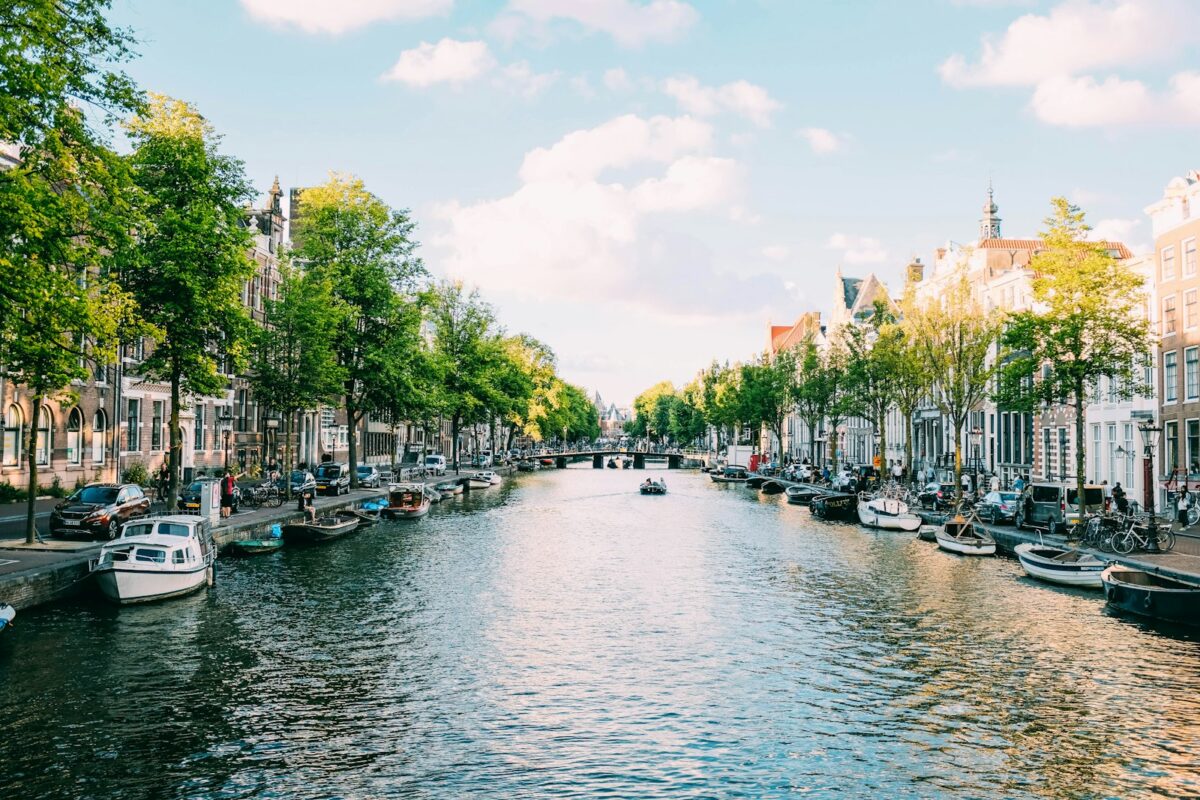
Category Archives: Portugal

Portugal Will Take Remote Workers, But the Income Bar Just Rose

Wrapping up a workday from a Lisbon rooftop, the Tagus glinting below, is the picture that pulls thousands of remote workers toward Portugal each year. The dream still stands in 2026, but the price of entry climbed. The Portugal D8 digital nomad visa now asks remote earners to show roughly 3,680 euros a month, pegged to four times the national minimum wage. Hit that bar and Portugal remains one of Europe’s friendliest bases. Miss it and your application stalls before it starts.

By the Travel Explore editorial desk. Last updated June 28, 2026.

Where this goes

The Portugal D8 digital nomad visa income bar

The threshold tracks Portugal’s minimum wage, set at “four times the minimum wage” for the main applicant. In 2026 that lands near 3,680 euros monthly in active remote income from outside Portugal. Bringing a partner adds 50 percent to the requirement. Each dependent child adds 30 percent. The D8 suits employees and freelancers with foreign clients; the separate D7 is the lane for passive income such as pensions or rentals. You also need health insurance, a clean criminal record, and proof of accommodation. Savings of around 36,000 euros in the bank strengthen a borderline file.

Who qualifies and what to file

Eligibility rests on stable, location-independent income and a track record to back it. Most consulates want three to six months of bank statements, a work contract or client agreements, and a tax identification number. Take a Vietnamese UX designer in Hanoi billing European agencies in euros. With steady invoices above the threshold and a rental lined up in Porto, she files a temporary-stay visa, then converts to a residence permit after arrival. Gather documents early. Apostille what your consulate demands. A thin paper trail is the most common reason a strong earner gets refused.

The citizenship catch nobody mentions

Portugal long sold a five-year road to citizenship. That road got longer. Parliament reapproved a revised nationality law in April 2026, and the President signed it in May, stretching the general naturalisation clock from five years to ten for most applicants, with seven years for EU and Portuguese-speaking-country nationals. The D8 still grants residency, lifestyle and Schengen access. It simply no longer doubles as a fast passport. Plan your timeline around residency benefits, not a quick second nationality, and the visa still makes sense for most remote workers.

Weighing Portugal against other remote-work bases? Compare routes at https://linktr.ee/travelexpore.

Key points to remember

  • The 2026 income bar sits near 3,680 euros a month for the main applicant.
  • Add 50 percent for a spouse and 30 percent per child.
  • The D8 is for active remote income; the D7 is for passive income.
  • Citizenship now takes ten years for most applicants, not five.

Clear answers

How much income do I need for the D8 in 2026?
About 3,680 euros a month, equal to four times Portugal’s minimum wage, plus more for dependents.

Can I bring my family?
Yes. Each dependent raises the income requirement, 50 percent for a spouse and 30 percent per child.

Does the D8 still lead to citizenship?
It leads to residency. Naturalisation now generally takes ten years, or seven for EU and CPLP nationals.

D8 or D7, which one fits me?
Choose the D8 for active remote work income and the D7 if you live on passive income such as pensions.

Related reads

Share this story

  • LinkedIn: Portugal still welcomes remote workers in 2026, but the income bar just rose. The numbers inside.
  • Twitter: Portugal D8 digital nomad visa now wants about 3,680 euros a month. Do you clear it?
  • Facebook: Dreaming of working from Lisbon? Here is the real 2026 income bar for the D8 visa.

Your Lisbon plan, costed

Portugal rewards remote workers who prepare. Confirm your income clears the bar, line up documents, and plan around residency rather than a quick passport. Map the full route at https://linktr.ee/travelexpore.

Sources

  • AIMA, Agency for Integration, Migration and Asylum, residence visa guidance (T0 official)
  • The Portugal News, nationality law changes reapproved 2026 (T2 national press)
  • Global Citizen Solutions, Portugal D8 Digital Nomad Visa 2026 guide (T3 commercial, context)


Tapay copy tradingGrow your money while you plan your moveTapay auto-copies a live trading strategy to your own account — spot & futures. Start free on demo, go live when you’re ready.Start free →

Trading involves risk. Only trade what you can afford to lose.

Portugal Scrapped Its Open Job-Seeker Visa — What Now?

If Lisbon or Porto is your target city, the rules for arriving without a job in hand have tightened. Portugal has replaced its open job-seeker visa with a narrower Portugal job-seeker visa built only for highly qualified professionals — the Visto para Procura de Trabalho Qualificado. The come-one-come-all version is gone; the new route still lets you land and look for work, but it now screens for skills, sector and qualifications before you board.

Inside this guide

What replaced the old Portugal job-seeker visa

Under the reforms now in force, the broad job-seeker permit is closed to most applicants. In its place, the qualified job-seeker route is reserved for professionals in fields the government defines by ordinance — typically technology, healthcare, engineering and similar shortage areas. You will need to show recognised qualifications and, in many cases, evidence that your profile fits a priority sector. Alongside this, Portugal has lengthened its standard citizenship timeline and added integration requirements such as an A2 Portuguese test, so the whole pathway now expects more commitment up front than the easygoing reputation of recent years suggested.

The 120-day clock and the one-year wait

The qualified visa grants a 120-day stay to find a job, extendable in limited cases, during which you can attend interviews and sign a contract that converts you to a residence permit. Miss the window and the rule bites: you must leave and wait a full year before reapplying. Picture Valentina, a Mexican UX designer who lands in Lisbon with a strong portfolio but no offer. With 120 days, a tight shortlist of hiring studios and recognised credentials ready, she signs within three months. Without that preparation, the same clock becomes a one-way ticket home.

Wondering whether your profession makes the qualified list? Get a quick eligibility read through https://linktr.ee/travelexpore.

How to arrive ready, not hopeful

Confirm first that your occupation sits in a priority sector, because that single fact decides whether the visa is even open to you. Get your qualifications recognised before you travel, line up interviews so the 120 days are spent closing offers rather than starting from zero, and budget realistically for Lisbon’s rising rents. Begin basic Portuguese early — A2 is now part of the longer-term picture, and showing progress signals the seriousness the new system rewards. Treat the 120 days as a sprint you have trained for, not a holiday with a job hunt attached.

Straight answers

The door to Portugal is still open for skilled movers — it is simply narrower and more deliberate than before.

  • The open job-seeker visa is closed; a qualified-only route replaces it.
  • 120 days to find work, then a one-year wait if you do not succeed.
  • Priority sectors like tech and healthcare define eligibility.
  • Citizenship now takes longer and adds an A2 language test.

Straight answers

Can anyone still use a job-seeker visa for Portugal? No. It is now limited to highly qualified professionals in government-defined priority fields.

What happens if I do not find work in 120 days? You must leave Portugal and wait one year before you can reapply for the visa.

Do I need Portuguese to apply? Not for the visa itself, but A2 Portuguese is now part of the longer residence-and-citizenship path.

Does a job offer convert to residence? Yes. Signing an eligible contract within the window lets you switch to a residence permit inside Portugal.

Related reads

Share this story

  • LinkedIn: Portugal closed its open job-seeker visa. If you are a skilled professional, the new qualified route still works — but only with preparation.
  • X: Portugal’s open job-seeker visa is gone. The new 120-day qualified route rewards the ready. Here is how.
  • Facebook: Planning a move to Lisbon? The job-seeker visa just changed and most people have not caught up.

Make your 120 days count

Portugal still welcomes skilled movers, but it now asks you to show up qualified, recognised and ready to sign. Plan the sector fit, the credentials and the interviews before you fly, and the new route becomes a real path rather than a gamble. Start mapping it at https://linktr.ee/travelexpore.

Sources

Portugal Just Doubled the Wait for Citizenship — Read This

If a Portuguese passport was part of your five-year plan, that plan just changed. The Portugal citizenship 10 year rule is now law: in May 2026 the President promulgated a reform that doubles the standard naturalisation wait from five years to ten. Anyone building a life in Lisbon, Porto or the Algarve — remote workers, retirees, founders and investors alike — needs to understand what shifted, who is shielded, and why the clock you start now matters more than ever.

On this page

The reform in one minute

Portugal’s parliament approved the revised Nationality Law on 1 April 2026 by 152 votes to 64, and President António José Seguro promulgated it on 3 May 2026. The headline change is simple: most foreign residents now need ten years of legal residence before they can apply for citizenship, up from five. Crucially, the reform touches naturalisation only — the five-year route to permanent residence is untouched, so your right to keep living, working and travelling in Portugal does not change. Until the text is published in the Diário da República and enters into force, the old five-year regime still applies, which is exactly why timing your application has become a live issue rather than a someday one.

Who still qualifies sooner

The law keeps a meaningful fast lane. Citizens of European Union countries and of Portuguese-speaking nations — Brazil, Angola, Mozambique, Cape Verde, Guinea-Bissau, São Tomé and Príncipe, and Timor-Leste — face a seven-year wait rather than ten. That CPLP carve-out is the single biggest reason your starting nationality now shapes your strategy.

Consider a Brazilian founder who relocated her fintech to Lisbon in 2024 on a D2 entrepreneur visa. Under the old rules she was counting down to a 2029 citizenship application. Under the reform she is on the seven-year track, so her realistic window moves to 2031 — still years ahead of a non-CPLP neighbour who now waits until 2034. Knowing which bucket you fall into is the difference between planning a passport and guessing at one.

Mapping your own route to an EU passport? Start with the resources at https://linktr.ee/travelexpore.

How to protect your timeline

Three things matter now. First, lock in your residence start date — your countdown runs from when your residence permit is issued, so chase any delayed renewals and keep clean records. Second, treat language early: the A2 Portuguese requirement has not gone away, and waiting until year nine to study is a classic, avoidable stumble. Third, if you are weighing Portugal against another European base, factor the longer horizon into the decision rather than assuming the old five-year story you read in 2023. The country is still one of Europe’s most welcoming entries; it simply asks for a longer commitment before the passport.

Worth remembering

  • Standard naturalisation now requires ten years of legal residence.
  • EU and Portuguese-speaking nationals keep a seven-year route.
  • Permanent residence still arrives at five years — only citizenship moved.
  • The old regime applies until the law formally enters into force, so dates matter.

Quick answers

Does the change affect my permanent residency? No. The five-year permanent residence pathway is unchanged; only the naturalisation timeline was extended.

Do Golden Visa holders get singled out? No. This is a system-wide naturalisation reform that applies to every legal residence status, not a Golden-Visa-specific rule.

I am from a Portuguese-speaking country — what is my wait? Seven years of legal residence, the same shorter track granted to EU citizens.

Has the language test changed? The A2-level Portuguese requirement remains; start preparing early so it never becomes the bottleneck.

Related reads

  • LinkedIn: Portugal just doubled its citizenship wait to 10 years. Here’s who still qualifies at 5 or 7.
  • Twitter/X: Portugal’s 5-year passport era is over. New law = 10 years (7 for EU/CPLP). What it means 👇
  • Facebook: Planning a Portuguese passport? The rules changed in May 2026 — read before you count the years.

Plan your Portugal move with eyes open

A longer road to citizenship is not a closed door — it’s a reason to start cleanly and early. Get the visa, residence and language tools you need in one place at https://linktr.ee/travelexpore

Sources

  • Diário da República / Assembleia da República — Nationality Law reform, promulgated 3 May 2026 (T0 official)
  • Portugalist — “Portuguese Citizenship Now Takes 10 Years” analysis, 2026 (T1 specialist)
  • Outbound Investment Group — President signs revised Nationality Law, 2026 (T1 specialist)

Portugal D7 Or D8? The Visa Choice Africans Keep Getting Wrong

For African applicants comparing the Portugal D7 vs D8 Visa 2026, the choice is rarely about cost — it is about how you earn your money. The D7 is built for passive income (pensions, dividends, rental income, royalties). The D8 is built for active remote work for non-Portuguese clients. Pick the wrong category and the Portuguese consulate refuses on the spot, even when every other document is perfect.

What the D7 visa actually rewards

The D7 was created for retirees and rentiers — people whose income arrives without them having to clock in. To qualify, you must show stable, recurring passive income at or above the Portuguese minimum wage (which for 2026 sits in the ballpark of €820–€870 per month, refreshed annually). Spouses and dependants add roughly 50% and 30% of the principal threshold respectively, so a family of four needs around 2.2× the single-applicant figure.

Income sources that pass the D7 test include foreign pensions, royalties, dividends, interest, rental income from property outside Portugal, and intellectual property licensing. Income sources that do NOT pass include freelance contracts, consulting fees, and salary — even if paid from outside Portugal — because those are classed as active income.

A Kenyan retiree drawing a UK pension and rental income from two Nairobi flats can qualify on D7 without difficulty. A Lagos-based software engineer earning $80,000 a year from a US client cannot — that is active income, and that is what the D8 is for.

What the Portugal D8 visa solves

The D8 — launched in October 2022 and tweaked several times since — is Portugal’s dedicated digital nomad visa. It targets remote workers and freelancers who earn from non-Portuguese employers or clients. The threshold is four times the Portuguese minimum wage, which puts the bar around €3,280–€3,480 per month gross for the 2026 cycle.

There are two D8 sub-flavours: a temporary stay visa (up to one year, renewable to two) and a long-stay residence visa that leads to a 2-year residence permit, renewable for 3 more years and then to permanent residence after 5 years — effectively a path to Portuguese citizenship via the same timeline as the D7.

The D8 income evidence is heavier than the D7’s: an employment contract or service agreement showing the work is genuinely remote, plus 3 months of bank statements proving the income lands consistently. A South African remote developer working for a Berlin startup is the textbook D8 applicant.

Portugal D7 vs D8 Visa 2026 side by side

Same destination, two completely different routes. Here is what shifts when you toggle between them:

  • Income type accepted: D7 = passive only; D8 = active remote earnings
  • Income threshold: D7 = ~1× minimum wage; D8 = ~4× minimum wage
  • Bank statements: Both require 3 months minimum showing the income
  • Tax residency: Both routes make you a Portuguese tax resident after 183 days
  • NHR regime: The original NHR is closed; the new IFICI / NHR 2.0 has narrower scope for both routes
  • Path to citizenship: Both lead to citizenship eligibility after 5 years of legal residence
  • Family reunification: Available on both routes; thresholds increase per dependant

The Portuguese consulate in your country (or VFS Global where applicable) is strict about category. If you submit a D7 with consulting income mislabelled as “dividend”, your file is refused and the visa fee is not refunded. A Ghanaian digital nomad who tried this in 2024 lost the application fee plus six weeks of waiting time.

Not sure whether your income passes D7 or D8 rules? Travel Explore screens income evidence before you book a consulate appointment — https://linktr.ee/travelexpore

Documents the Portuguese consulate actually checks

For African applicants, the consulate’s strictness shows up in three places: proof of income, proof of accommodation, and criminal records. The boilerplate document list is well documented on vistos.mne.gov.pt, but here is the abbreviated bundle:

  • Valid passport with 3+ months validity beyond visa expiry
  • Two recent passport photos (35×45mm)
  • Proof of accommodation in Portugal — rental contract (12 months minimum) or property deed
  • Schengen-area travel insurance covering €30,000 minimum
  • Criminal record certificate from your country of origin, apostilled or legalised
  • NIF (Portuguese tax number) — obtainable via a tax representative before arrival
  • Portuguese bank account proof showing settlement funds
  • Income evidence specific to D7 or D8 (do not mix)

The rental contract is what catches most African applicants. Many landlords will not sign a 12-month contract for someone who is not yet in Portugal, so you typically need a Portugal-based fixer or remote-friendly landlord. Plan this three months before applying.

Tax implications: NHR is gone, IFICI is narrower

The original Non-Habitual Resident (NHR) regime closed to new applicants on 31 December 2023. Its successor, IFICI (Investment in Innovation and Research) or NHR 2.0, is tightly scoped — it benefits scientific researchers, certain highly qualified workers and innovation-focused founders rather than passive-income retirees or generic remote workers.

For most D7 and D8 applicants in 2026, ordinary Portuguese tax rules apply: progressive personal income tax at rates up to 48%, plus solidarity surcharge above €80,000. The good news is that double-taxation treaties between Portugal and most African nations exist, so a Kenyan or South African applicant typically does not pay tax twice on the same income.

Talk to a Portuguese tax adviser before relocating. The choice between D7 and D8 affects how your income is sourced, which affects which country gets the first taste of it.

Portugal D7 vs D8 Visa 2026: Common questions answered

Can I work for Portuguese companies on a D7 or D8 visa?

No. Both visas are predicated on income coming from outside Portugal. Working for Portuguese employers requires a different route — typically a work visa under the standard Portuguese labour code.

Which is cheaper for African applicants — D7 or D8?

D7 has a lower income threshold (~€820/month vs ~€3,280/month for D8) but the income source must be passive. So if you have rental income or a pension, D7 is cheaper to qualify for. If you earn active income from remote work, D8 is your only option.

How long does the Portugal D7 or D8 visa take to process?

Consulate processing typically runs 60–90 days from biometrics. After arrival in Portugal, AIMA (the immigration service) issues the residence permit within 60–90 days. Total timeline: roughly 4–6 months from application to landing.

Do I need a rental contract before I apply for the Portugal D7 vs D8 Visa 2026?

Yes — the consulate requires proof of accommodation as part of the application. Most consulates want a 12-month rental contract or a property deed. Short-term stays (Airbnb, hotels) do not qualify.

Can I bring my family on the D7 or D8?

Yes. Spouses and dependent children can be included. The income threshold rises by approximately 50% for the spouse and 30% per child. Family reunification can also be applied for after you have settled.

Before you go

  • D7 is for passive income (pensions, dividends, royalties); D8 is for active remote work
  • D7 threshold ~1× Portuguese minimum wage; D8 ~4× minimum wage
  • The original NHR is closed — do not plan around it
  • Both routes lead to citizenship eligibility after 5 years of legal residence
  • Pick the wrong category and your Portugal D7 vs D8 Visa 2026 application is refused without refund

Start your Portugal journey

The Portugal D7 vs D8 Visa 2026 choice depends entirely on whether you earn passively or actively. Travel Explore reviews income sources, prepares the consulate bundle and connects you with vetted Portuguese tax advisers. Book your assessment at https://linktr.ee/travelexpore.

Related reads on Travel Explore

Share this story

  • Same country, two visas, one mistake will cost you: D7 is for passive income; D8 is for remote work.
  • Portugal’s D7 needs €820/month. The D8 needs €3,280/month. Choose wisely.
  • NHR is gone. Africans planning a Portugal move in 2026 need a new tax plan.

Portugal D7 vs D8 vs HQA 2026: Which Portuguese Visa Fits African Applicants

Portugal kept its lights on for African applicants in 2026 even as other European doors narrowed. The country offers three distinct residency routes, each fitting a different financial and professional profile. The big three are: Portugal D7 D8 HQA 2026 — the passive-income D7, the Digital Nomad D8 and the Highly Qualified Activity HQA Tech Visa. Choosing wrongly costs you months. Here is the side-by-side comparison every African applicant should read before booking the Lisbon consulate appointment.

Quick reference table

  1. D7 Passive Income visa — who it fits
  2. D8 Digital Nomad visa — who it fits
  3. HQA Tech Visa — who it fits
  4. Side-by-side: income, processing, tax
  5. Top mistakes African applicants make
  6. FAQs from Lagos, Accra, Nairobi

D7 Passive Income visa — who it fits

The D7 is built for retirees and remote earners with reliable passive income. African profiles that have qualified:

  • African retirees with pension income above EUR 870/month.
  • Rental property owners in Nigeria, South Africa or Kenya whose rent flows to a personal account.
  • Dividend earners from public-company holdings.
  • Long-tail royalty earners.

Income floor (2026): EUR 870/month for the principal applicant, plus 50% for spouse and 30% per dependant.

D8 Digital Nomad visa — who it fits

The D8 is for active remote workers. It is Portugal’s equivalent of the Spanish DNV but with a lower income bar. Two streams:

  • Temporary stay D8 — up to one year, renewable, lower documentation.
  • Residency D8 — two-year initial residence permit, renewable for three more, leading to permanent residence at five.

Income floor (2026): EUR 3,480/month (four times the Portuguese minimum wage).

HQA Tech Visa — who it fits

The Highly Qualified Activity (HQA) Tech Visa fast-tracks African engineers, AI specialists, biotech researchers and senior developers via a Portuguese university or research-centre partnership. Key points:

  • No income floor — partnership-based.
  • Processing as fast as 30 days in some cases.
  • Leads to a five-year residency permit and Portuguese citizenship at year five (per current rules pending reform).
  • Family members included.

Side-by-side: income, processing, tax

CriterionD7D8HQA
Monthly income floor 2026EUR 870EUR 3,480Partnership-based
Initial visa duration4 months4 months4 months
Residency duration2 years2 years2 years
Renewal to total 5 yearsYesYesYes
NHR / IFICI tax electionLimitedEligibleEligible
Processing time3-6 months2-4 months30-90 days

Top mistakes African applicants make

  1. Mistaking the D7 for the D8. The D7 is for passive income; using it with active remote-work income is rejected.
  2. Submitting bank statements only in your home-country currency. Convert and certify in EUR.
  3. Skipping the NIF (Portuguese tax number) before consulate filing.
  4. Booking a flight to Portugal before the AIMA appointment is confirmed.
  5. Using a non-apostilled FBI/SARPCCO criminal record clearance.

👉 Want a one-call diagnosis of which Portuguese visa fits your profile? Book at https://linktr.ee/travelexpore.

Hand-build your Portugal case file with Travel Explore

Whether you are leaning D7, D8 or HQA, the document chain — apostille, sworn translation, NIF, bank, NHR election — is identical and where most African cases break down. Travel Explore’s Portugal desk does it end-to-end at https://linktr.ee/travelexpore.

FAQs from Lagos, Accra, Nairobi

Can I switch from D7 to D8 later?
Yes, but you must demonstrate the change in income source.

Does Portugal still grant citizenship after five years?
Yes under the current rules. A proposed reform could extend to seven years; if you start the clock in 2026 you should still be assessed under the five-year rule.

What is IFICI?
The new tax incentive that replaced NHR (Non-Habitual Resident). It offers a 20% flat tax for qualifying activities. Available to D8 and HQA holders, not always D7.

Do I need a Portuguese address before applying?
Yes. A rental contract or hotel reservation covering the first 12 months satisfies the requirement.

Can my children attend Portuguese public schools?
Yes. Public school is free for residents.

How long does the consular interview take?
15-30 minutes. Documents are checked and biometrics taken.

Headline takeaways

  • D7 = passive income; D8 = active remote work; HQA = tech and research.
  • Income floor: EUR 870 (D7) vs EUR 3,480 (D8) vs partnership (HQA).
  • All three lead to permanent residence at year 5 and citizenship under current rules.
  • HQA is the fastest path for African tech professionals.

More from Travel Explore

Share this story

  • “D7 vs D8 vs HQA: Portugal’s three doors to African applicants in 2026.”
  • “EUR 870 a month gets a Nigerian retiree a Portuguese residency. Here is how.”
  • “HQA Tech Visa: the African developer’s fastest route to Portugal in 2026.”

Sources: aima.gov.pt · imigrante.sef.pt