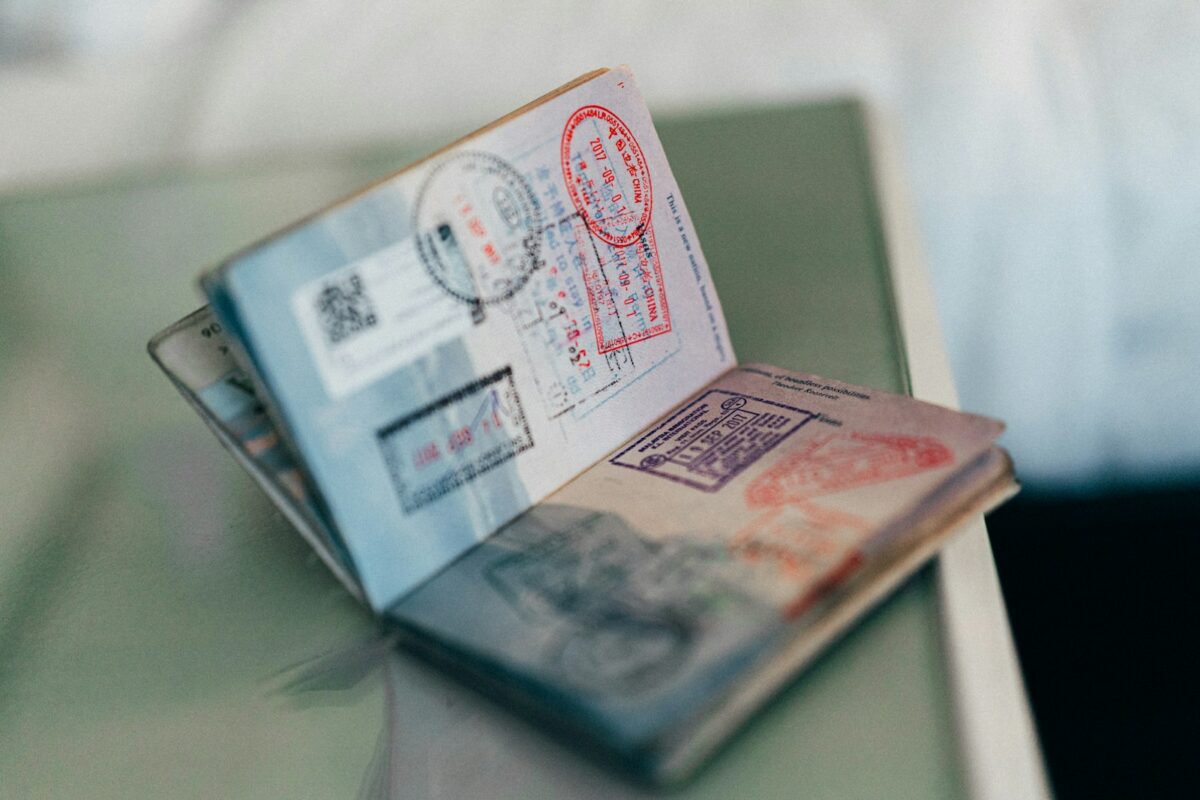
Tag Archives: proof of funds

Five Reasons Skilled-Worker Visas Get Refused (And the Fixes)

A job offer does not guarantee a visa. Thousands of qualified applicants learn that the hard way every year, when a single weak document sinks a file that looked airtight. Most of the common skilled worker visa refusal reasons have nothing to do with talent and everything to do with preparation. As of 2026, caseworkers across the UK, Canada, Australia, and Germany are stricter on funds, genuineness, and paperwork than they were two years ago. The good news: every one of these failures is preventable. Here are the five that recur, and the fix for each.

By the Travel Explore editorial desk. Last updated June 30, 2026.

What you will learn

Why strong applications still fail

Skilled-visa decisions are documentary, not personal. A caseworker rarely meets you; they meet your file. If the file leaves a gap, they refuse and move on. Consider Bilal, a Pakistani IT specialist with a real offer from a London firm. His salary qualified, his role qualified, yet his first attempt was refused over maintenance funds held in the wrong account for the wrong number of days. The skill was never the issue. The evidence was. That pattern repeats across destinations and visa classes.

The five skilled worker visa refusal reasons

  1. Insufficient or unstable funds. Money that arrived too recently, or sat below the required balance, reads as borrowed. Hold the exact sum for the full qualifying period.
  2. Salary below the going rate. Meeting the general floor is not enough if your specific occupation code demands more. UK guidance is blunt: you need a “confirmed job offer” at the right rate.
  3. Genuineness doubts. Vague job duties or a thinly staffed sponsor invite a refusal on credibility, a growing focus in sponsor-compliance checks.
  4. Document gaps. A missing translation, an unsigned letter, or an expired test score can end an otherwise strong case.
  5. Credentials not recognised. Skipping the official assessment of your degree leaves the caseworker unable to score you.

Building your evidence pack? Use our document and funds checklist before you submit: https://linktr.ee/travelexpore

How to refusal-proof your file

Treat the application like an audit. Hold your maintenance funds early and keep clean statements covering the full window. Match your salary to the exact occupation rate, not just the headline minimum. Ask your employer for a detailed role description that proves a genuine vacancy. Get every document translated and certified. Finish your credential assessment before you file. Two short rules help. Evidence beats assertion. Early beats rushed. Applicants who internalise both rarely see a refusal letter.

Reader questions

Are skilled worker visa refusal reasons the same in every country?
The themes repeat: funds, salary, genuineness, documents, and credentials. The exact thresholds and forms differ by destination.

Can I reapply after a refusal?
Usually yes. Read the refusal letter closely, fix the specific failing, and submit a stronger file rather than the same one again.

How long should I hold proof of funds?
It varies by country, but most require an unbroken balance for a set number of consecutive days, so prepare well ahead.

Does a refusal hurt future applications?
It can, because you must usually declare it. An honest, well-evidenced reapplication is far stronger than hiding the history.

Related reads

Share this story

  • LinkedIn: Most skilled-visa refusals are preventable. Five reasons strong files fail, and the fix for each.
  • Twitter/X: Talent is not the problem. Five skilled worker visa refusal reasons and how to beat them in 2026.
  • Facebook: About to apply for a work visa? Avoid these five refusal traps before you submit.

Submit once, get it right

A refusal costs months and money. Prepare your funds, salary evidence, and documents like a caseworker will read them, because one will. Start with our refusal-proofing checklist: https://linktr.ee/travelexpore

Sources

  • UK Government, Skilled Worker visa (T0): https://www.gov.uk/skilled-worker-visa
  • IRCC, work in Canada (T0): https://www.canada.ca/en/immigration-refugees-citizenship/services/work-canada.html
  • Free Movement, UK immigration law analysis (T1): https://freemovement.org.uk/


Tapay copy tradingGrow your money while you plan your moveTapay auto-copies a live trading strategy to your own account — spot & futures. Start free on demo, go live when you’re ready.Start free →

Trading involves risk. Only trade what you can afford to lose.
What It Really Costs to Move Abroad in 2026

Moving abroad used to be priced in your head as a plane ticket plus a visa fee. That mental model is broken. The real cost to move abroad 2026 stacks up across application charges, proof-of-funds you must show, deposits, health surcharges and a few fees nobody warns you about. As of 2026, the visa sticker price is often the smallest line. Here is the full picture, so your savings match reality, not a rough guess.

By the Travel Explore editorial desk. Last updated 29 June 2026.

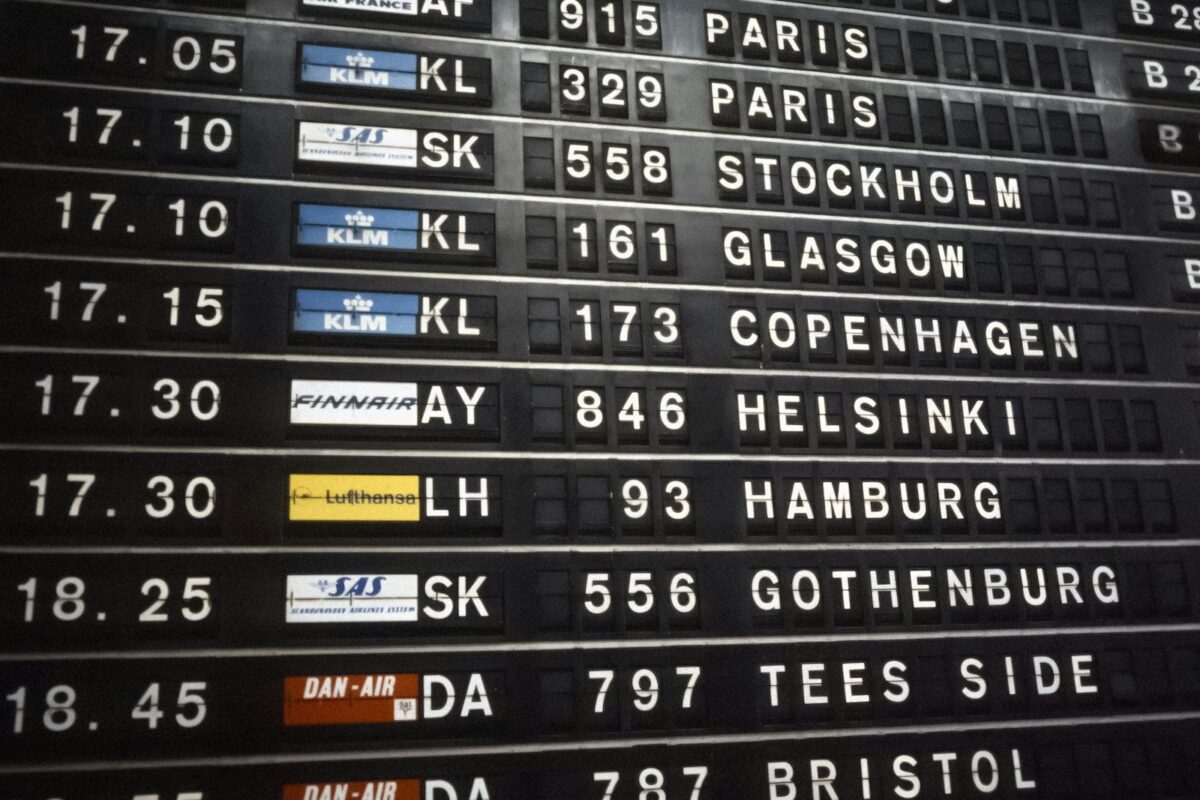
Cost to move abroad 2026 shown on an airport departures board

What the move really includes

The upfront fees you can see

Start with the obvious. Visa application fees range from modest to steep, and several countries add a health surcharge on top. The UK charges an Immigration Health Surcharge per year of your visa. The US now adds a $250 visa integrity fee at issuance. Australia and New Zealand levy application charges per applicant, so a family multiplies fast. Credential evaluations, police certificates and biometrics each carry their own small bills.

None of these is huge alone. Added together, across a couple of people, they often clear several thousand dollars before you have booked a flight.

Proof-of-funds and the cost to move abroad 2026

This is the line that surprises people most. Many visas require you to show settlement or maintenance money you are not spending, only proving. Canada sets fixed proof-of-funds amounts for Express Entry by family size. The UK asks students and many workers to hold maintenance funds for a set period. Germany expects a blocked account for job-seekers and students. You are not paying this money away, but it must sit in your account, which changes how much you actually need saved.

Treat proof-of-funds as locked capital. It shapes your timeline as much as your budget.

The hidden charges that catch people

Take Bilal, an IT specialist from Lahore moving on a skilled-worker route. He budgeted the visa fee and a flight, then met the rest: a first-month rent deposit plus agent fee, baggage and shipping, currency conversion losses, private health cover before his public coverage started, and the cost of certifying documents. His real outlay ran far past the visa line.

Build a buffer for these. A simple rule: whatever the official fees total, add a settling-in fund for one to three months of rent, transport and food in your destination city. Two short words help here. Plan generously.

Want a personalised move-cost estimate for your destination and family size? Build one with us at https://linktr.ee/travelexpore.

Money checklist

  • Count visa fees, surcharges and biometrics for every applicant.
  • Set aside proof-of-funds as locked, not spendable, money.
  • Add deposits, shipping and currency losses to your budget.
  • Keep a one-to-three-month settling-in fund on top.

For destination-specific figures, see our guide to proof-of-funds across major work and study visas.

Budget questions, answered

Is proof-of-funds money I have to spend?

No. You must show you hold it, usually for a set period, but it stays yours to use after you arrive.

What is the most overlooked cost?

Settling-in money, the rent deposits, shipping and early living costs before your first local pay arrives.

Do fees rise each year?

Often, yes. Several countries index visa and health charges annually, so always check current figures before you apply.

Can I reduce the upfront burden?

Sometimes, by timing applications, choosing routes with lower surcharges, or applying as the right family configuration.

Keep reading

Share this story

  • LinkedIn: The visa fee is the smallest part of moving abroad. Here is the full 2026 cost picture.
  • Twitter: Cost to move abroad 2026: visa fees are the small line. Proof-of-funds and hidden charges are the big ones.
  • Facebook: Thinking of moving abroad? Budget for these costs before you book anything.

Count the full cost before you commit

A move planned on the visa fee alone runs out of money fast. Map every charge for your destination and family size, and build a realistic relocation budget with help at https://linktr.ee/travelexpore.

Sources

Tapay copy tradingGrow your money while you plan your moveTapay auto-copies a live trading strategy to your own account — spot & futures. Start free on demo, go live when you’re ready.Start free →

Trading involves risk. Only trade what you can afford to lose.

5 Common Mistakes That Get Canada Study Permit Refusal Letters in 2026

Roughly 38% of Canada Study Permit applications from sub-Saharan Africa were refused in 2025, according to IRCC’s annual transparency release. The numbers are uneven by country — Nigerian applicants saw refusal rates near 43%, while Ghanaian and Kenyan applicants hovered around 33%. The good news is that Canada Study Permit Refusal letters cluster around five fixable mistakes. Get these five right and the same file you nearly submitted lands inside the approval band.

Mistake 1: A weak Statement of Purpose

The Statement of Purpose (SOP) is the most-cited refusal reason in 2025 IRCC GCMS notes. Officers want a one-page document that ties three things together: (a) why this specific program, (b) why this specific institution, and (c) why Canada rather than the UK, Australia, or staying home. Generic SOPs that praise "Canada’s multicultural society" get refused; specific SOPs that name course modules, a thesis supervisor, and a return-to-country employer get approved.

A Lagos-based Bachelor’s graduate applying for a Master’s in Data Science at the University of Waterloo should mention the supervisor whose published work overlaps with the applicant’s undergraduate thesis. That single paragraph flips the visa officer’s read on study intent.

Mistake 2: Proof of funds that does not match IRCC math

IRCC raised the cost-of-living threshold to CAD 22,895 per year (outside Quebec) from January 2024 and the 2026 levels review kept it unchanged. Add one year’s tuition, plus CAD 4,000 for travel, plus CAD 8,000 per dependant if applying with spouse or children. African applicants frequently underfund by overlooking that the threshold is per year of study — a two-year Master’s needs the funds doubled or evidence of credible installment funding.

Bank statements alone do not work. IRCC wants six months of transaction history showing the funds did not arrive yesterday, plus a source-of-funds letter. The official IRCC funds list spells out the acceptable proofs.

Mistake 3: Filing without a valid Provincial Attestation Letter

Since January 2024, IRCC requires a Provincial Attestation Letter (PAL) from the destination province for most study-permit applications. By 2026 this is enforced end to end. Filing without a PAL is an automatic refusal. Filing with a PAL that has expired or that was issued by a province where you no longer have admission is also an automatic refusal. Always cross-check that your designated learning institution shares the PAL via the provincial portal, not via email or scan.

Need a second pair of eyes on your application? Travel Explore can review it — https://linktr.ee/travelexpore

Mistake 4: Triggering the dual-intent objection

Visa officers read between the lines. If your file looks like you intend to permanently relocate before completing the program, you get refused on "dual intent" grounds. Common triggers: SOP language about "migrating to Canada", family members already on PR in Canada with no mention of return ties, age over 35 with a Bachelor’s-level program, a thin domestic career path back home. The Travel Explore Canada study permit guide has tested SOP openings that pass dual-intent scrutiny.

A Kenyan applicant aged 32 applying for a college diploma without prior tertiary education will absolutely face dual-intent objections. Either upgrade to a Master’s-level program or supply employer letters that pre-commit to a post-study role back home.

Mistake 5: Translation, notarisation and biometric slip-ups

The cheapest refusals are the most embarrassing. WAEC results without a certified English translation. A Sworn affidavit translated by a friend rather than an ICCRC-recognised translator. Biometrics taken at one VFS centre but uploaded to a profile linked to a different province. These are 100% fixable. Use a sworn translator listed on the Canadian embassy website, redo biometrics in the right city, and recheck the file before clicking submit.

Frequently asked questions about Canada Study Permit Refusal

Can I reapply after a Canada Study Permit Refusal?

Yes, immediately. There is no cooldown period, but you must address each refusal reason in the new file with new evidence. A reapplication that ignores the GCMS notes is refused again.

Should I request my GCMS notes?

Always. The CAD 5 GCMS request through Canadian counsel reveals the exact officer reasoning and is your blueprint for the next file.

Does an SDS application reduce refusal risk?

Yes for eligible countries. Although SDS as a separate stream ended in November 2024, the document-light pathway it replaced (Student Direct Stream) still pulls fast approval in revised processing standards.

Does a refusal hurt my next visa to another country?

It does not bar you, but you must declare it. UK and Australian forms ask about prior refusals; a hidden refusal is itself grounds for refusal.

Can Travel Explore help me appeal?

Study permit refusals are not appealable, but they are challengeable via judicial review or, more commonly, a stronger reapplication. Travel Explore handles both.

The bottom line

  • Canada Study Permit Refusal letters cluster around the SOP, funds, PAL, dual intent and translation slips
  • Fix the SOP first — it carries the most weight in GCMS notes
  • Match IRCC math on proof of funds; do not underfund by even one term
  • The Provincial Attestation Letter is mandatory and non-negotiable
  • Reapply quickly with GCMS notes addressed point by point to flip a Canada Study Permit Refusal into an approval

Apply with confidence

Get expert help with your Canada Study Permit Refusal recovery — https://linktr.ee/travelexpore

Related reads on Travel Explore

Share this story

  • 4 in 10 African study permit files get refused. Here are the five fixes
  • The SOP paragraph that flips a Canadian visa officer’s read
  • Proof of funds: the math IRCC uses that most African applicants miss