
Yearly Archives: 2026

ETIAS Launch in Q4 2026: What African Travellers Need to File for Schengen Entry

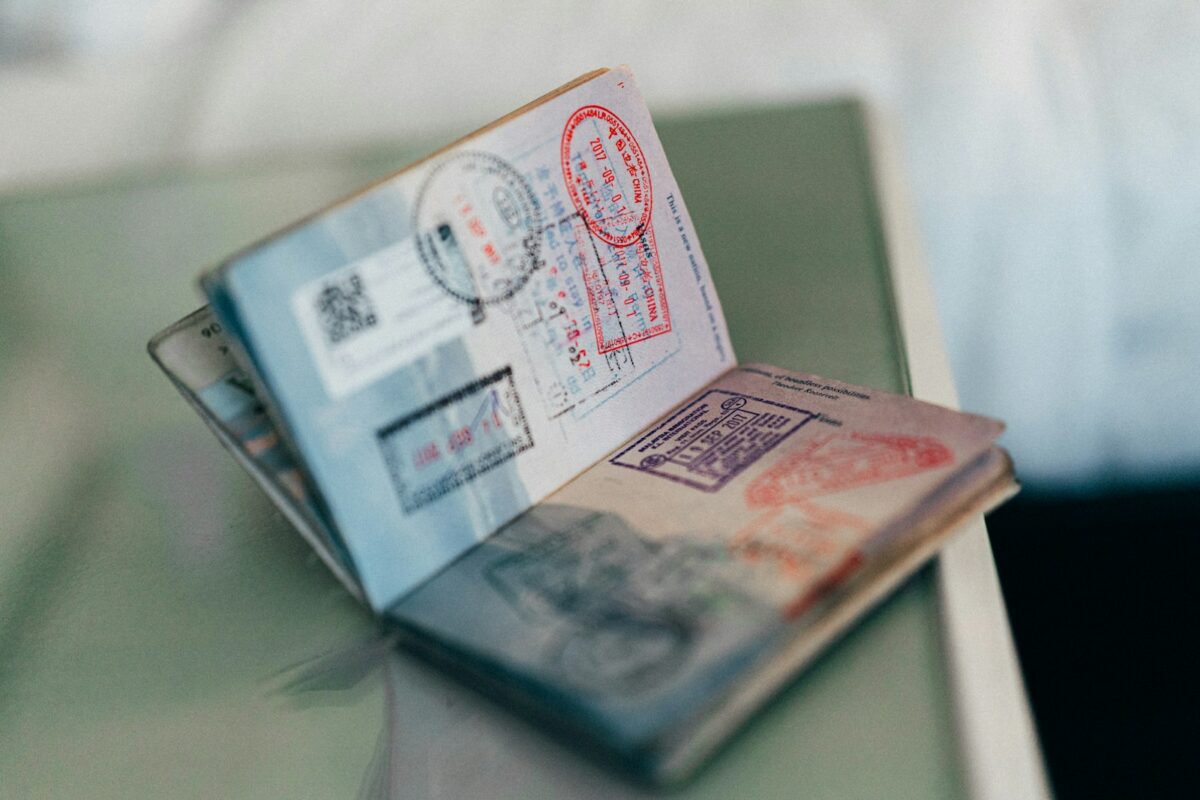
The ETIAS launch Q4 2026 is the second half of Europe’s new border architecture, and it lands on the heels of the Entry/Exit System (EES) that went live on 10 April 2026. For African passport-holders, this is a real procedural change rather than a marketing tweak: you will need a pre-travel authorisation before boarding a flight to any Schengen country once ETIAS is live, even for short tourism, business or family-visit trips. Read this if you are visa-exempt for the EU — or planning to be once Kenya, South Africa or Mauritius secure full reciprocity.

On this page

EES today, ETIAS this autumn — the sequence

EES is a database that registers every non-EU short-stay entry and exit, replacing manual passport stamps with biometric capture of facial image and fingerprints. It went live 10 April 2026 and has been rolling out in phases at airports and land borders since. ETIAS is the pre-travel authorisation that visa-exempt nationals will need on top of EES, and the European Council confirmed in March 2025 that it would launch in the last quarter of 2026. The European Commission has now signalled October–December 2026 as the operational window, with a six-month transition period before authorisation becomes mandatory.

Who actually needs ETIAS as an African passport holder

ETIAS applies only to nationals of countries already on the EU’s visa-free list. Today that covers passport-holders of Mauritius and Seychelles directly, plus second-passport holders from many African families — UK, Canadian, Australian or Caribbean CBI passports issued to African nationals all trigger ETIAS rather than a Schengen visa. African passport-holders from countries requiring a short-stay Schengen visa (Nigeria, Ghana, Kenya before reciprocity finalises, South Africa, Senegal, Egypt and most others) continue to apply for the C-type visa and are not in the ETIAS scope yet.

Kwame, a Ghanaian project manager with a Canadian passport, illustrates the most common dual-citizen case. From Q4 2026 he will need an approved ETIAS authorisation linked to his Canadian passport before he can fly Toronto–Frankfurt. His Ghana passport is irrelevant for the Schengen leg as long as he travels on the Canadian document.

Filing flow, fee, validity

The ETIAS application is online, takes roughly 10 minutes and costs €7 for applicants between 18 and 70. Under-18s and over-70s are exempt. Decisions are usually issued within minutes, but the EU allows up to 96 hours for routine review and up to 30 days where additional documentation is requested. Authorisations are valid for three years or until the underlying passport expires, whichever comes first, and cover multiple short stays of up to 90 days in any 180-day rolling window across all 30 Schengen states.

You will be asked for: passport details, current address, education and occupation, current and previous Schengen travel history, criminal record disclosure, and a few security questions about travel to conflict zones. Lying is not the move — the system cross-checks against Interpol, SIS, VIS and other databases before granting authorisation.

Pre-file with Travel Explore

Once Q4 opens we will pre-file ETIAS applications for African travellers and dual-citizens at no charge on Travel Explore Premium. Reserve your slot here → https://linktr.ee/travelexpore

Reasons ETIAS gets denied

The European Commission’s guidance lists six primary refusal grounds: previous Schengen overstay, irregular entry record in EES, unresolved criminal record matching, listed alert in SIS, public health concern, or false statements during the application itself. The most common pitfall for African dual-citizens is failing to disclose a previous visa refusal — even one rejected Schengen visa filed under your African passport must be declared on the ETIAS application linked to your second passport. Suppression equals refusal.

If refused, you receive a reasoned decision and a right of appeal in the country responsible for the assessment. There is no automatic ban — you can re-apply once the refusal ground is cured.

FAQ

Does ETIAS replace a Schengen visa?

No. ETIAS only applies to passport-holders who are already visa-exempt. Nigerian, Ghanaian, Kenyan and most other African passport-holders still apply for the Schengen short-stay visa.

Is it a visa?

No. ETIAS is a pre-travel authorisation, similar to the US ESTA or Canadian eTA. Border officers still make the final entry decision.

Do I need ETIAS for transit?

Yes — if you leave the international transit area in a Schengen airport, ETIAS is required. Airside-only transit is exempt.

Does an EU residence permit replace ETIAS?

Yes. Anyone holding a long-stay D-visa or residence permit from a Schengen state is exempt from ETIAS for travel within Schengen.

Will ETIAS affect EES biometric scans?

No. EES still captures fingerprints and facial image on first entry; ETIAS is a pre-authorisation layered on top.

Quick wins before Q4 2026

  • Confirm whether your passport is in the ETIAS-eligible visa-free list.
  • Renew your passport now if it expires within 24 months — ETIAS validity tracks the passport’s expiry.
  • Pull a clean Schengen travel history from EES self-service once available, to verify no spurious overstay flags.
  • If you hold a second passport (UK, Canadian, Australian, Caribbean CBI), file ETIAS on that document — not your African one.
  • Build a 96-hour buffer between application and flight, especially in October and November when launch traffic peaks.

Travel Explore handles the filing

Get a clean ETIAS file submitted by an expert team. Lock in your slot at https://linktr.ee/travelexpore

Related reads

Share this story

  • Europe just added a 10-minute pre-flight step. Skip it and the airline won’t board you.
  • Visa-free into Schengen? Read this before booking your October trip.
  • €7 and three years of coverage. Here is the ETIAS playbook for African travellers.

Sources: European Commission Migration and Home Affairs ETIAS and EES guidance (April 2026); French Ministry of Europe and Foreign Affairs EES launch advisory; Fragomen EU border briefing, May 2026.

UAE Property Investor Visa AED 400,000 in 2026: How African Buyers Qualify

The UAE Property Investor Visa AED 400,000 route is the cleanest entry to Gulf residency for African buyers in 2026 — and after April’s rule changes it is also the cheapest it has been since 2019. Sole owners now secure a renewable 2-year property investor visa with no minimum value when paired with the Dubai Land Department’s valuation, while joint owners must each hold at least AED 400,000 in equity. For Nigerian, Kenyan, Ghanaian and South African investors who have already been priced out of London and Lisbon, Dubai is offering the most accessible legal residency in the Gulf.

Map of this guide

Three property-visa tiers explained

The UAE now operates three property-linked residency tiers. Tier one is the renewable 2-year property investor visa: sole owners can hold any value of completed Dubai property at DLD valuation, joint owners need AED 400,000 of equity each. Tier two is the 10-year Golden Visa for property investors, which requires AED 2 million invested. Tier three is the Real Estate Talent / SME founder package, which gives priority processing for off-plan and mortgaged buyers under the refreshed Golden Visa investor portal launched in May 2026.

The February 2026 scrapping of the 50% down-payment rule is the single biggest change. Mortgaged and off-plan units now count toward the threshold at full DLD valuation, not just paid-in equity. That alone halves the cash a Lagos or Nairobi investor needs in the first year.

Paperwork the Dubai Land Department wants

You will need the Title Deed in your name, a DLD valuation certificate dated within 90 days, a clear-from-mortgage letter (or the bank’s no-objection letter if you are mortgaged), a passport copy, a passport-sized photo and a UAE health-insurance policy. Source-of-funds documentation has tightened in 2026 — three months of bank statements from your home country plus an audited income trail are the new norm under the UAE’s enhanced AML regime.

Emeka, an Abuja-based oil services trader, illustrates the cleanest path. He bought a 1-bedroom in Dubai Marina for AED 1.1 million using a 50% mortgage in March 2026. Under the old rule his AED 550,000 equity counted only — now the full DLD valuation does. He filed for the 2-year investor visa via the Smart Services portal, received approval in 11 days, and onboarded his family on dependant permits one month later.

Real all-in cost from Lagos or Nairobi

The visa itself is roughly AED 4,000 in government fees plus AED 1,200 for Emirates ID. Add legal due diligence, NOC fees and DLD admin and you are landing closer to AED 18,000 in transactional costs for a single applicant. Dependants are AED 5,000–7,000 each. The bigger swing item is the property purchase: a usable 1-bedroom in Jumeirah Village Circle sits at AED 750k–950k today, while Dubai Marina or Downtown will start at AED 1.4 million.

African buyers typically finance via a UAE mortgage (LTV 50–80% for non-residents, 6.5–8% rates) and use a Dubai-based property management firm to keep the unit yielding. Net rental yield on a JVC 1-bed is currently 6–8% — enough in many cases to cover the visa renewal cycle.

Have Travel Explore vet the deal first

Every week we see African buyers lose deposit money on off-plan projects that never qualify for residency. We pre-vet developers, valuations and visa eligibility before you sign anything. Start the audit at https://linktr.ee/travelexpore

Path to the 10-year Golden Visa

Once your portfolio crosses AED 2 million in DLD-valued Dubai property, you become eligible for the 10-year Golden Visa for investors. The 2026 update lets you reach that threshold across multiple properties — a stack of three JVC units now does the job. The Golden Visa also unlocks sponsorship of parents, household staff and unrestricted business setup in mainland UAE.

For African families thinking in five-year cycles, the play is to start with a 2-year investor visa on one apartment, build rental cash flow, add property two and three over 24 months, then convert to Golden Visa with the AED 2 million milestone.

FAQ

Does an off-plan apartment qualify?

Yes from April 2026 — provided the DLD records you as the title-holder. Earlier rules required completion or 50% paid-in equity.

Can my spouse and children be sponsored?

Yes. Spouse, children under 18 (or unmarried daughters of any age) and parents in some cases can be added as dependants under your investor visa.

Do I have to live in Dubai?

No physical-presence rule applies — but you must not stay outside the UAE for more than 6 consecutive months or the visa lapses. Most African investors travel in every quarter for compliance.

Is rental income taxable?

The UAE itself imposes no personal income tax on rental income. Tax may still apply in your country of residence — check home-country rules separately.

What if the property value falls below AED 400,000 at renewal?

The investor visa is anchored to the original Title Deed and DLD valuation at issuance. Market drops do not automatically cancel the visa unless you sell the property.

Five quick wins for African buyers

  • Buy in DLD-registered freehold areas only — not leasehold pockets.
  • Insist on the developer’s RERA registration number before paying any deposit.
  • Use a UAE-licensed escrow account for all installments — never wire to a developer’s operating account.
  • Keep one year of liquid AED for renewals, insurance and DEWA bills.
  • Build a UAE banking footprint before your first rental contract — Emirates NBD, Mashreq Neo and Wio currently accept African passport holders without local residency.

Buy clean, hold long, renew on autopilot

Travel Explore handles property due diligence, visa filing and Emirates ID renewal under one engagement. Begin at https://linktr.ee/travelexpore

Related reads

Share this story

  • One Dubai apartment. Two-year residency. Zero income tax. Welcome to 2026.
  • AED 400,000. That’s it. The cheapest Gulf residency African buyers will see this decade.
  • The 50% down-payment rule is gone — mortgaged buyers now qualify like everyone else.

Sources: Dubai Land Department property investor portal 2026; UAE Federal Authority for Identity & Citizenship Golden Visa rulebook 2026; Fragomen UAE residency client briefing, May 2026.

UK Earned Settlement 10-Year ILR 2026: What African Skilled Workers Lose

UK earned settlement 10-year ILR 2026 is the single biggest shift in British settlement law for our generation of African Skilled Worker holders. The Home Office has confirmed that the qualifying period for Indefinite Leave to Remain under most points-based system routes — Skilled Worker, Scale-up, High Potential Individual — moves from five years to ten under the new earned settlement framework. If you are a Nigerian software engineer, a Ghanaian care assistant, a Kenyan radiographer or a Zimbabwean accountant currently on a Skilled Worker visa, this article maps the rule, the carve-outs, and the realistic moves that protect your settlement clock.

Inside this guide

The 2026 earned settlement rule, in plain English

The 2025 immigration white paper, now translating into the Statement of Changes published in spring 2026, formally raises the standard qualifying period for Indefinite Leave to Remain to ten years for most points-based routes. The official position is that settlement is no longer automatic at five years of lawful residence — it must be earned through continuous contribution, clean compliance and either time or specific demonstrable national-interest factors that can shave the clock back to five.

The four pillars of “earned” status are: continuous sponsored employment without unauthorised gaps, salary at or above the relevant going rate across each three-month payroll window, B2 English maintained, and no breach of public-funds, criminality or sponsor-licence rules. Hit all four and you stay eligible; miss one and you fall back to the new decade.

Who keeps the 5-year clock and who restarts

The change is forward-looking but reaches further than many African applicants assume. Anyone whose first Skilled Worker permission was granted before the statement’s commencement date generally keeps the five-year route, provided they apply for ILR before any visa break. People granted a new initial Skilled Worker, Scale-up or HPI visa after commencement default to ten years unless they qualify for one of the published acceleration grounds (highly-skilled roles on the Critical Workforce list, dependants of a British national, or those settled-flagged through a global talent endorsement).

Folake, a Lagos-trained nurse, illustrates the trap. She moved to Manchester on a Health and Care Worker visa in March 2023. Her five-year ILR window closes in March 2028 — comfortably inside the legacy framework. But if she switches sponsor and her new permission is issued post-commencement, the Home Office can argue she “re-entered” the route and reset her settlement clock. Continuity matters more than ever.

Real-world math: extra fees, IHS, anxiety

An additional five years of Skilled Worker sponsorship is not just a calendar problem — it is a balance-sheet event. Two more 3-year visa extensions, each carrying the application fee plus Immigration Health Surcharge for the worker and any dependants, push the typical cost of reaching ILR from roughly £14,000 to £26,000 for a family of four. Add in priority service, sponsor licence levy pass-through, and biometric appointments and you are looking at well over £30,000 to cross the line.

That is before the soft costs: a decade of dependency on a single sponsor, restricted ability to switch industries, and rising scrutiny on the three-month payroll compliance window introduced in April 2026.

Map your move with Travel Explore

If you are mid-Skilled-Worker and unsure whether you are on the 5-year or 10-year clock, our consultants run a free 20-minute timeline audit so you can plan extension dates, switches and dependant applications around the new rules. Start here → https://linktr.ee/travelexpore

Three legitimate moves to defend your timeline

First, freeze your existing Skilled Worker permission. Resist the urge to switch sponsors purely for a small salary uplift before commencement; a new permission could pull you onto the 10-year track. Second, accelerate any dependant applications now so spouse and child clocks align with yours. Third, if your role sits on the Critical Workforce or new Temporary Shortage List, capture documentary evidence — pay slips, employer letters, role profile — every twelve months so you can credibly argue an “earned” five-year settlement when policy guidance lands.

African applicants in shortage clinical roles (nursing, radiography, paramedic), STEM PhDs in priority sectors, and Global Talent endorsees from accredited African universities have the strongest factual basis for staying on a 5-year path. Document early, document often.

FAQ

Will my Skilled Worker visa become invalid?

No. Existing leave continues until its current expiry. The ten-year clock affects the new ILR test — not the validity of the current Skilled Worker grant.

Do dependants follow the main applicant’s clock?

Yes. Spouses and children settle on the principal’s qualifying period, so any reset on the main applicant flows through.

Does time on a Student or Graduate route count?

No. Only time on the Skilled Worker / Scale-up / HPI tracks counts toward ILR under the points-based system. Student and Graduate route time still does not.

Can I shorten ten years with extra salary?

The Home Office signals that contribution thresholds (salary, tax, civic activity) may unlock the accelerated 5-year route, but the final scoring grid is expected in late 2026. Plan around ten years and treat any acceleration as upside.

What if I lose my sponsor?

You have 60 days to find new sponsorship. A clean transfer inside that window protects continuity; a gap can reset your clock. Build a backup sponsor list before you need it.

What to walk away with

  • Ten years is the new default ILR window for Skilled Worker holders post-commencement.
  • Continuity of permission is the single biggest factor protecting a 5-year clock.
  • Critical-shortage roles and Global Talent endorsements remain the strongest acceleration cases.
  • Budget for an extra £12,000–£15,000 per family for two additional extensions.
  • Align dependant applications to the principal applicant before any switch.

Plan the next decade with one call

Travel Explore maps your settlement clock, sponsor strategy and family timeline in one place. Book your audit at https://linktr.ee/travelexpore

Related reads

Share this story

  • UK just doubled the ILR clock. African Skilled Workers need this read today.
  • Five years became ten — but only for some. Find out which track you are on.
  • £12,000 of new fees, 60 months of extra waiting. The UK settlement story has changed.

Sources: UK Home Office Statement of Changes 2026, House of Commons Library briefing CBP-10267, gov.uk Skilled Worker guidance updated 20 May 2026.

Japan Specified Skilled Worker 2026: African Workers Use SSW Type 1 and Type 2 Routes

Japan’s Japan Specified Skilled Worker 2026 visa — known as Tokuteigino in Japanese — covers 16 sectors with a workforce-shortage focus. Two sub-routes exist: SSW Type 1 (Tokutei Gino 1-go), which is renewable up to five years total, and SSW Type 2 (Tokutei Gino 2-go), which has no renewal cap and supports family reunification. Egyptian welders, Kenyan agricultural workers, Nigerian construction technicians, Ghanaian nursing assistants and Senegalese hospitality professionals are using this route to build careers in Tokyo, Osaka, Nagoya and Fukuoka. Here is the 2026 playbook.

The 16 sectors covered in 2026

From the most recent Ministry of Justice expansion, the 16 sectors are: nursing care, building cleaning, machine parts and tooling, industrial machinery, electric and electronic information, construction, shipbuilding and machinery, automobile repair, aviation, accommodation, agriculture, fishery and aquaculture, manufacture of food and beverages, food service, automobile transportation, railway, and forestry/wood-product manufacturing. Each sector has its own qualifying skill test and Japanese-language exam.

The sectors most receptive to African applicants right now are food service, accommodation, agriculture and construction. Nursing care has been expanding but typically requires JLPT N3 Japanese, which is a heavier lift. Manufacturing and shipbuilding hire heavily but candidates need ITAC or sector-specific technical training that is harder to access from Africa without a feeder programme.

SSW Type 1 versus Type 2 — the difference that matters

SSW Type 1 (Tokutei Gino 1-go) is the entry route. Family members cannot accompany the worker; the visa is renewable in one- and two-year increments up to five years total. Salary must match a Japanese national in the equivalent role. After five years, the worker either transitions to Type 2 (only in sectors that have implemented Type 2 — currently 11 of the 16) or returns home.

SSW Type 2 (Tokutei Gino 2-go) is the long-term route. Spouse and dependent children can accompany, and the visa renews indefinitely. Eligibility requires a higher skill test pass plus several years of supervisory experience. After roughly five years on Type 2 (ten years total in Japan with one year as a permanent resident-aligned spouse), permanent residence becomes possible. For African workers planning a long-term move with family, Type 2 is the strategic target — but most start with Type 1 and progress.

The skill test and Japanese language requirement

Two exams are required for SSW Type 1. First, the Japan Foundation Test for Basic Japanese (JFT-Basic) at level A2 or higher, or JLPT N4 or higher (N3 for nursing care). The JFT-Basic is administered at testing centres in Cairo, Lagos, Nairobi, Accra, Dakar, Pretoria and several other African capitals. Pre-registration is required and tests fill up months in advance.

Second, the sector-specific skill test (Tokutei Gino Hyoka Shiken). These are written and practical exams set by the sector industry body. Tests are held in Japan and in many African cities depending on the sector — food service and accommodation exams are now offered in Lagos and Nairobi annually. Pass rates vary by sector but typically run 35–55%. Most candidates need a structured 4–6 month preparation programme.

Considering the Japan SSW route but not sure which of the 16 sectors fits your work history? Send your CV through https://linktr.ee/travelexpore and we will tell you which sector exam you should prepare for.

The full application timeline

Realistic timeline. Months 1–2: pick a sector matched to your work history and start the JFT-Basic preparation. Month 3: take the JFT-Basic (or JLPT N4 if you have already studied Japanese). Months 4–5: prepare for and take the sector skill test. Month 6: with both passes in hand, work with a Japanese recruiter (or your Travel Explore consultant) to land a Japanese employer offer. Month 7: the employer submits the Certificate of Eligibility (COE) application to the Japanese Immigration Services Agency. Month 8: COE arrives; you submit the visa stamp application at the Japanese embassy in your home country. Month 9: visa stamped, you fly to Japan and register at the local ward office.

Costs run roughly USD 1,500–3,000 in exam fees, document translation and apostille fees, plus the international flight. Many African candidates use staffing agencies that front the cost in exchange for a recruitment fee deducted from the first year’s salary — verify the agency is licensed by both your country’s labour migration authority and Japan’s accredited support organisation list before signing.

Frequently asked questions

What level of Japanese do I need for the SSW visa 2026?

JFT-Basic A2 or JLPT N4 for most sectors; JLPT N3 for nursing care. Tests are held in major African cities including Cairo, Lagos, Nairobi, Accra, Dakar and Pretoria.

Can my family come with me on Japan’s SSW Type 1?

No. Family reunification is only available under SSW Type 2. Type 1 workers must travel without spouse or children. After progression to Type 2, family can join.

How long can I stay in Japan on the SSW visa?

SSW Type 1 is capped at five years total. SSW Type 2 has no cap and supports indefinite renewal, eventually leading to permanent residence.

Which sectors are most realistic for African applicants?

Food service, accommodation, agriculture and construction have the highest African intake. Nursing care requires JLPT N3 (a higher bar). Manufacturing and shipbuilding require sector-specific technical training that is harder to access from Africa.

Are there licensed Japan SSW recruiters in Africa?

Yes, but verify both ends: the recruiter must be licensed by your home country’s labour migration ministry AND listed on Japan’s Accredited Support Organisation registry. Unlicensed brokers are the main scam vector in this route.

Take the next step today

Travel Explore agents are online — drop us a note from https://linktr.ee/travelexpore and we will convert this article into a written plan for your case.

End-of-article cheat sheet

  • 16 sectors covered; food service, accommodation, agriculture and construction are the most accessible for African applicants.
  • SSW Type 1 caps at five years; Type 2 is the long-term route with family reunification and a path to permanent residence.
  • JFT-Basic A2 or JLPT N4 plus a sector-specific skill test are mandatory — budget 4–6 months of preparation.

Share this story

  1. Japan’s SSW visa is the most accessible Asia route for African workers. Here is the 16-sector map.
  2. Type 1 vs Type 2 — the difference that decides whether your family can come to Japan with you.
  3. JFT-Basic A2 plus a sector test. The Japan SSW route is genuinely achievable from Lagos, Nairobi and Cairo.

Have a question about your case? Tap our team via https://linktr.ee/travelexpore and we’ll come back to you with a written next step.

South Korea E-7 Visa 2026: How African Professionals Land Skilled Jobs in Seoul

The South Korea E-7 visa 2026 is one of Asia’s most underrated skilled-worker routes for African professionals. The Ministry of Justice’s Immigration Office covers 86 designated occupations — engineers, IT specialists, designers, language instructors, marine professionals and researchers — and the route leads to F-2 long-term residency in five years. Ghanaian software developers in Seoul fintech, Egyptian marine engineers in Busan shipyards and Kenyan English-language program directors are quietly building careers there. Here is the 2026 playbook.

What the E-7 visa actually is

The E-7 (Specially Designated Activities) visa is Korea’s main skilled-worker category. There are three sub-categories: E-7-1 covers specialist professionals in 86 designated occupations (the big bucket), E-7-2 covers semi-skilled workers in five occupations including welding and shipbuilding, and E-7-3 covers private-school administrators and similar roles. Most African applicants will target E-7-1.

The visa is initially valid for up to two years and renewable. After three to five years on E-7, you can apply for the F-2 long-term residence visa, and after five years total of legal residence the F-5 permanent residence becomes available. The route also supports family — spouse and dependent children come in on F-3 dependant visas, with limited work rights for spouses through a separate F-3 work permit application.

Salary floor and points system

From the 2024 update still in force through 2026, the minimum salary requirement is 80% of Korea’s gross national income per capita — which works out to roughly KRW 32–35 million annually (about USD 23,000–25,000). For ‘high-value’ professionals — IT, R&D, biotech — the threshold may be applied at 100% of GNI per capita, around KRW 42 million.

A points-based scoring system supplements the salary floor. Points are awarded for age (younger is better), Korean language ability (TOPIK level 3 or higher adds significant points), academic degree (master’s and PhD weighted heavily), prior work experience in the designated field, and Korean employer’s size and stability. Most professional applicants need to clear 60 of 100 possible points. African candidates with master’s degrees and even basic TOPIK 2 usually clear this comfortably.

The 86 designated occupations — where Africans fit

The full list spans IT (software engineers, data scientists, network architects, security specialists, AI/ML engineers), engineering (mechanical, electrical, civil, chemical, aerospace), design (industrial, graphic, fashion, UX), language teaching (native-language instructors, language program managers), research (university researcher, lab principal investigator), marine engineering, healthcare specialists and journalism.

Three African angles. (1) Software and AI — Seoul’s fintech and Samsung/LG ecosystems hire African candidates with strong English and 3+ years of relevant experience; TOPIK is not required for English-track engineering roles. (2) Marine engineering — Korean shipyards in Busan and Ulsan hire Egyptian and Nigerian marine engineers from Alexandria Maritime and the Nigerian Maritime Academy regularly; salary floors are lower (around KRW 32m) but housing is often provided. (3) Native-language instructor — South African, Kenyan and Nigerian candidates with a bachelor’s degree from an English-speaking university and a TEFL/TESOL certificate qualify as native English instructors; entry-level salaries cluster around KRW 30m.

Have a Korean employer interested but not sure if your role qualifies as one of the 86 E-7 occupations? Send the job description through https://linktr.ee/travelexpore and we will map it to the official designation list.

How African applicants actually file

The process. (1) Land a Korean employer offer at or above the threshold for your sub-category. (2) The Korean employer applies for a Certificate of Confirmation of Visa Issuance (CCVI) at the local Korean immigration office; this typically takes three to four weeks. (3) Once the CCVI issues, you apply for the actual E-7 visa at the Korean embassy in your home country (Pretoria for Southern Africa, Abuja for Nigeria/West Africa, Cairo for North Africa, Nairobi for East Africa). Visa stamping takes 7 to 14 working days for complete applications.

The three most common refusal causes for African applicants: incorrect job-to-occupation mapping (the role’s actual duties do not match the designated E-7 occupation), academic credentials not apostilled by the Hague Convention authority in your home country, and prior immigration history in countries with high Korean concerns. Get a pre-submission file review from a Korean immigration adviser — the embassy expects clean files and rejects applications with even minor inconsistencies.

Frequently asked questions

Do I need to speak Korean for the E-7 visa 2026?

No, but TOPIK level 3 adds significant points and improves your case. English-track roles in software, engineering and research often do not require Korean.

What is the salary floor for the E-7 visa?

Approximately KRW 32–35 million annually for standard E-7-1, or KRW 42 million for high-value categories like IT/R&D. Thresholds reset annually with GNI per capita.

Can my spouse work on a Korean F-3 dependant visa?

Not automatically. Spouses on F-3 must apply for a separate work permit. F-3 holders also gain limited work rights after the main applicant transitions to F-2.

How long until I can apply for Korean permanent residence?

After three to five years on E-7 you can apply for F-2 long-term residence; after five years total of legal residence in Korea you can apply for F-5 permanent residence.

Are African degrees accepted for the E-7 visa?

Yes, provided they are from accredited universities. Documents must be apostilled by the Hague Convention authority in your home country. South Africa, Kenya, Egypt and many West African countries are Hague signatories.

Take the next step today

If you have a partner, child or sibling counting on this application, set up a free family-visa briefing via https://linktr.ee/travelexpore.

The headlines

  • E-7 covers 86 designated specialist occupations; salary floor sits around KRW 32–42m depending on category.
  • Korean language adds points but English-track engineering and research roles do not require TOPIK.
  • Apostille your African degree certificates early — missing apostilles is the top embassy refusal cause.

Share this story

  1. South Korea’s E-7 visa is one of Asia’s quietest skilled-worker routes for Africans. Here is who qualifies.
  2. 86 occupations, KRW 32–42m floor, five years to permanent residence. The Seoul plan most Africans miss.
  3. African software engineer, marine engineer or English instructor? Read this before applying for Korean visas.

Have a question about your case? Tap our team via https://linktr.ee/travelexpore and we’ll come back to you with a written next step.