Category Archives: EU

Finland Specialist Permit 2026: €3,937 Salary, 14-Day Fast Track and the D Visa for African Tech and Healthcare Talent

For African tech and healthcare talent looking past the usual UK and Germany routes, the Finland Specialist Permit 2026 is one of Europe’s most underrated fast-tracks. Salary floor €3,937 a month, processing in 10 to 14 days for registered employers, dependents on parallel permits, and a D visa that lets African specialists collect their residence permit cards in-country. Helsinki is courting overseas tech and AI workers in a way Berlin and Amsterdam are not.

What changed in the Finland Specialist Permit 2026

Finland’s Fast Track for specialists has been live since 2022, but 2026 brought meaningful upgrades. Migri now processes complete employer-filed cases in as little as 10 to 14 days. Specialists with a job offer paying at least €4,086 a month can file fully online, give biometrics on arrival, and bring spouses and children on dependent permits processed in parallel.

The minimum salary for a Specialist Residence Permit in 2026 is €3,937 per month. The applicant must hold a higher education degree or equivalent professional expertise gained through experience or other education, and the employer must be registered with Migri to access the Fast Track.

From 8 January 2026, Finland tightened the path to permanent residence with longer minimum continuous-residence requirements, but the Specialist route itself remains the same speed. African applicants should plan PR around the new clock, not the old one.

Who fits the Finland Specialist Permit 2026

Finland is targeting specialists Europe is short on: AI engineers, machine-learning researchers, software architects, cybersecurity leads, mechanical engineers, biotech scientists, and senior healthcare professionals. African candidates likely to clear the bar include a Kenyan AI engineer at a Nairobi startup with a master’s degree, a Senegalese cybersecurity lead from a Dakar bank, an Egyptian mechanical engineer from a Cairo OEM, a Cameroonian biotech researcher from a Yaoundé lab, or a South African data scientist from Johannesburg.

The route does not fit early-career generalists, retail or hospitality roles, or applicants without a degree-or-equivalent expertise story. Finland courts specialists with deep skills, not entry-level workers.

Key requirements: salary, education and the D visa

Migri publishes a clean checklist on its Fast Track for specialist page. African applicants need a signed employment contract paying at least €3,937 per month, evidence of higher-education degree or expert experience, valid passport, biometric photo, and the application fee. Fast Track speed requires the employer to be registered with Migri.

The D visa is the killer feature for African applicants. Once the residence permit is approved, you receive a D visa allowing you to enter Finland and collect your residence permit card on arrival. Spouses get an unrestricted work permit; children under 18 are added to the main applicant’s residence card.

  • Salary: minimum €3,937 per month (2026); above €4,086 for fully online filing
  • Education: higher-education degree or equivalent expertise
  • Employer: must register with Migri to access the 10-14 day Fast Track
  • D visa: enter Finland and collect the permit card in-country
  • Family: spouse permit issued in parallel, with full work rights
  • Stricter PR clock from 8 January 2026 — plan citizenship timeline accordingly

Need help with your application?

Travel Expore helps African applicants navigate this process end-to-end — from documents to consulate appointments — with consultants serving applicants from Lagos to Nairobi to Johannesburg. Start your free eligibility check at https://linktr.ee/travelexpore.

Why the Finland Specialist Permit 2026 matters for African talent

Finland is one of the few EU countries actively running an international talent campaign — Work in Finland is courting engineers and researchers disillusioned with US visa uncertainty and long European processing queues. The country’s pitch is real: 10 to 14 day processing, parallel family permits, English-friendly tech hubs (Helsinki, Espoo, Tampere, Oulu), and a path to PR after the new minimum-residence period.

Compared to Germany’s EU Blue Card or the Netherlands HSM, Finland trades a smaller market for faster processing and a calmer policy environment. African applicants targeting AI, data science or cybersecurity will find Helsinki competitive on salary and quality of life, especially with the dependent-permit head-start. Read our Germany EU Blue Card 2026 explainer for a side-by-side mental model.

Frequently asked questions about Finland Specialist Permit 2026

How fast is the Finland Specialist Permit 2026 in practice?

Cases filed by Migri-registered employers process in 10 to 14 days. Applicants who file directly without an employer registration can expect 1 to 3 months. Pre-book biometric appointments at the Finnish consulate or VFS Global centre in Lagos, Nairobi, Accra or Cairo to avoid bottlenecks.

Does the Finland Specialist Permit lead to PR or citizenship?

Yes. Specialists become eligible for permanent residence after the minimum continuous-residence period that took effect on 8 January 2026, and citizenship after the longer naturalisation timeline. Finland counts most legal residence years toward both clocks.

Can my family come with me on the Finland Specialist Permit?

Yes. Spouses and children apply for dependent permits in parallel. Spouses receive unrestricted work rights and can take any job in Finland. Children study under the standard rules at no extra fee for compulsory education.

What does the D visa actually do?

The D visa is a national long-stay visa valid for up to 100 days. After your Specialist permit is approved, the D visa lets you fly into Finland and collect your residence permit card in-country, removing a separate visa pickup step.

Which African cities can I file from?

Finnish missions and VFS Global partners cover Lagos, Nairobi, Accra, Cairo, Pretoria, Algiers and Casablanca. Application logistics depend on your country of residence; the Migri online portal handles the document upload and decision.

Key takeaways

  • The Finland Specialist Permit 2026 minimum salary is €3,937 per month.
  • Fast Track processing runs 10 to 14 days for Migri-registered employers.
  • D visa lets African specialists collect the residence permit card in-country.
  • Spouses get unrestricted work rights and family permits process in parallel.
  • For African AI, cybersecurity and biotech talent, the Finland Specialist Permit 2026 is one of Europe’s fastest routes to a Schengen residence card.

Get expert help with your Finland Specialist Permit 2026 application

Travel Explore helps African applicants — from Lagos, Nairobi, Accra, Cape Town, Yaoundé, Dakar and beyond — navigate this process end-to-end. Talk to a consultant at https://linktr.ee/travelexpore.

Related reads on Travel Explore

Share this story

  • Finland processes specialist permits in 14 days. Here is what African talent needs to file.
  • Helsinki is poaching tech talent from Berlin and Silicon Valley — African applicants are next.
  • €3,937, a degree and 14 days: the Finland Specialist Permit 2026 in plain English for African pros.

Top 5 European Health Worker Visa Routes for African Nurses and Carers in 2026

The European Health Worker Visas 2026 landscape has been reshaped by the post-pandemic nursing shortage. Five routes now compete for African nurses, carers, midwives and PSWs: the UK Health and Care Worker visa, Ireland’s Stamp 4 path through the General Employment Permit, Germany’s skilled worker route via Anabin and Anerkennung, the Netherlands Highly Skilled Migrant scheme for medical specialists, and France’s Talent Passport “profession santé”. Each has its own salary floor, language rule and timeline.

What changed for European Health Worker Visas 2026?

The UK’s Health and Care Worker visa now anchors at £25,000 (down from £31,300 after the December 2025 ISL phase-out, with healthcare-support workers phased back in for new applicants). Ireland’s critical-skills permit lists nursing among the fastest-tracked occupations with Stamp 4 access at 21 months. Germany’s Anerkennung (qualification recognition) for nurses now runs digitally through the new ZSBA portal, cutting recognition times to 90-120 days. The Netherlands HSM scheme requires €5,688 monthly gross for medical specialists. France’s Talent Passport profession santé track demands a contract above €43,243 for medical roles.

Per the WHO Global Strategic Directions for Nursing, Europe faces a 1.7 million nurse shortfall by 2030 — meaning African nurses with English or French fluency are seeing strong recruitment from public health systems and private chains alike.

Who is affected?

The five routes fit different African health worker profiles. A Nigerian registered nurse with NMCN registration and IELTS 7 fits the UK Health and Care Worker visa cleanly. A Kenyan registered nurse with the Nursing Council of Kenya credentials lands well under Ireland’s Critical Skills permit. A Cameroonian nurse with French fluency and Caisse Nationale d’Assurance Maladie credentials fits France’s Talent Passport profession santé. A Senegalese midwife with French qualifications fits Belgium and France. A Ghanaian carer with NHS-aligned care diploma fits Germany’s skilled-worker route after Anerkennung.

Key requirements: 5 routes side-by-side

Each route demands a host-country employer, qualification recognition and language proof. Salary floors and PR timelines diverge sharply. The most relevant comparisons:

  • UK Health and Care Worker — £25,000 floor, 5 years to ILR, IHS surcharge waived, OET or IELTS required.
  • Ireland General Employment Permit — €34,000-38,000 for nurses, Stamp 4 at 21 months, NMBI registration required.
  • Germany Skilled Worker — No salary floor for nurses (collectively bargained); B1 German + Anerkennung mandatory.
  • Netherlands HSM (medical specialists) — €5,688 monthly gross, BIG registration required, IND recognised employer.
  • France Talent Passport santé — Contract above €43,243, French fluency, ARS authorisation required.

Need help choosing a European health worker route?

Travel Expore helps African nurses and carers compare European Health Worker Visas 2026 end-to-end — from qualification recognition to language testing — with consultants serving applicants from Lagos to Nairobi to Yaoundé. Start your free eligibility check at https://linktr.ee/travelexpore.

Why it matters for African nurses and carers

The five routes differ on three axes that matter most for African applicants: language (UK and Ireland accept English; Germany demands B1 German; France demands French; Netherlands is more flexible but Dutch becomes mandatory at PR), salary (UK and Ireland pay better starting salaries; Germany has stronger collective bargaining; Netherlands and France pay top medical specialists best), and PR speed (Ireland 21 months to Stamp 4 is fastest; UK 5 years; Germany 21 months for Blue Card holders, 33 months for skilled worker; Netherlands 5 years; France 5 years). Per OECD Health Workforce data, foreign-trained nurses now make up 17.4% of the workforce in OECD countries, up from 13% in 2010.

For African applicants, language is the binding constraint. Anglophone nurses (Nigerian, Ghanaian, Kenyan, South African, Tanzanian) flow naturally to UK and Ireland. Francophone nurses (Cameroonian, Senegalese, Ivorian) do best on the France Talent Passport. Multilingual applicants with B1 German unlock the German route, which often has the best 5-year retention and salary growth.

Frequently asked questions about European Health Worker Visas 2026

Which European country is fastest for African nurses?

Ireland is typically fastest end-to-end — NMBI registration plus the Critical Skills Employment Permit can land an African nurse in Dublin within 4-6 months. The UK is second at 6-8 months including OSCE. Germany takes 9-12 months due to Anerkennung.

Do I need IELTS for European Health Worker Visas 2026?

UK and Ireland accept IELTS 7 (or OET equivalent for healthcare). Germany requires B1 German via Goethe-Institut testing. France requires DELF B2 French. Netherlands accepts IELTS plus a Dutch transition for PR.

Can I bring my family on European Health Worker Visas 2026?

Yes — all five routes allow family reunification. UK Health and Care Worker, Ireland Critical Skills and Netherlands HSM grant immediate family work rights. Germany and France typically require a separate family reunification application.

Which European route gives PR fastest for African nurses?

Ireland leads with Stamp 4 at 21 months on the Critical Skills permit. Germany Blue Card matches at 21-33 months depending on B1 German. UK gives ILR at 5 years. Netherlands and France standard 5-year residence.

Do I need to recognise my African nursing qualifications in Europe?

Yes. UK requires NMC registration (OSCE exam). Ireland requires NMBI registration. Germany requires Anerkennung via the regional health authority. Netherlands requires BIG registration. France requires ARS authorisation.

Which African countries send the most nurses to Europe?

Nigeria, Kenya and Ghana lead Anglophone migration to UK and Ireland. Cameroon, Senegal and Côte d’Ivoire lead Francophone migration to France and Belgium. South Africa and Zimbabwe also feature strongly across all routes.

Key takeaways

  • The European Health Worker Visas 2026 landscape offers five distinct routes for African nurses and carers.
  • UK Health and Care Worker visa anchors at £25,000 floor with 5-year ILR.
  • Ireland gives Stamp 4 fastest — 21 months on Critical Skills permit.
  • Germany requires B1 German plus Anerkennung but offers strong collective bargaining.
  • France and Netherlands demand higher salaries and language proof but pay top medical specialists best.

Get expert help with European Health Worker Visas 2026

Travel Explore helps African applicants — from Lagos, Nairobi, Accra, Cape Town, Yaoundé, Dakar and beyond — navigate this process end-to-end. Talk to a consultant at https://linktr.ee/travelexpore.

Related reads on Travel Explore

Share this story

  • African nurses, here are your top 5 European routes for 2026 — ranked
  • Five European visas, one career — the African nursing migration matrix
  • Why Anglophone nurses pick UK or Ireland and Francophone pick France in 2026

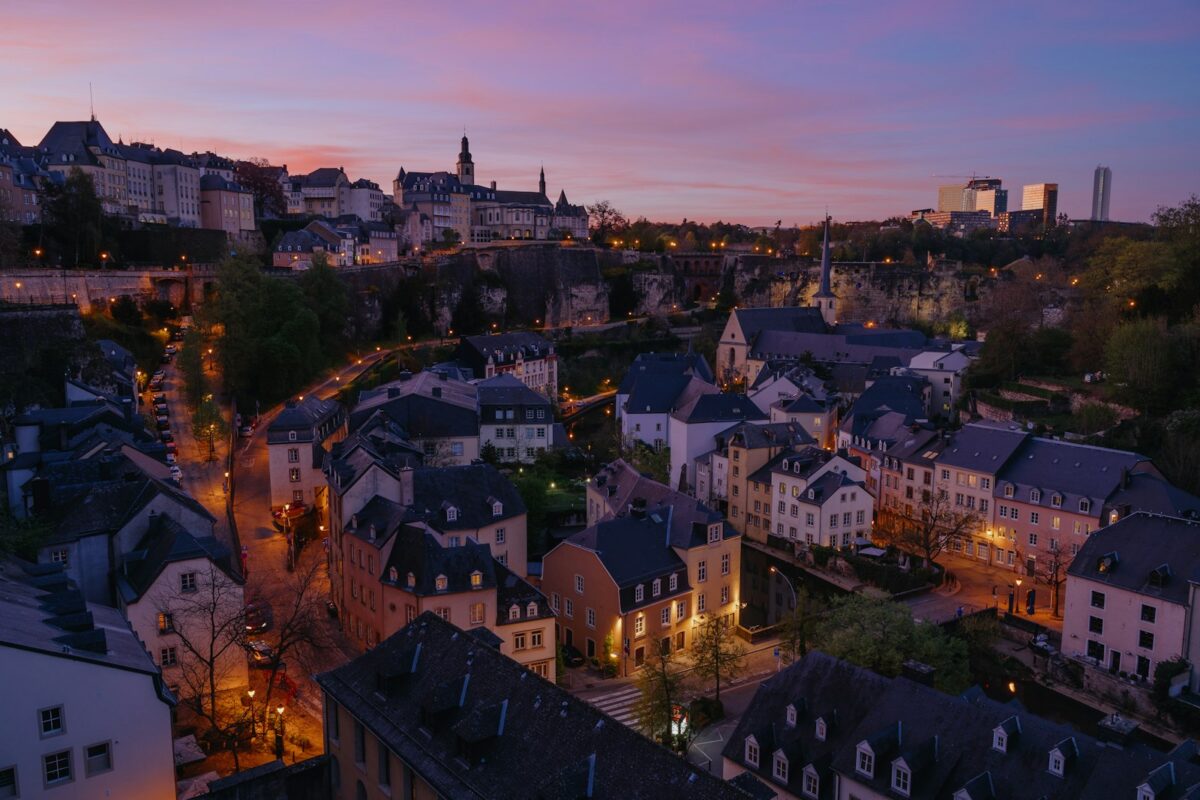
Luxembourg Work Permit 2026: EU Blue Card, Single Permit and EUR 81,000 Salary Bar for African Professionals

The Luxembourg Work Permit 2026 framework hands African professionals three distinct lanes: the EU Blue Card at €58,968 for shortage roles or €81,072 general, the Single Permit (combined work and residence) for ordinary skilled employment, and the Highly Qualified Worker permit for niche specialists. Luxembourg punches far above its weight in finance, fund administration, fintech, EU-language translation and ICT — and the Grand Duchy actively recruits Anglophone and Francophone African talent.

What is the Luxembourg Work Permit 2026?

Luxembourg operates a single-permit framework where third-country nationals apply for a combined authorisation covering both residence and work. The three sub-routes are: the EU Blue Card for highly qualified employment with EU-wide intra-mobility, the Single Permit for ordinary skilled work, and the Highly Qualified Worker permit for occupations on the Luxembourg shortage list. Per the guichet.lu Blue Card page, decisions for complete files land in 60 to 90 days, with priority handling for shortage occupations.

The 2026 update increases salary thresholds in line with Luxembourg’s inflation indexing. Application fees are €80 for the residence card plus the work-permit administrative fee. Permits are issued for the duration of the contract, capped at 4 years for Blue Card and 1-2 years for Single Permit (renewable).

Who is affected?

The Luxembourg Work Permit fits African finance, ICT and EU-language professionals: a Senegalese fund accountant joining a Luxembourg City fund administrator, a Cameroonian fintech engineer at a Kirchberg neobank, a Nigerian ICT specialist at a regulated EU bank, an Ivorian compliance officer at a private banking arm, an Egyptian quantitative analyst at a hedge fund, a Ghanaian translator with French/English specialisation joining EU institutions, and a Tanzanian fund-of-funds analyst at a UCITS administrator.

Luxembourg’s strength is the financial sector — over 25% of EU UCITS funds and the largest cross-border life insurance hub. African banking and finance professionals routinely move from Lagos, Nairobi, Cairo and Johannesburg to Luxembourg through internal transfers within global banks (BGL BNP Paribas, Société Générale, Deutsche Bank, etc.).

Key requirements & salary thresholds

To qualify for the Luxembourg Work Permit 2026, African applicants need: a Luxembourg employer ready to register the position with ADEM (the public employment service), a contract meeting the relevant salary threshold, recognised qualifications (the Ministry of Higher Education validates non-EU degrees), private health insurance until the National Health Fund kicks in, and a clean criminal record extract. For parallel context on EU finance hubs, see our Ireland General Employment Permit 2026 guide.

  • EU Blue Card — €81,072 general, €58,968 for shortage IT and STEM roles (1.0x and 1.2x average gross wage).
  • Single Permit — Salary at or above the prevailing rate for the occupation; ADEM validates the labour-market test.
  • Highly Qualified Worker — Salary at 1.5x the average wage for niche specialists.
  • Recognition — ENIC-NARIC Luxembourg validates non-EU qualifications in 30-90 days.

Need help with your Luxembourg Work Permit 2026 application?

Travel Expore helps African finance and ICT professionals navigate the Luxembourg Work Permit 2026 end-to-end — from ADEM registration to ENIC-NARIC validation — with consultants serving applicants from Lagos to Dakar to Cairo. Start your free eligibility check at https://linktr.ee/travelexpore.

Why it matters for African applicants

Luxembourg matters because it pairs French- and English-language work environments with one of the EU’s highest median wages and shortest paths to PR. After 5 years of legal residence, holders qualify for permanent residence; after 7 years (or 5 with B1 Luxembourgish), citizenship becomes available. Luxembourg also runs a friendly highly-skilled-migrant tax regime — the impatriate scheme grants a 50% tax exemption on certain bonuses and benefits for up to 8 years, similar in spirit to Spain’s Beckham law. Per Luxembourg for Finance, the financial sector hires roughly 6,000 international professionals annually, with African talent representing a growing slice.

Family-friendly policies matter: spouses get full labour-market access from arrival, and Luxembourg’s public schools accommodate French, Luxembourgish, German and English. Healthcare quality ranks among Europe’s best.

Frequently asked questions about Luxembourg Work Permit 2026

How long does a Luxembourg Work Permit 2026 application take?

EU Blue Card and Single Permit decisions land in 60 to 90 days for complete files. Highly Qualified Worker shortage-list roles can decide in 30 to 60 days.

Can I bring my family on a Luxembourg work permit?

Yes. Spouses and dependent children under 18 can apply for family reunification once the principal holder has the residence card. Spouses receive full labour-market access from arrival.

Do I need French or German for the Luxembourg Work Permit 2026?

Not at the visa stage. Many finance and ICT roles operate in English. French is essential for client-facing roles in legal and consulting; German helps in cross-border banking. Luxembourgish becomes useful for citizenship.

What is the salary threshold for the EU Blue Card via Luxembourg?

€81,072 for general highly qualified employment; €58,968 for shortage IT and STEM roles. The Single Permit has no fixed threshold but must match the prevailing rate for the occupation.

Can I apply for permanent residence in Luxembourg?

Yes. After 5 years of continuous legal residence with valid permits, holders qualify for the EU long-term residence permit. Luxembourg citizenship requires 5 to 7 years plus B1 Luxembourgish.

What is the Luxembourg impatriate tax scheme?

A regime offering 50% tax exemption on impatriation premiums (relocation bonuses, housing allowances, school fees) for up to 8 years for certain highly skilled employees moving from outside Luxembourg.

Key takeaways

  • The Luxembourg Work Permit 2026 framework offers Blue Card, Single Permit and Highly Qualified Worker lanes.
  • EU Blue Card requires €81,072 general or €58,968 for shortage IT and STEM.
  • African finance, fund administration, fintech and EU-language professionals are the strongest fit.
  • PR available after 5 years; citizenship after 5-7 with B1 Luxembourgish.
  • The impatriate scheme offers 50% tax exemption on relocation bonuses for 8 years.

Get expert help with your Luxembourg Work Permit 2026 application

Travel Explore helps African applicants — from Lagos, Nairobi, Accra, Cape Town, Yaoundé, Dakar and beyond — navigate this process end-to-end. Talk to a consultant at https://linktr.ee/travelexpore.

Related reads on Travel Explore

Share this story

  • Why Luxembourg is hiring African finance talent at EUR 58,968 in 2026
  • The Grand Duchy’s three work-permit lanes — which one fits African professionals
  • 50% tax exemption + Blue Card + EU mobility — the Luxembourg stack

Estonia Digital Nomad Visa 2026: 12-Month Permit and e-Residency Path for African Tech Talent

The Estonia Digital Nomad Visa 2026 is one of Europe’s cleanest packages for African tech talent: a 12-month residence permit, a remote-work-friendly tax structure, an e-Residency layer for company formation, and full Schengen mobility. Tallinn already has a small but vibrant African tech community working for US fintechs, UK SaaS firms and remote agencies. The 2026 update keeps the €4,500 monthly gross income floor while clarifying the tax residency rules.

What is the Estonia Digital Nomad Visa 2026?

Estonia launched its Digital Nomad Visa in 2020 as part of a wider push to attract location-independent professionals to its e-Estonia ecosystem. The visa is officially a Type D long-stay national visa for remote workers employed by, contracted to, or running a business outside Estonia. Per the Estonian Police and Border Guard Board page, the visa is issued for up to 365 days and is non-renewable in-country — though holders can transition to other Estonian permits like the Startup Visa or Employee Card if they secure local work.

The 2026 update raises the gross monthly income floor to €4,500 (from €3,504 set in 2024) and aligns it with Estonia’s rising minimum wage. Application fees are €100 at an Estonian embassy or honorary consulate. Decisions typically land in 30 days for complete files.

Who is affected?

The Estonia DNV fits African tech talent and remote-first creatives: a Nigerian product designer contracted to a New York agency, a Kenyan software engineer working full-time for a London SaaS company, a Senegalese marketing consultant servicing French and Belgian clients, an Egyptian copywriter building a remote agency, a Ghanaian frontend developer at a Berlin remote-first startup, and a South African video editor with international clients. The unifying thread is verifiable income above the floor from non-Estonian sources.

African applicants who want to combine the DNV with company formation often pair it with e-Residency — Estonia’s digital identity programme that lets non-residents register Estonian companies and run them online. The DNV is the residence layer; e-Residency is the business layer.

Key requirements & income floor

To qualify for the Estonia Digital Nomad Visa 2026, African applicants need: proof of remote work for an entity registered outside Estonia (employer letter, freelance contracts, or own non-Estonian business documents), gross monthly income of at least €4,500 for the past 6 months, valid travel medical insurance covering Schengen, a clean criminal record extract, and a minimum 1-year passport validity beyond the visa expiry. For parallel context on European digital-nomad routes, see our Spain Digital Nomad Visa 2026 breakdown.

  • Income — €4,500 monthly gross, sustained over the past 6 months.
  • Insurance — Schengen-area travel medical insurance, €30,000 minimum coverage.
  • Validity — Up to 365 days; non-renewable in Estonia (must exit and reapply or switch to another permit).
  • Tax residency — Stays beyond 183 days trigger Estonian tax residency at 22% flat (2025 reform).

Need help with your Estonia DNV application?

Travel Expore helps African remote workers navigate the Estonia Digital Nomad Visa 2026 end-to-end — from income proofing to e-Residency stacking — with consultants serving applicants from Lagos to Nairobi to Cape Town. Start your free eligibility check at https://linktr.ee/travelexpore.

Why it matters for African tech talent

Estonia matters because it pairs Schengen mobility with one of the EU’s most digital-friendly tax structures. African remote workers earning USD or GBP can keep their international clients while running an Estonian OU (private limited company) for invoicing and SaaS operations — the corporate tax model defers tax until profits are distributed, meaning reinvested earnings face 0%. Combined with the DNV’s 12-month residence, this is one of the cleanest legal setups for an African founder operating between Lagos, London and a Tallinn-registered entity.

Tallinn’s remote-work infrastructure (coworking spaces, co-living houses, the Lift99 hub) is mature enough that arrival is friction-free. Per Invest Estonia, over 8,000 African e-Residents now operate Estonian companies, with Nigeria, Kenya, South Africa and Egypt leading.

Frequently asked questions about Estonia Digital Nomad Visa 2026

Can I work for an Estonian company on the DNV?

No. The Digital Nomad Visa requires income from non-Estonian sources. To work for an Estonian employer, switch to the Employee Card or Startup Visa.

How long can I stay on the Estonia Digital Nomad Visa 2026?

Up to 365 days in Estonia. The visa is non-renewable in-country — you must exit Estonia and reapply, or switch to a different permit (Startup Visa, Employee Card, etc.) before expiry.

Is e-Residency the same as the Estonia DNV?

No. e-Residency is a digital identity for non-residents to run Estonian companies online — it grants no right to live in Estonia. The DNV is the residence permit. Many African founders combine both: e-Residency for the company, DNV for the residence.

What income proof do I need for the Estonia Digital Nomad Visa 2026?

Bank statements showing €4,500+ monthly gross for the last 6 months, an employer letter or signed contracts confirming the remote relationship, and tax filings or invoices from your work over the past year.

Can I bring my family on the Estonia DNV?

Spouses and dependent children can apply for accompanying long-stay visas. They must show their own travel insurance and proof of resources. Spouses cannot work locally on the accompanying visa.

How does Estonian tax work on the DNV?

If you stay more than 183 days in Estonia in a 12-month period, you become an Estonian tax resident and owe income tax (22% flat from 2025). Many DNV holders structure their stays to avoid tax residency.

Key takeaways

  • The Estonia Digital Nomad Visa 2026 gives African remote workers a 12-month Type D long-stay visa.
  • Income floor is €4,500 gross monthly from non-Estonian sources, sustained over 6 months.
  • The visa is non-renewable in-country — switch to Startup Visa or Employee Card if you want to extend.
  • Pair with e-Residency to register and run an Estonian OU as the invoicing entity.
  • Tax residency triggers at 183 days; flat 22% income tax from 2025.

Get expert help with your Estonia Digital Nomad Visa 2026 application

Travel Explore helps African applicants — from Lagos, Nairobi, Accra, Cape Town, Yaoundé, Dakar and beyond — navigate this process end-to-end. Talk to a consultant at https://linktr.ee/travelexpore.

Related reads on Travel Explore

Share this story

  • African remote workers, Estonia is the cleanest EU setup you have not used yet
  • e-Residency + DNV: the African founder stack for an Estonian-registered global business
  • EUR 4,500, 12 months, Schengen access — why Tallinn is the new African remote-work hub

Czech Republic Employee Card 2026: How African Workers Land 2-Year Permits With CZK 22,260 Salaries

The Czech Republic Employee Card 2026 is the surprise sleeper hit of central Europe. While Germany debates the €50,700 Blue Card threshold, Czechia hands skilled African workers a 2-year combined work-and-residence permit on a CZK 22,260 monthly salary — roughly €900 / month. Prague’s automotive cluster, Brno’s tech scene and Plzeñ’s manufacturing belt are absorbing African welders, electricians, software developers and nurses faster than ministry bureaucracy can keep up.

What is the Czech Republic Employee Card 2026?

The Employee Card (Zaměstnanecká karta) is Czechia’s standard combined work-and-residence permit for non-EU nationals taking up specific job vacancies on the Ministry of Labour’s register. It replaced the old work-permit-plus-residence-permit system in 2014 and now handles roughly 90% of all third-country labour migration. Per the Ministry of Interior Employee Card page, the card is issued for the duration of the contract, capped at 2 years, and is freely renewable if the employment continues.

The 2026 update keeps the structure but raises the salary floor to match Czechia’s 2026 minimum wage (CZK 22,260 / month or 1.5x the average wage for highly qualified roles). Application fees are CZK 2,500 (about €100) plus a CZK 1,000 collection fee at the embassy. Decisions land in 60 to 90 days for shortage-list roles, 90 to 120 days for general placements.

Who is affected?

The Czech Employee Card fits African workers who want a low-bar entry into the EU labour market. The shortage list (called the Government’s Programme for Highly Qualified Employees and Programme for Qualified Employees) explicitly includes welders, machine operators, electricians, registered nurses, software developers, lathe operators, drivers and carers. This means a Cameroonian welder taking a Plzeñ manufacturing role qualifies, alongside a Senegalese registered nurse with a Prague hospital offer, a Nigerian software developer joining a Brno fintech, an Ivorian production-line technician at Škoda Auto, a Tanzanian lathe operator at a Bohemian engineering firm, an Egyptian biomedical engineer at a Pilsen lab, and a Ghanaian truck driver with a freight company contract.

Key requirements & salary floor

To qualify for the Czech Republic Employee Card 2026, African applicants need: a Czech employer prepared to file the position on the Ministry register, a contract meeting the CZK 22,260 monthly minimum (or 1.5x average wage for highly qualified roles), recognised qualifications via the regional Krajský úřad nostrification process, valid health insurance and accommodation proof. For broader EU work-route context, see our Austria Red-White-Red Card 2026 guide.

  • Salary — CZK 22,260 monthly minimum (general); CZK ~46,000 monthly for highly qualified.
  • Permit length — 2 years initially, freely renewable as long as employment continues.
  • Vacancy register — The Czech vacancy must be open at least 30 days on the Ministry register before a non-EU applicant can be hired.
  • Recognition — Non-EU qualifications must pass nostrification (typically 60-90 days at the regional office).

Need help with your Czech Employee Card application?

Travel Expore helps African workers navigate the Czech Republic Employee Card 2026 end-to-end — from vacancy verification to nostrification — with consultants serving applicants from Lagos to Nairobi to Accra. Start your free eligibility check at https://linktr.ee/travelexpore.

Why it matters for African applicants

Czechia matters for African talent because the cost-to-quality-of-life equation is rare in Europe. Prague rents are 40% lower than Berlin’s, salaries for shortage occupations are competitive, and the country sits inside Schengen so weekend trips to Vienna, Munich and Kraków are routine. The path to permanent residence runs at 5 years of continuous Employee Card holding. Per the Czech Ministry of Labour, third-country workers represent ~9% of the active labour force, with growth concentrated in Africa, Vietnam and Ukraine.

For African families, Czechia’s public schools are accessible and university tuition is free in Czech-language programmes (low-cost in English). The country is not a popular African diaspora destination yet — meaning competition for housing and jobs is lower than in Germany, France or the Netherlands.

Frequently asked questions about Czech Republic Employee Card 2026

How long does a Czech Republic Employee Card 2026 application take?

Standard processing is 60 to 90 days for shortage-list roles, 90 to 120 days for general placements. Highly qualified employee programme roles can decide in as little as 30 days.

Do I need Czech for the Employee Card?

No Czech is required at visa stage. Many Prague and Brno tech roles operate in English. Czech becomes mandatory at A1 level for permanent residence after 5 years.

Can I bring my family on the Czech Employee Card?

Yes. After the principal holder receives the card, family reunification is available for spouses and dependent children. Family members get free labour-market access after the residence card is issued.

What is the salary floor for the Czech Republic Employee Card 2026?

CZK 22,260 monthly is the legal minimum (~€900). Highly qualified roles must pay at least 1.5x the average Czech wage (~CZK 46,000). The salary floor is the same regardless of African nationality.

Can I switch employers on a Czech Employee Card?

Yes, after the first 6 months on the original employer. Holders must notify the Ministry of Interior of the new employer and the new role must also be on the vacancy register.

How does the Czech path to permanent residence work?

After 5 years of continuous legal residence with Employee Cards (and at A1 Czech proficiency), holders qualify for the EU long-term residence permit. Czech citizenship typically requires 10 years and B1 Czech.

Key takeaways

  • The Czech Republic Employee Card 2026 is the lowest-bar combined permit in central Europe at CZK 22,260 monthly.
  • African welders, nurses, electricians and software developers are explicitly named on the shortage list.
  • Decisions land in 60-120 days; the highly qualified programme is fastest.
  • Card is valid 2 years initially, freely renewable while employment continues.
  • Permanent residence at 5 years; citizenship at 10 years with B1 Czech.

Get expert help with your Czech Republic Employee Card 2026 application

Travel Explore helps African applicants — from Lagos, Nairobi, Accra, Cape Town, Yaoundé, Dakar and beyond — navigate this process end-to-end. Talk to a consultant at https://linktr.ee/travelexpore.

Related reads on Travel Explore

Share this story

  • Czechia is hiring African talent at CZK 22,260 — here is the door
  • Why African welders and nurses should look at Prague before Berlin
  • The lowest-bar EU work-and-residence permit nobody is talking about